58k+ listingsShips to NLResponse within one hour+31 73 711 4717info@questpair.com
Procurable · sourced on request

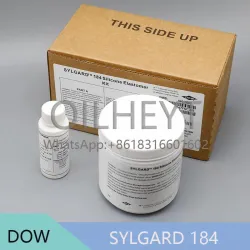
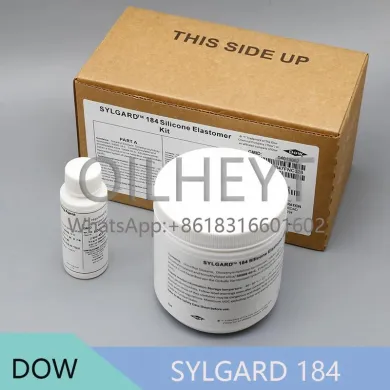
Dow SYLGARD™ 184

UsedDowCoatingsNetherlands
Procurable

Not in stock, available to order through our sourcing team

Not in stock, but we can get it for you

We source this model through our supplier network. Request a quote and we'll come back within one hour.

  1. Request a quote
  2. We confirm price and lead time
  3. You approve, we ship to you
Specific Gravity (Cured)
1.03
Dynamic Viscosity (Mixed)
3500 cP
Tensile Strength
980 psi
Hardness (Shore A)
43
Dielectric Strength
500 V/mil
Availability
Procurable
Lead time
Confirmed with your quote
All 25 specifications
  • Ships to NL
  • Response within 1 hour
  • Warranty available. Buy without worry
  • Support from a scientist

Specifications 25

Brands
Dow
New/Used
Used
Weight
1.1 kg
Specific Gravity (Cured)
1.03
Dynamic Viscosity (Mixed)
3500 cP
Tensile Strength
980 psi
Hardness (Shore A)
43
Dielectric Strength
500 V/mil
Dielectric Constant at 100 Hz
2.72
Dissipation Factor at 100 Hz
0.00257
Thermal Conductivity
0.27 W/m·K
Refractive Index at 589 nm
1.4118
Operating Temperature Range
-45°C to 200°C
Curing Time at 25°C
48 hours
Curing Time at 150°C
15 minutes
Mixing Ratio
10:1 (Base to Curing Agent)
Shelf Life
24 months
Working Time at 25°C
1.5 hours
Flash Point
121.11°C
Color
Clear
Volume Resistivity
2.9 × 10¹⁴ Ω·cm
Dielectric Constant at 100 kHz
2.68
Dissipation Factor at 100 kHz
< 0.00133
Availability
Procurable
Lead time
Confirmed with your quote

Product description

Two-part silicone elastomer, 10:1 mix, cures flexible, dielectric, transparent, temp range -45°C to 200°C.

SYLGARD® 184 is a two-part, transparent silicone elastomer widely used for encapsulating and protecting electronic components. When mixed in a 10:1 ratio and cured, this elastomer forms a flexible, durable material that safeguards sensitive electronics from environmental factors.

Key features include:

  • Flowable consistency: Easily fills intricate geometries, ensuring comprehensive coverage.
  • Versatile curing options: Cures at room temperature in 48 hours or can be heat-accelerated to cure in 10 minutes at 150°C.
  • Excellent dielectric properties: Provides reliable electrical insulation, enhancing component longevity.
  • High transparency: Allows for easy inspection of encapsulated components without removal.
  • Broad operating temperature range: Maintains performance from -45°C to 200°C, suitable for diverse environments.

This elastomer is extensively applied in:

  • Electronics: Encapsulation of power supplies, connectors, sensors, transformers, amplifiers, and relays.
  • LED lighting: Protective coating for LED modules, enhancing durability and performance.
  • Solar energy: Encapsulation of photovoltaic cells to shield against environmental stressors.
  • Biomedical engineering: Fabrication of microfluidic devices and other flexible electronic applications.

Commonly utilised in:

  • University laboratories: Research and development of microfluidic systems and flexible electronics.
  • Biomedical research centres: Development of medical devices and diagnostic tools.
  • Electronics manufacturing facilities: Production of durable electronic components and assemblies.

Introduced by Dow Corning, SYLGARD® 184 has been a staple in various industries for decades, continuing to be a preferred choice for professionals seeking reliable encapsulation solutions.

Why Questpair exists

Lab equipment markets are fragmented. Buyers spend weeks calling distributors, comparing quotes, and verifying supplier reliability. Sellers struggle to reach global research labs.

We built Questpair to fix this. Every supplier on the platform is verified before listing. Every quote you receive comes from a real, vetted seller. AI prepares your case in minutes, then a real specialist takes over.

We're an independent team based in The Netherlands, working with research labs and procurement teams across Europe and worldwide.

Frequently asked questions

How long does laboratory equipment typically last?

With a service contract, ten to fifteen years is normal for most benchtop instruments. Detectors and pumps are the parts that wear first.

Can I get service for older equipment?

Often, yes. Verified suppliers frequently work with service partners converting the instrument. If applicable, we can list servicing options alongside the offer.

Where can I buy parts?

Ask a scientist through the request button. Parts are often available even when the instrument itself is discontinued.

What is the typical lead time for refurbished equipment?

Two to six weeks, depending on refurbishment scope and whether calibration is included.

Does laboratory equipment ship internationally?

We ship to 38 countries. Crating and customs handling are quoted with the instrument.

Reply in one hour

Can't find the exact configuration?

Tell us what you need and a scientist finds it for you, usually within the hour.

Last updated 22 October 2026