53k+ listingsShips to NLResponse within one hour+31 73 711 4717info@questpair.com
Procurable · sourced on request

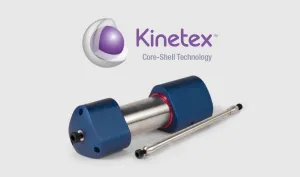
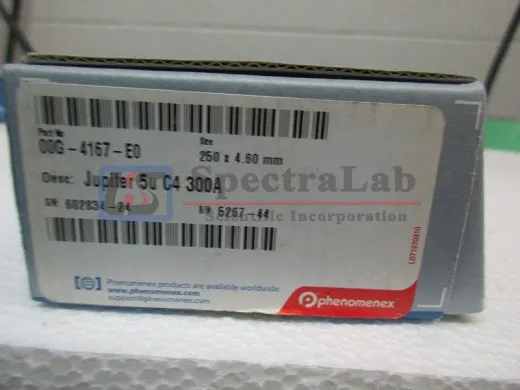
Phenomenex Kinetex

UsedPhenomenexHPLC columnsNetherlands
Procurable

Not in stock, available to order through our sourcing team

Not in stock, but we can get it for you

We source this model through our supplier network. Request a quote and we'll come back within one hour.

  1. Request a quote
  2. We confirm price and lead time
  3. You approve, we ship to you
Particle Size
1.3 µm, 1.7 µm, 2.6 µm, 5 µm
System Compatibility
HPLC, UHPLC, PREP LC
Carbon Load
12%
Typical Efficiency
>400,000 plates/m for 1.3 µm, ~320,000 plates/m for 1.7 µm, ~280,000 plates/m for 2.6 µm, ~180,000 plates/m for 5 µm
Typical Backpressure
>400 bar for 1.3 µm and 1.7 µm, 200–350 bar for 2.6 µm, <250 bar for 5 µm
Availability
Procurable
Lead time
Confirmed with your quote
All 13 specifications
  • Ships to NL
  • Response within 1 hour
  • Warranty available. Buy without worry
  • Support from a scientist

Specifications 13

Brands
Phenomenex
New/Used
Used
Particle Size
1.3 µm, 1.7 µm, 2.6 µm, 5 µm
System Compatibility
HPLC, UHPLC, PREP LC
Carbon Load
12%
Typical Efficiency
>400,000 plates/m for 1.3 µm, ~320,000 plates/m for 1.7 µm, ~280,000 plates/m for 2.6 µm, ~180,000 plates/m for 5 µm
Typical Backpressure
>400 bar for 1.3 µm and 1.7 µm, 200–350 bar for 2.6 µm, <250 bar for 5 µm
pH Stability
1–12
Maximum Pressure
1000 bar
Surface Area
200 m²/g
USP Code
L1
Availability
Procurable
Lead time
Confirmed with your quote

Product description

Core-shell LC columns with particle sizes 1.3-5 µm for enhanced efficiency and reduced backpressure.

Phenomenex Kinetex is an advanced series of liquid chromatography (LC) columns engineered to deliver ultra-high performance across both HPLC and UHPLC systems. Introduced in 2009, these columns leverage innovative core-shell silica technology to enhance separation efficiency and speed without necessitating significant capital investment in new instrumentation.

Key features include:

  • Core-shell particle design: Provides up to three times the efficiency of traditional fully porous 5 µm columns and double that of 3 µm columns, resulting in sharper peaks and improved resolution.
  • Versatile particle sizes: Available in 1.3 µm, 1.7 µm, 2.6 µm, and 5 µm, accommodating various analytical needs and system compatibilities.
  • Multiple chemistries: Offers a range of stationary phases, including C18, PFP, and HILIC, to suit diverse separation requirements.
  • Reduced backpressure: Achieves high resolution and sensitivity over extended linear velocities without generating excessive backpressure, facilitating faster analyses.
  • Cost efficiency: Enhances productivity by reducing solvent consumption and analysis time, leading to lower operational costs.

These columns are widely utilised in pharmaceutical research, food safety analysis, environmental testing, and forensic toxicology. They are commonly employed in university laboratories, biomedical research centres, and clinical environments. The Kinetex series remains relevant and in active use, offering scalable solutions that adapt to evolving analytical demands.

Why Questpair exists

Lab equipment markets are fragmented. Buyers spend weeks calling distributors, comparing quotes, and verifying supplier reliability. Sellers struggle to reach global research labs.

We built Questpair to fix this. Every supplier on the platform is verified before listing. Every quote you receive comes from a real, vetted seller. AI prepares your case in minutes, then a real specialist takes over.

We're an independent team based in The Netherlands, working with research labs and procurement teams across Europe and worldwide.

Frequently asked questions

How long does laboratory equipment typically last?

With a service contract, ten to fifteen years is normal for most benchtop instruments. Detectors and pumps are the parts that wear first.

Can I get service for older equipment?

Often, yes. Verified suppliers frequently work with service partners converting the instrument. If applicable, we can list servicing options alongside the offer.

Where can I buy parts?

Ask a scientist through the request button. Parts are often available even when the instrument itself is discontinued.

What is the typical lead time for refurbished equipment?

Two to six weeks, depending on refurbishment scope and whether calibration is included.

Does laboratory equipment ship internationally?

We ship to 38 countries. Crating and customs handling are quoted with the instrument.

Reply in one hour

Can't find the exact configuration?

Tell us what you need and a scientist finds it for you, usually within the hour.

Last updated 3 November 2026