51k+ listingsShips to NLResponse within one hour+31 73 711 4717info@questpair.com
Sold · specialists can find another

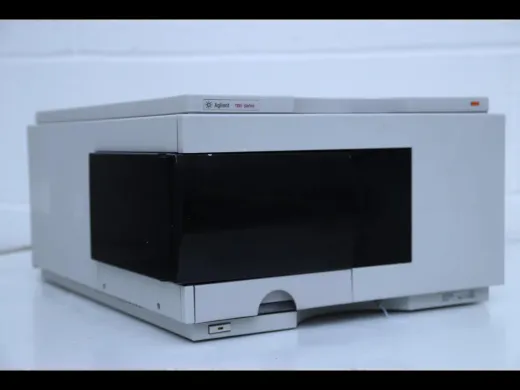
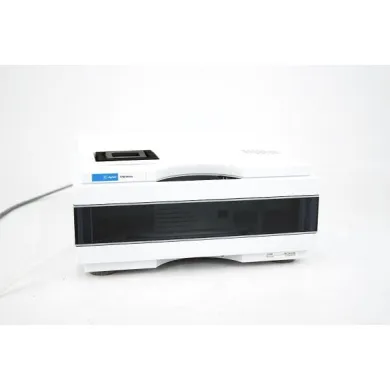
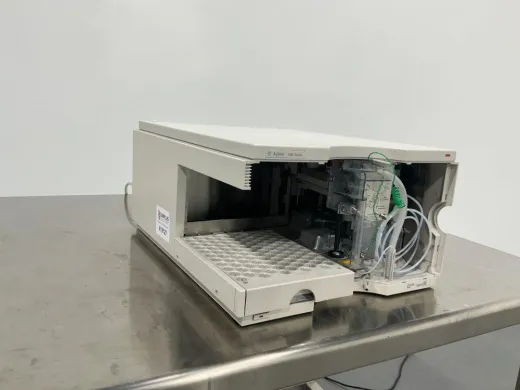
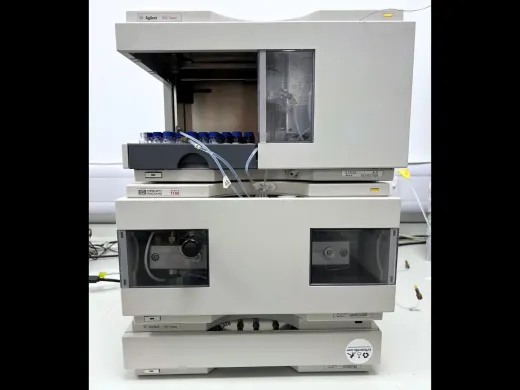
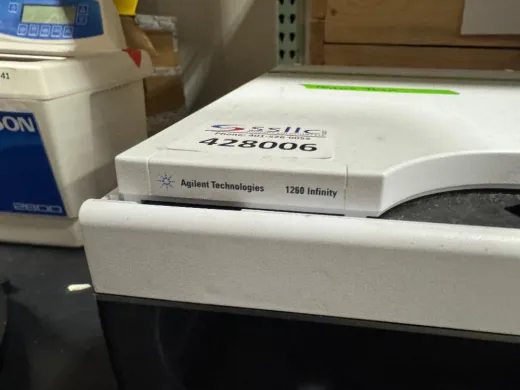
Agilent 1200 HPLC G1364D Micro Fraction Collector and MALDI Spotter

UsedAgilentHPLC autosamplersUnited States

Sold

This item is sold

Our specialists can find you another one, the same model or a close equivalent, and send you a quote.

Delay Volume (in ul)
25 um ID fraction collector capillary: ~0.25 50 um ID fraction collector capillary: ~1100 um ID fraction collector capillary: ~5
Maximum Flow Rate
100 ul/min
Minimum Fraction Volume
Typically 2 ul (depending on fraction collector container)
Maximum Capacity
2 micro collector/spotter connected via 2-position, 6-port micro valve (G1162A)
Cooling
Recommended (with additional G1330B ALS Therm, not included standard)
Availability
Sold
All 16 specifications
  • Ships to NL
  • Response within 1 hour
  • Warranty available. Buy without worry
  • Support from a scientist

Specifications 16

Brands
Agilent
New/Used
Used
Delay Volume (in ul)
25 um ID fraction collector capillary: ~0.25 50 um ID fraction collector capillary: ~1100 um ID fraction collector capillary: ~5
Maximum Flow Rate
100 ul/min
Minimum Fraction Volume
Typically 2 ul (depending on fraction collector container)
Maximum Capacity
2 micro collector/spotter connected via 2-position, 6-port micro valve (G1162A)
Cooling
Recommended (with additional G1330B ALS Therm, not included standard)
Trigger Modes
Time slices Peak (threshold, up-/downslope)Timetable (combination of time intervals and peak) and Agilent 1200 UV-Vis detectors DAD G1315A/B, MWD G1365A/B are fully supported. Other detectors with appropriate delay volumes can be connected through UIB interface
Operating Modes
Above location Into locationLiquid Contact Control: The tip of the fraction collector capillary will initially move down to the bottom of the well. Then it will slowly move upwards while the fraction is collected. The contact control mode enables the micro collector/spotter to collect fractions down to 2 ul in well plates or MALDI spots down to 100 nl
MALDI Spotting Plates (Pre-configured)
96 Agilent plate for AP-MALDI 100 Applied Biosystems, 2 x 96 Applied Biosystems, 192 Applied Biosystems, 400 Perseptive BiosystemsMicromass 80/96 spotsBruker Anchor Chips 384/1536 spots
MALDI Plate Capacity
4 (3 for Bruker Anchor Chip 1536)
MALDI Spot Size
100 to 5000 nl (depending on the MALDI plate)
Maximum Spotting Rate
20 spots/min (1 spot/3s)
Dimensions (H x W x D)
5.5 x 13.5 x 17 in. (14 x 34.5 x 43.5 cm)
Weight
40.7 lb. (18.5 kg)
Electrical Requirements
100-120/220-240V, 50/60Hz, 200VA

Product description

High-precision micro-scale fraction collector supporting 100 nl/min–100 µl/min flow; includes fraction cooling and MALDI target thermostatting.

Agilent 1200 HPLC G1364D Micro Fraction Collector/Spotter

  • Delay Volume (µL):
  • 25 µm ID capillary: ~0.25 µL
  • 50 µm ID capillary: ~1 µL
  • 100 µm ID capillary: ~5 µL
  • Maximum System Flow: 100 µL/min
  • Minimum Fraction Volume: Typically 2 µL

Key Features:

  • Designed for high-precision micro-scale fraction collection and MALDI spotting
  • Supports ultra-low flow rates from below 100 µL/min down to 100 nL/min
  • Minimizes internal and delay volumes to preserve chromatographic peak integrity
  • Precise capillary tip positioning for accurate and reproducible fraction collection
  • Liquid contact control system ensures reliable microliter and nanoliter fraction collection without carryover
  • Fraction cooling prevents sample evaporation and thermal degradation
  • Thermostatting of MALDI targets promotes superior crystallization between matrix and analyte for improved MALDI-TOF MS performance (requires G1330B ALS Thermostat, sold separately)
  • Single low-volume PEEK-coated fused silica capillary reduces dispersion and directs flow efficiently
  • Built-in permanent waste position allows automated continuous eluent diversion during non-collection periods

Applications:

  • Compatible with various collection formats including well plates, Eppendorf tubes, and direct MALDI targets
  • Suitable for single and multidimensional chromatographic separations
  • Ideal for proteomics, peptide, and protein research demanding high sensitivity and reproducibility

This equipment is factory tested to ensure compliance with performance specifications prior to shipment.

Why Questpair exists

Lab equipment markets are fragmented. Buyers spend weeks calling distributors, comparing quotes, and verifying supplier reliability. Sellers struggle to reach global research labs.

We built Questpair to fix this. Every supplier on the platform is verified before listing. Every quote you receive comes from a real, vetted seller. AI prepares your case in minutes, then a real specialist takes over.

We're an independent team based in The Netherlands, working with research labs and procurement teams across Europe and worldwide.

Frequently asked questions

How long does laboratory equipment typically last?

With a service contract, ten to fifteen years is normal for most benchtop instruments. Detectors and pumps are the parts that wear first.

Can I get service for older equipment?

Often, yes. Verified suppliers frequently work with service partners converting the instrument. If applicable, we can list servicing options alongside the offer.

Where can I buy parts?

Ask a scientist through the request button. Parts are often available even when the instrument itself is discontinued.

What is the typical lead time for refurbished equipment?

Two to six weeks, depending on refurbishment scope and whether calibration is included.

Does laboratory equipment ship internationally?

We ship to 38 countries. Crating and customs handling are quoted with the instrument.

Reply in one hour

Can't find the exact configuration?

Tell us what you need and a scientist finds it for you, usually within the hour.

Last updated 23 November 2026