53k+ listingsShips to NLResponse within one hour+31 73 711 4717info@questpair.com
Procurable · sourced on request

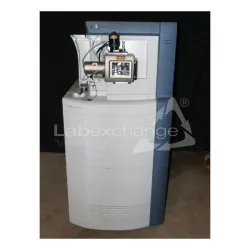
Waters Micromass Q/TOF

UsedWatersAnalytical Balances AccessoriesNetherlands
Procurable

Not in stock, available to order through our sourcing team

Not in stock, but we can get it for you

We source this model through our supplier network. Request a quote and we'll come back within one hour.

  1. Request a quote
  2. We confirm price and lead time
  3. You approve, we ship to you
Footprint
Requires an additional 650 mm x 200 mm of floor space for external Edwards EM28
Mass Range
Up to m/z 20,000
Collision Energy
Up to ±205 eV
Ionization Techniques
Electrospray Ionization (ESI) and Atmospheric Pressure Chemical Ionization (APCI)
Temperature Range
Optimum ambient laboratory temperature between 19°C and 22°C; maximum not exceeding 30°C
Availability
Procurable
Lead time
Confirmed with your quote
All 40 specifications
  • Ships to NL
  • Response within 1 hour
  • Warranty available. Buy without worry
  • Support from a scientist

Specifications 40

Brands
Waters
New/Used
Used
Dimensions
180 mm (width) x 635 mm (depth) x 1163 mm (length)
Weight
200 kg
Footprint
Requires an additional 650 mm x 200 mm of floor space for external Edwards EM28
Mass Range
Up to m/z 20,000
Collision Energy
Up to ±205 eV
Ionization Techniques
Electrospray Ionization (ESI) and Atmospheric Pressure Chemical Ionization (APCI)
Temperature Range
Optimum ambient laboratory temperature between 19°C and 22°C; maximum not exceeding 30°C
Humidity
Relative humidity should not exceed 70%
Power Supply
Single-phase 50 – 60 Hz, 230 V nominal power supply rated at 13 A (UK) or 15 A (Europe); an additional single-phase 50 – 60 Hz, 230 V or 115 V nominal power supply rated at 5 A (UK) is required to run the embedded PC
Voltage
230 V or 115 V
Current
13 A (UK) or 15 A (Europe) for main supply; 5 A (UK) for embedded PC
Cooling Water Flow Rate
35 L/hour at inlet temperature of 20°C or 23 L/hour at inlet temperature of 15°C
Cooling Water Temperature Stability
±2°C
Cooling Water Pressure
Minimum supply pressure: 10 psi; maximum supply pressure: 60 psi
Cooling Water Flow Rate at 15°C
0.4 L/min
Cooling Water Inlet Temperature
Inlet water temperatures below 15°C are not recommended
Cooling Water Outlet Temperature
No more than 30°C
Cooling Water Inlet and Outlet Requirements
One inlet and one outlet required; reinforced 10 mm (3/8 inch) flexible hose preferred
Cooling Water Filters
Suitable in-line filters required to remove particulate matter from town water supplies
Cooling Water Supply
Recirculating chiller with heat dissipation into system: 400 W; minimum reservoir volume: 5 L
Cooling Water Supply Temperature Stability
±2°C
Cooling Water Supply Flow Rate at 15°C
0.4 L/min
Cooling Water Supply Flow Rate at 20°C
0.4 L/min
Cooling Water Supply Flow Rate at 23°C
0.4 L/min
Cooling Water Supply Flow Rate at 30°C
0.4 L/min
Cooling Water Supply Flow Rate at 35°C
0.4 L/min
Cooling Water Supply Flow Rate at 40°C
0.4 L/min
Cooling Water Supply Flow Rate at 45°C
0.4 L/min
Cooling Water Supply Flow Rate at 50°C
0.4 L/min
Cooling Water Supply Flow Rate at 55°C
0.4 L/min
Cooling Water Supply Flow Rate at 60°C
0.4 L/min
Cooling Water Supply Flow Rate at 65°C
0.4 L/min
Cooling Water Supply Flow Rate at 70°C
0.4 L/min
Cooling Water Supply Flow Rate at 75°C
0.4 L/min
Cooling Water Supply Flow Rate at 80°C
0.4 L/min
Cooling Water Supply Flow Rate at 85°C
0.4 L/min
Availability
Procurable
Lead time
Confirmed with your quote

Product description

High-resolution Q/TOF mass spectrometer with up to 10,000 FWHM, 5 ppm accuracy, m/z 20,000 range, ESI/APCI sources.

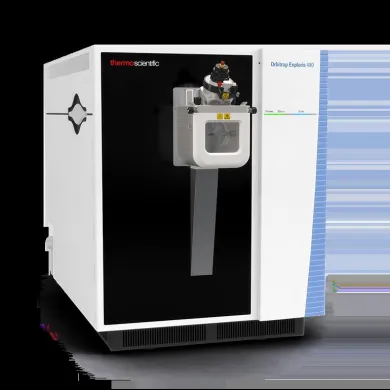
The Micromass Q/TOF is a hybrid quadrupole time-of-flight mass spectrometer designed for high-resolution, accurate mass measurements in complex sample analyses. Combining a quadrupole mass filter with an orthogonal acceleration time-of-flight (oa-TOF) analyser, this instrument delivers precise mass determination and structural elucidation of biomolecules. Introduced in the late 1990s, the Q/TOF series has been instrumental in advancing mass spectrometry applications across various scientific domains.

Key features:

  • High resolution: Achieves up to 10,000 full width at half maximum (FWHM), enabling differentiation of nominally isobaric ions.
  • Exact mass measurement: Provides mass accuracy within 5 parts per million (ppm) root mean square (RMS) in both MS and MS/MS modes.
  • Wide mass range: Supports transmission up to m/z 20,000 for MS analysis, accommodating large biomolecules.
  • Efficient collision cell: Features a hexapole collision cell with collision energy up to ±205 eV for effective fragmentation in structural investigations.
  • Versatile ionisation techniques: Equipped with electrospray ionisation (ESI) and atmospheric pressure chemical ionisation (APCI) sources for diverse sample types.

Applications:

  • Proteomics: Facilitates peptide sequencing and protein identification through precise mass measurements.
  • Metabolomics: Enables comprehensive profiling of metabolites in biological samples.
  • Pharmaceutical analysis: Supports drug discovery and development by characterising compounds and their metabolites.
  • Biotechnology: Essential for molecular cloning workflows and widely adopted in synthetic biology research.

Commonly used in:

  • University laboratories: Supports academic research in life sciences and chemistry departments.
  • Biomedical research centres: Aids in disease research and biomarker discovery.
  • Pharmaceutical companies: Integral to quality control and drug development processes.
  • Biotechnology firms: Critical in biopharmaceutical production pipelines and molecular diagnostics.

While the Micromass Q/TOF series has been succeeded by newer models, it remains a foundational instrument in mass spectrometry, reflecting Micromass's legacy of innovation in analytical instrumentation.

Why Questpair exists

Lab equipment markets are fragmented. Buyers spend weeks calling distributors, comparing quotes, and verifying supplier reliability. Sellers struggle to reach global research labs.

We built Questpair to fix this. Every supplier on the platform is verified before listing. Every quote you receive comes from a real, vetted seller. AI prepares your case in minutes, then a real specialist takes over.

We're an independent team based in The Netherlands, working with research labs and procurement teams across Europe and worldwide.

Frequently asked questions

How long does laboratory equipment typically last?

With a service contract, ten to fifteen years is normal for most benchtop instruments. Detectors and pumps are the parts that wear first.

Can I get service for older equipment?

Often, yes. Verified suppliers frequently work with service partners converting the instrument. If applicable, we can list servicing options alongside the offer.

Where can I buy parts?

Ask a scientist through the request button. Parts are often available even when the instrument itself is discontinued.

What is the typical lead time for refurbished equipment?

Two to six weeks, depending on refurbishment scope and whether calibration is included.

Does laboratory equipment ship internationally?

We ship to 38 countries. Crating and customs handling are quoted with the instrument.

Reply in one hour

Can't find the exact configuration?

Tell us what you need and a scientist finds it for you, usually within the hour.

Last updated 3 November 2026