

Analytical-instruments
We personally find you the right used, refurbished and new analytical instruments from verified suppliers.
Analytical instruments are laboratory devices that measure the composition, quantity, or physical properties of a sample, covering everything from the mass of a substance to the concentration of its chemical constituents. The Questpair catalogue lists 15513 analytical instruments from 34 verified suppliers and distributors across 26 countries, in new, used, and refurbished condition. Of those, 74 percent of the listings are used, the remainder new. Prices run from EUR 1 to EUR 258.267. The category spans weighing equipment, chromatography, spectrometry, and electrochemical measurement, which is why a single listing page can hold both a pocket scale and a high-resolution mass spectrometer. Analytical instrumentation of this breadth rarely sits under one roof.
Updated:
Analytical instruments product list


Not the exact instrument you need?
Tell our scientists what you are after. We track it down, including off-market supply.

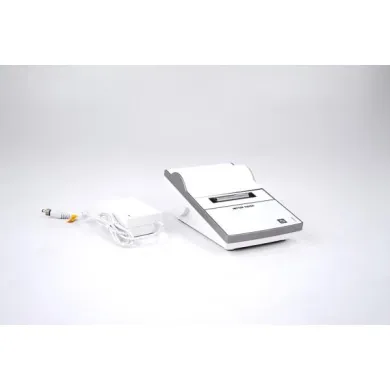
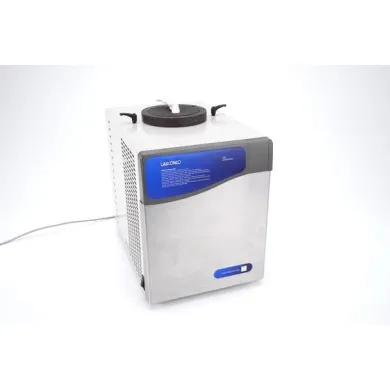
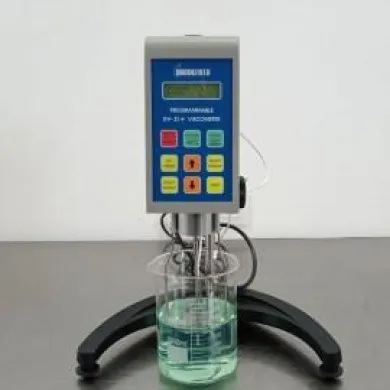
Not the exact instrument you need?
Tell our scientists what you are after. We track it down, including off-market supply.
Showing 1–40 of 10,234 listings
Show 40 more listingsBuying guide
The specification that settles the purchase differs sharply across this category, so the first job is to decide which number actually governs your application. For a balance it is readability and the weighing range: a four-place analytical balance reading to 0.1 mg serves a very different task than a bench scale reading to the gram, and buying up or down from your true requirement wastes either money or precision. For a chromatograph or a spectrometer the governing figures are detection limit, resolution, and the detector type fitted, because those decide what you can see and how small a quantity you can quantify. Fix the one specification your method depends on before comparing anything else; the rest follows from it.
On a used unit, the datasheet is only the starting point. What a buyer verifies is the service and calibration history, because an analytical balance drifts, a pH meter's electrode ages, and a chromatography column or a mass spectrometer's ion source wears with use. Ask when the instrument was last calibrated, whether it holds a current calibration certificate, and whether consumable or wear parts are included. A balance will usually need recalibration against a known reference mass after transport; a chromatograph may need a new column or seals. These are routine rather than disqualifying, but they belong in your cost calculation before you commit.
That calculation is where the price band matters. Across the Questpair catalogue, analytical instruments cost anywhere from EUR 1 to EUR 258.267, a range that covers a simple pocket scale at one end and a research-grade mass spectrometer at the other. A buyer working to a fixed budget will find the weighing subcategories, scales and balances, occupying the lower and middle of that band, while chromatography and mass spectrometry sit well above the average of EUR 4.773. Refurbished units listed for sale are more affordable than comparable new equipment, which is what makes a high-end instrument reachable on a research-group budget. The brands that dominate each tier are predictable: Radwag, Ohaus, and Mettler Toledo lead the weighing listings, while Thermo Scientific and Agilent anchor the chromatography and spectrometry end. Matching a brand to your price band narrows the field quickly, because parts availability and the ease of comparing one model against another both track with how common a maker is in the catalogue.
Types of Analytical instruments
Scales
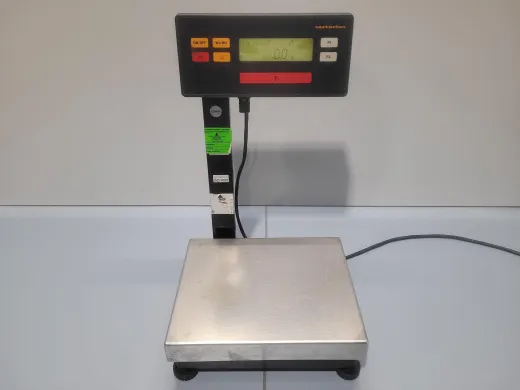
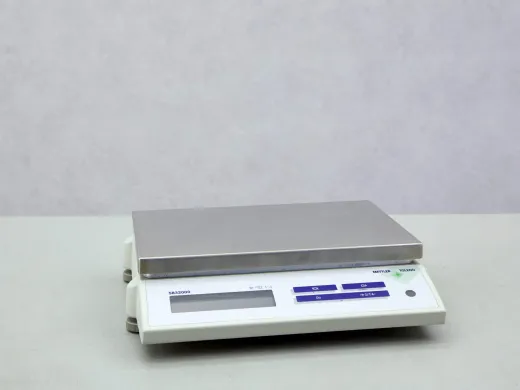
Scales are the highest-volume subtype in the category and the entry point to laboratory weighing. They measure mass at lower resolution than analytical balances, typically reading to the gram or the tenth of a gram, which suits bulk sample preparation, formulation, and routine portioning rather than trace work. A bench or platform scale handles larger loads where a balance would be overwhelmed. In gravimetric analysis and sample preparation the scale is the first instrument a sample meets, used to weigh out reagents before they move to a more precise device. Among the listings that specify a type, scales span a wide price range, from simple pocket units to heavy-capacity industrial models, which is why they sit at the lower end of the catalogue's spread.
Balances
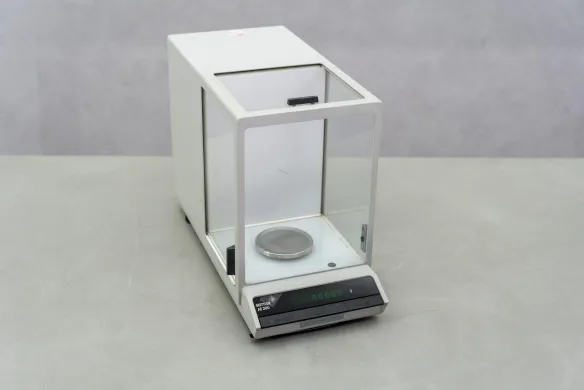
Balances read mass to far finer resolution than scales, the analytical balance resolving to 0.1 mg or better, which is what quantitative chemistry and formulation demand. The distinction that matters to a buyer is readability against capacity: a semi-micro or micro balance trades maximum load for the finest resolution, while a precision balance offers a broader range at coarser readings. Weighing at this level underpins gravimetric analysis, the preparation of standards for chromatography, and any protocol where a stated concentration depends on an accurately weighed mass. In cell culture and molecular biology work, balances weigh out media components and buffer salts where an error of a milligram shifts a result. They are the most precision-dependent of the weighing subtypes and the ones most sensitive to calibration state.
HPLC equipment
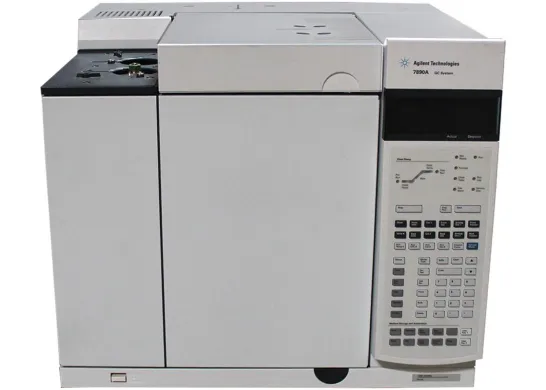
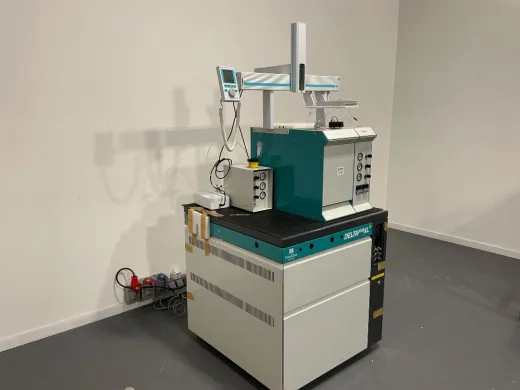
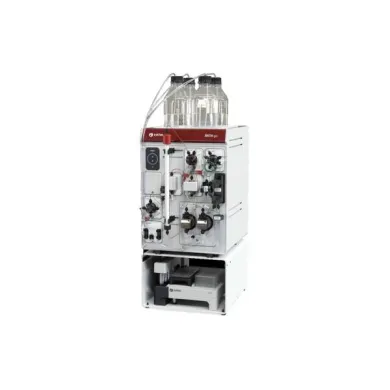
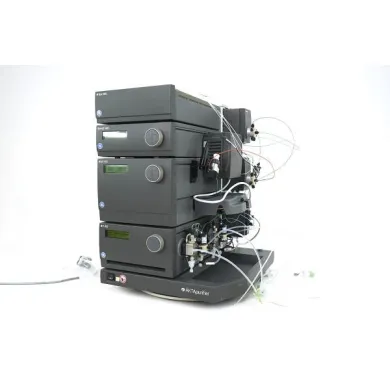
HPLC equipment covers high-performance liquid chromatography systems and their modules: pumps, autosamplers, column ovens, and detectors that together separate a mixture into its components and quantify each. The subtype divides by detector and by whether a listing is a complete system or an individual module, which is the first thing a buyer checks. Liquid chromatography is a workhorse of analytical chemistry, pharmaceutical quality control, and protein purification, and in life sciences it carries into proteomics and molecular diagnostics where it resolves peptides, metabolites, and drug compounds. An HPLC system for peptide separation or a chromatograph configured for small-molecule assay are the configurations buyers most often search for. These systems sit well above the weighing subtypes in price and reward careful attention to column and seal condition on a used unit.
pH meter
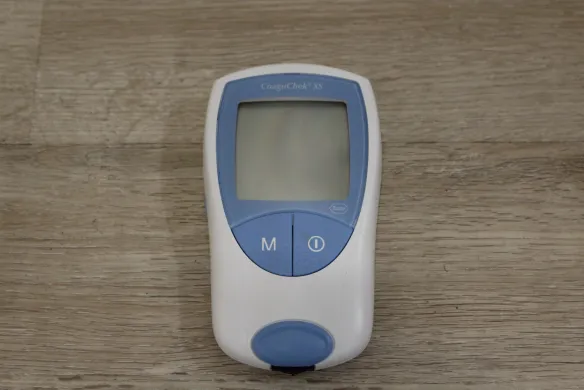
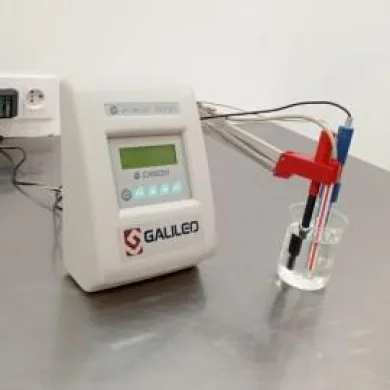
A pH meter measures the acidity or alkalinity of a solution through an electrode and is among the most common bench instruments in any wet laboratory. The subtype ranges from simple handheld testers to benchtop meters with temperature compensation and multi-point calibration, and the governing distinction is electrode quality and whether the probe is included and serviceable. pH measurement is routine in microbiology, cell culture, and electrochemistry, used to set and monitor buffer and media conditions where a tenth of a pH unit changes an outcome. A buffer pH meter for cell culture work and a benchtop unit for electrochemical measurement cover the two ends of how these are bought. Because the electrode ages, a used meter's probe condition matters more than the meter body itself.
Moisture analysers
Moisture analysers determine the water content of a sample, most commonly by heating it and measuring mass loss, which combines a precision balance with a controlled heat source in one instrument. They differ from a straight balance in that halogen or infrared drying is built in, and the buyer's decision turns on heating method, temperature range, and sample capacity. Moisture determination matters in pharmaceutical quality control, food analysis, and formulation, where a specified water content governs stability and shelf life. In biomanufacturing and the handling of lyophilised products, a moisture analyser confirms that a dried material meets its specification. These sit in the mid-range of the catalogue and, like balances, depend on a sound calibration of the integrated weighing cell.
Mass spectrometers
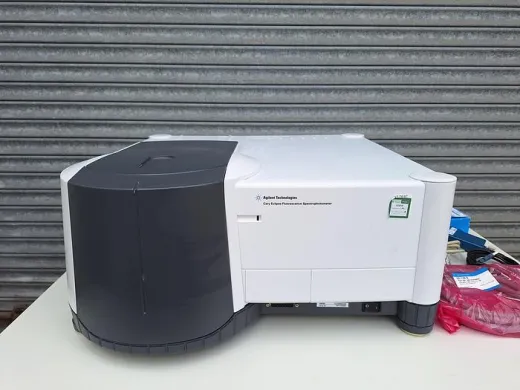
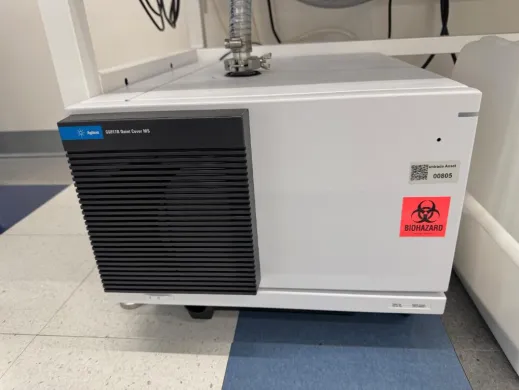
Mass spectrometers identify and quantify compounds by sorting ionised molecules according to their mass-to-charge ratio, and they are among the most capable instruments in the category. The subtype divides by analyser design, quadrupole, time-of-flight, Orbitrap, and ion trap among them, and by the ionisation source fitted, each suited to a different class of sample. Mass spectrometry is central to proteomics, metabolomics, and molecular diagnostics, identifying proteins and peptides, screening metabolites, and confirming drug compounds at trace concentration. A mass spectrometer for proteomics analysis or a system coupled to a chromatograph for metabolite identification are the configurations that drive demand. These occupy the top of the catalogue's price range and warrant close inspection of ion source and detector condition on any used purchase.
Electronics
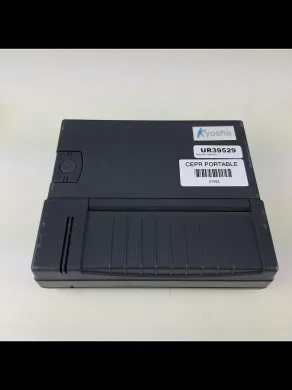
The electronics subtype covers the controllers, power supplies, signal modules, and interface boards that support analytical instruments rather than performing a measurement themselves. A buyer reaches for these to repair, upgrade, or extend an existing system, so the decisive question is compatibility with a specific instrument model. Because the subtype is a parts-and-support category, listings here are often individual components rather than complete devices, and their value lies in keeping a working instrument running. They do not carry a research field of their own, but they underpin every one that the other subtypes serve, which is why a sound replacement board can return a chromatograph or a spectrometer to service for a fraction of a full instrument's cost.
Mass comparators
Mass comparators are specialised balances built for the highest attainable precision in comparing one mass against another, used in calibration laboratories and metrology rather than general bench work. What separates them from an analytical balance is resolution and stability at the limit of weighing: a comparator resolves differences a standard balance cannot, which is what makes it the instrument that calibrates other instruments. The work is gravimetric metrology, the maintenance of mass standards against which laboratory balances are checked. A buyer in this subtype is typically equipping a calibration facility and values documented traceability above all else. These are a low-volume, high-specification corner of the catalogue, and their calibration history is the single fact that matters most on a used unit.
Frequently asked questions
What is an analytical instrument?
An analytical instrument is a laboratory device that measures the composition, quantity, or a physical property of a sample. The category covers weighing equipment, chromatography systems, spectrometers, and electrochemical measurement devices like pH meters.
What does analytical-instruments mean as a category?
It groups together the laboratory devices used to quantify or characterise a sample, from measuring mass to measuring chemical concentration. On Questpair it spans scales, balances, HPLC equipment, pH meters, moisture analysers, mass spectrometers, electronics, and mass comparators under one listing page.
How do analytical instruments work?
Each subtype works on a different principle: a balance uses an electromagnetic force restoration cell to measure mass, a pH meter reads a voltage across an electrode, a chromatograph separates a mixture as it passes through a column, and a mass spectrometer sorts ionised molecules by mass-to-charge ratio. What they share is converting a physical or chemical property of the sample into a quantified reading.
What types of analytical instruments are there?
The main types listed here are analytical balances, precision balances, laboratory scales, industrial scales, laboratory balances, and the broader analytical instrument group covering chromatography, spectrometry, and electrochemistry. Weighing subtypes make up the bulk, while HPLC systems and mass spectrometers sit at the higher-specification end.
What are analytical instruments used for?
They are used to weigh reagents, prepare standards, measure acidity, determine moisture content, separate mixtures, and identify compounds at trace concentration. Applications run across pharmaceutical quality control, food analysis, proteomics, metabolomics, cell culture, and metrology.
How do I choose the right analytical instrument?
Decide which single specification your method depends on first: readability and weighing range for a balance, or detection limit, resolution, and detector type for a chromatograph or spectrometer. Fix that figure to your true requirement, then compare instruments against it rather than buying up or down from what you actually need.
What is the difference between refurbished and used analytical instruments?
Used describes an instrument sold in its existing condition, while refurbished means it has been reconditioned before sale. For both, the service and calibration history matters more than the age, so ask when it was last calibrated and whether wear parts like a column, seals, or an electrode are included.
How much does an analytical instrument cost?
Across the Questpair catalogue prices range from EUR 1 to EUR 258.267, with an average of EUR 4.773. A simple pocket scale sits at the low end and a research-grade mass spectrometer at the top; weighing subtypes occupy the lower and middle of that band.
What are the best brands for analytical instruments?
Radwag, Ohaus, and Mettler Toledo lead the weighing listings, while Thermo Scientific and Agilent anchor the chromatography and spectrometry end. Which one fits depends on the subtype you need rather than a single ranking across the whole category.
Is there a warranty on refurbished analytical instruments?
A warranty is often possible and is arranged in consultation for the specific listing. Check the individual listing and raise warranty terms with the supplier before you commit.
Can I get parts for these instruments?
Parts can be sourced via Questpair. For wear items like chromatography columns, seals, or pH electrodes, confirm on the listing whether consumables are included, since these age with use.
How long do analytical instruments last?
The instrument body often outlasts its wear parts, which is where the practical limit lies. A balance cell, a pH electrode, a chromatography column, and a mass spectrometer ion source all degrade with use, so lifespan depends more on maintaining and replacing those components than on the age of the main unit.
Should I buy new or refurbished?
Used and refurbished units are listed at lower prices than new, which is what makes a high-end instrument reachable on a research-group budget. On a used unit, weigh in the cost of recalibration and any replacement wear parts, and point warranty questions to the specific listing where terms are arranged in consultation.
Where can I buy analytical instruments?
The Questpair catalogue lists 15513 analytical instruments from 34 verified suppliers and distributors across 26 countries, in new, used, and refurbished condition. You compare and buy through the listings on the category page.
What is the lead time and shipping on these instruments?
Lead time and shipping depend on the individual supplier and the instrument, so both are set per listing. For questions on a specific item you can contact Questpair, and specialists respond within an hour.
What calibration and maintenance do these instruments need?
A balance usually needs recalibration against a known reference mass after transport, a pH meter needs its electrode checked and periodically replaced, and a chromatograph may need new columns or seals. Ask whether a used unit holds a current calibration certificate and when it was last calibrated. Note that Questpair lists and sources instruments and parts but does not perform servicing.
Which types in this category are most listed, and who reaches for which?
Scales are the highest-volume subtype and the entry point to laboratory weighing, used in bulk sample preparation and routine portioning. Balances serve quantitative chemistry where readability to 0.1 mg matters, HPLC and mass spectrometers are reached for in pharmaceutical QC and proteomics, pH meters in any wet lab, moisture analysers in food and formulation work, and mass comparators in calibration laboratories.
Which brands dominate this category, and what does that mean for a buyer?
Radwag, Ohaus, and Mettler Toledo dominate the weighing listings, and Thermo Scientific and Agilent the chromatography and spectrometry listings. A common maker means parts availability and model-to-model comparison are both easier, so matching a brand to your price band narrows the field quickly.
What separates the bottom of the price band here from the top?
The bottom of the range is occupied by simple pocket and bench scales reading to the gram, where the measurement is coarse and the device is inexpensive. The top is held by chromatography systems and mass spectrometers whose detection limit, resolution, and detector or analyser design let them quantify trace concentrations, which is what carries them well above the EUR 4.773 average.