51k+ listingsShips to NLResponse within one hour+31 73 711 4717info@questpair.com
Sold · specialists can find another

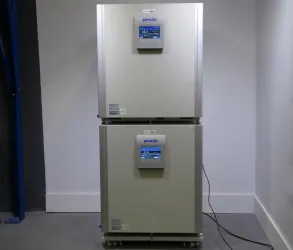
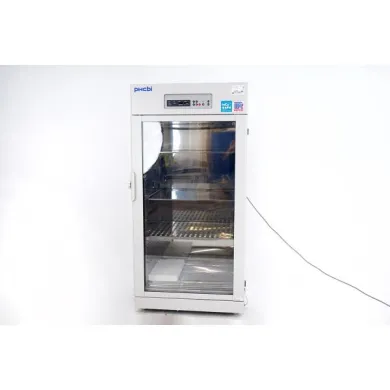
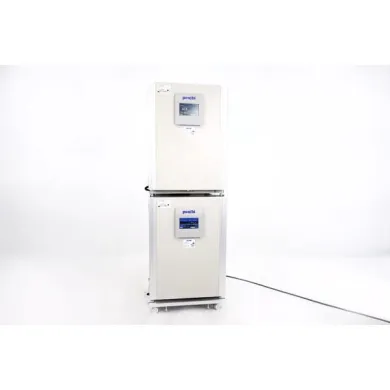
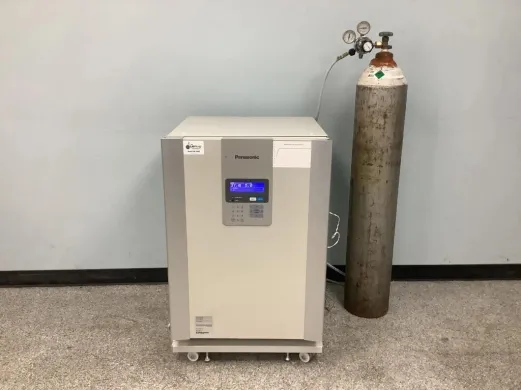
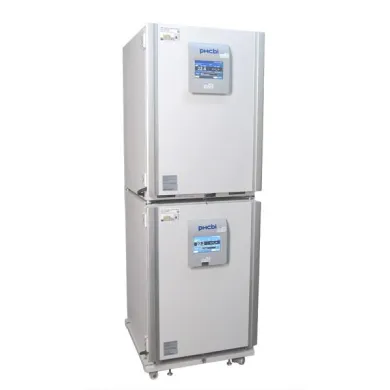
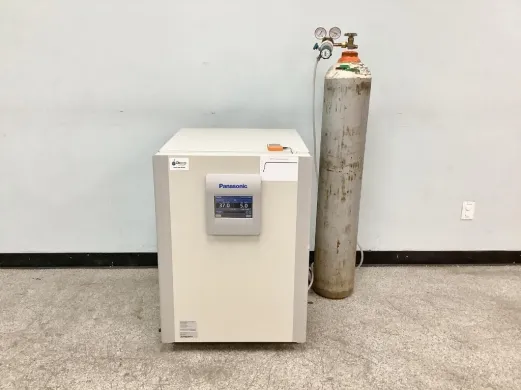
PHCbi MCO-230AICUVLG-PA Dual Stack CO2 Incubator for Cell Culture

UsedPHCbiIncubatorsUnited States

Sold

This item is sold

Our specialists can find you another one, the same model or a close equivalent, and send you a quote.

Temperature Range
Ambient +5°C to 50°C
Temperature Uniformity
± 0.25°C at 37°C
Temperature Control
± 0.1°C
Volume
8.1 cu. ft. (230L) [Per Unit]
CO2 Range
0 to 20%
Availability
Sold
All 16 specifications
  • Ships to NL
  • Response within 1 hour
  • Warranty available. Buy without worry
  • Support from a scientist

Specifications 16

Brands
PHCbi
New/Used
Used
Temperature Range
Ambient +5°C to 50°C
Temperature Uniformity
± 0.25°C at 37°C
Temperature Control
± 0.1°C
Volume
8.1 cu. ft. (230L) [Per Unit]
CO2 Range
0 to 20%
CO2 Control
± 0.15%
CO2 Sensor Type
IR2 dual filter
Relative Humidity
95% at 37°C, ± 5%
Access Port
1.2 in. (3.0 cm), rear upper left with silicone stopper
Shelf Dimensions (W x D x H)
24.4 x 17.7 x 0.5 in. (62.0 x 45.0 x 1.2 cm) [Per Unit]
Internal Dimensions (W x D x H)
25.3 x 20.6 x 27.6 in. (64.3 x 52.3 x 70.0 cm) [Per Unit]
External Dimensions (W x D x H)
30.3 x 28.7 x 35.6 in. (77.0 x 73.0 x 90.5 cm) [Per Unit]
Weight
198 lb. (90 kg.) [Per Unit]
Electrical Requirements
115V, 60 Hz, 1Ph, NEMA 5-15P

Product description

Dual stack CO2 incubator with precise ±0.25°C uniformity, 0–20% CO2 range, and advanced contamination control.

The PHCbi MCO-230AICUVLG-PA Dual Stack CO2 Incubator is engineered to maximize cell culture capacity within limited laboratory space by combining two independent 8.1 cu. ft. chambers in a stacked configuration. It provides precise environmental control critical for advanced molecular biology and biotechnology workflows, including gene editing and bioprocessing applications.

Key technical features include:

  • Temperature Control: Ambient +5°C to 50°C with exceptional uniformity of ±0.25°C at 37°C, ensuring stable incubation conditions essential for mammalian cell culture and synthetic biology research.
  • CO2 Regulation: Wide CO2 concentration range from 0 to 20% managed by a proprietary IR2 sensor, enabling rapid recovery and avoiding CO2 overshoot even after frequent door openings—vital for maintaining pH stability in culture media.
  • Contamination Protection: The *inCu-saFe* copper-enriched stainless steel interior offers passive antimicrobial properties, complemented by a SafeCell UV lamp that continuously decontaminates circulated air and humidity reservoirs without harming sensitive cultures. This design is critical in molecular diagnostics and biomanufacturing environments where contamination control is paramount.
  • Uniform Heating System: Direct Heat and Air Jacket technology ensures homogenous temperature and gas distribution, supporting reproducible results in live-cell imaging and fluorescence analysis setups.
  • User Interface and Data Management: Each chamber features a color LCD touchscreen for intuitive programming and monitoring, alongside a USB port that facilitates secure data logging and transfer, supporting regulatory compliance in clinical diagnostics and research labs.

This dual stack CO2 incubator is widely adopted in biotechnology and biomedical engineering laboratories, offering a robust solution for expanding culture volume while maintaining stringent environmental and contamination controls essential for critical applications such as cell therapy research and biopharmaceutical production pipelines.

Why Questpair exists

Lab equipment markets are fragmented. Buyers spend weeks calling distributors, comparing quotes, and verifying supplier reliability. Sellers struggle to reach global research labs.

We built Questpair to fix this. Every supplier on the platform is verified before listing. Every quote you receive comes from a real, vetted seller. AI prepares your case in minutes, then a real specialist takes over.

We're an independent team based in The Netherlands, working with research labs and procurement teams across Europe and worldwide.

Frequently asked questions

How long does laboratory equipment typically last?

With a service contract, ten to fifteen years is normal for most benchtop instruments. Detectors and pumps are the parts that wear first.

Can I get service for older equipment?

Often, yes. Verified suppliers frequently work with service partners converting the instrument. If applicable, we can list servicing options alongside the offer.

Where can I buy parts?

Ask a scientist through the request button. Parts are often available even when the instrument itself is discontinued.

What is the typical lead time for refurbished equipment?

Two to six weeks, depending on refurbishment scope and whether calibration is included.

Does laboratory equipment ship internationally?

We ship to 38 countries. Crating and customs handling are quoted with the instrument.

Reply in one hour

Can't find the exact configuration?

Tell us what you need and a scientist finds it for you, usually within the hour.

Last updated 24 November 2026