From€1,247.68excl. VAT
In stock
Can't find what you're looking for?
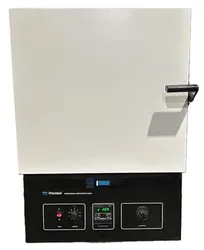
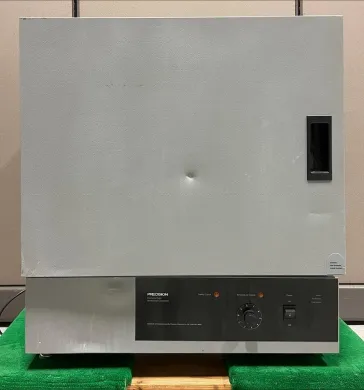
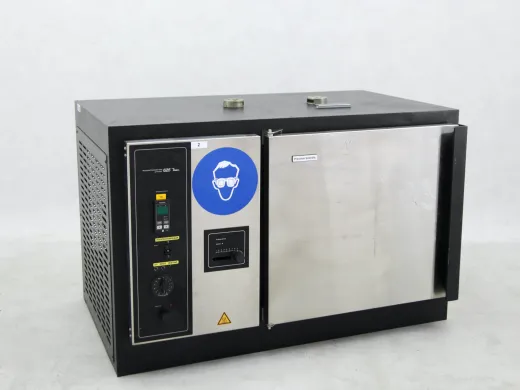
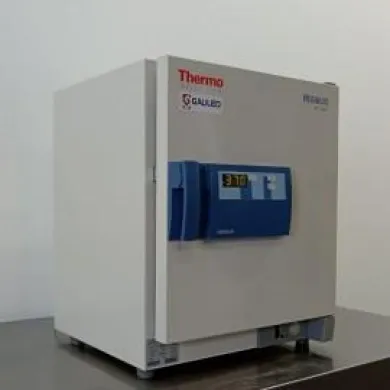
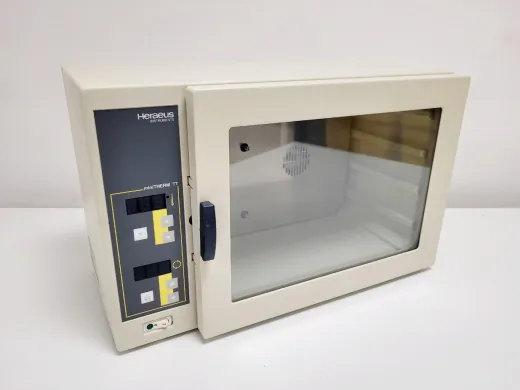
Precision Scientific HTM-150 forced-air oven with 5.3 cu ft chamber, 300°C maximum temperature and one adjustable wire-mesh shelf.
The Precision Scientific HTM-150 forced-air oven is a benchtop laboratory oven for sample drying, glassware sterilization, component testing, baking and moisture evaporation. Mechanical convection provides air exchange and cross-chamber temperature uniformity for these heating applications.
The unit has a double-wall insulated steel exterior and a corrosion-resistant stainless-steel interior chamber. Adjustable wire-mesh shelving is fitted, with one shelf included.
This Precision Scientific HTM-150 oven is used equipment. The maximum temperature is 300°C, or 572°F.
The HTM-150 is a mechanical convection laboratory oven for controlled heating applications. It is suited to sample drying in life sciences laboratories, glassware sterilization, component testing, baking and moisture evaporation. Mechanical convection promotes air exchange and temperature uniformity throughout the chamber.
This unit is part number 31107 and is supplied with one adjustable wire-mesh shelf. The equipment is used.
Mechanical forced convection supports higher-rate air exchange than a static-air oven and promotes temperature uniformity across the chamber. This configuration suits applications that require heating throughout the chamber rather than relying on natural air movement.
The 300°C maximum temperature covers the listed sample drying, glassware sterilization, component testing, baking and moisture evaporation applications. The 5.3 cubic foot chamber provides approximately 150 L of internal working volume.
Lab equipment markets are fragmented. Buyers spend weeks calling distributors, comparing quotes, and verifying supplier reliability. Sellers struggle to reach global research labs.
We built Questpair to fix this. Every supplier on the platform is verified before listing. Every quote you receive comes from a real, vetted seller. AI prepares your case in minutes, then a real specialist takes over.
We're an independent team based in The Netherlands, working with research labs and procurement teams across Europe and worldwide.
With a service contract, ten to fifteen years is normal for most benchtop instruments. Detectors and pumps are the parts that wear first.
Often, yes. Verified suppliers frequently work with service partners converting the instrument. If applicable, we can list servicing options alongside the offer.
Ask a scientist through the request button. Parts are often available even when the instrument itself is discontinued.
Two to six weeks, depending on refurbishment scope and whether calibration is included.
We ship to 38 countries. Crating and customs handling are quoted with the instrument.
Tell us what you need and a scientist finds it for you, usually within the hour.
Last updated 28 November 2026
Questpair lists 1,365 similar items in Heating & cooling, going up to around €9,000.