58k+ listingsShips to NLResponse within one hour+31 73 711 4717info@questpair.com

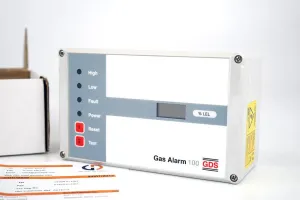
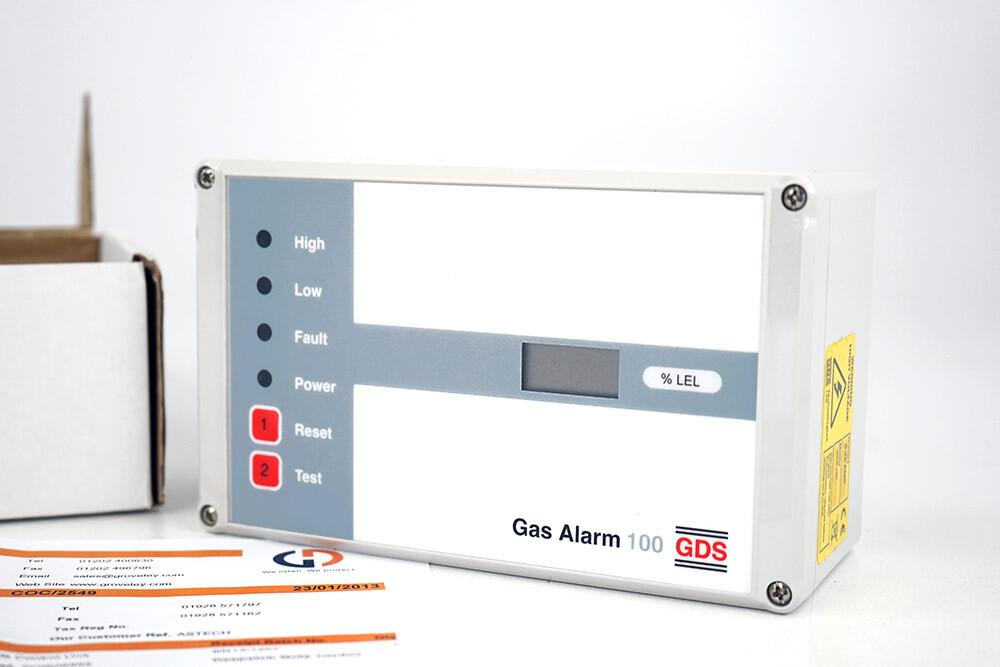
GDS 100 Single-Point Gas Alarm Control Unit GD-100-PEL-230

UsedGas analysersGermany

€294.38excl. VAT

In stock

Can't find what you're looking for?

Measured Gases
O2
Measurement Principle
Electrochemical
Output Signal
4–20 mA
Detail
Built-In Display
All 5 specifications
  • Ships to NL
  • Response within 1 hour
  • Warranty available. Buy without worry
  • Support from a scientist

Specifications 5

New/Used
Used
Measured Gases
O2
Measurement Principle
Electrochemical
Output Signal
4–20 mA
Detail
Built-In Display

Product description

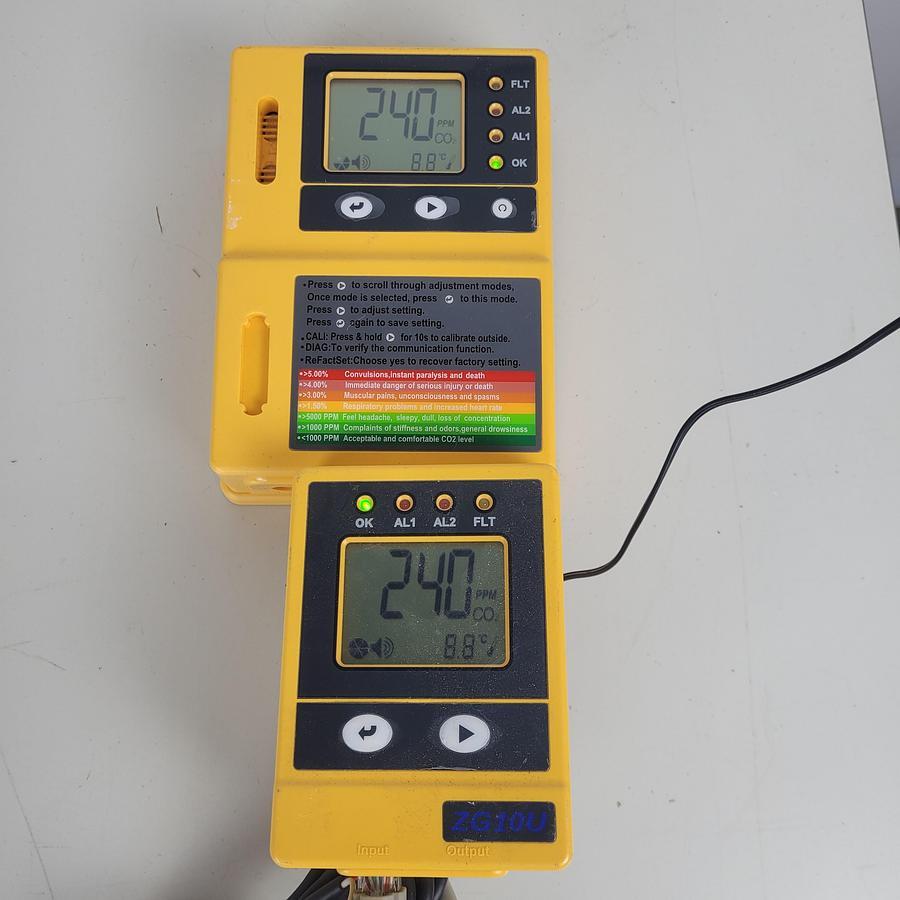
Fixed single-point gas alarm with two-stage relays, 4–20 mA output, IP65 protection, and digital display.

The GDS 100 GD-100-PEL-230 is a fixed single-point gas alarm control unit for monitoring combustible, oxygen, and toxic gas hazards in commercial, industrial, and process environments. It supports internal or remote sensors and can be wall- or panel-mounted.

Typical applications include boiler plant rooms, public buildings, swimming pools, water treatment facilities, HVAC control systems, manufacturing plants, and process facilities.

Key Features

  • Monitoring for flammable gas, oxygen, toxic gas, or compatible 4–20 mA input signals
  • Wall- or panel-mount configuration
  • Two alarm stages with relay outputs
  • Internal or remote sensor connection
  • 4–20 mA analogue output
  • Compact enclosure with low power consumption
  • IP65 protection
  • Extensive fault-detection circuitry
  • Selectable alarm delays
  • Digital 3½-digit display
  • Green power LED, red low/high alarm LEDs, and amber fault LED
  • Audible low, high, and fault alarms rated at 68 dB at 1 m
  • System test switch and sounder inhibit function
  • Alarm relay inhibition during calibration

Technical Specifications

  • Measurement ranges:
  • Combustible gas: LEL, % volume, or ppm
  • Toxic gas: ppm or % volume
  • Oxygen: % volume for depletion or enrichment
  • Compatible 4–20 mA input signals
  • Power consumption: 4 W at full alarm
  • Alarm relays:
  • Low, high, and fault alarm relays
  • SPCO contacts, normally de-energised; energised option available
  • Low gas relay available as normally energised or de-energised
  • Latched or unlatched operation
  • Contacts rated at 5 A, 230 V AC
  • Analogue outputs: 4–20 mA and 1–5 V
  • Auxiliary output: 24 V DC at 100 mA maximum for non-inductive equipment
  • Alarm settings: Fully adjustable from zero to full scale
  • Alarm delay options: 10 seconds, 30 seconds, or 10 minutes
  • Sensor inputs:
  • Three-wire bridge-type detector, MV catalytic
  • 4–20 mA electrochemical or infrared sensor
  • Sensor cable: Three-core, 1.5 mm² screened cable up to 1.5 km
  • Operating temperature: −10 to +50 °C
  • Storage temperature: −10 to +65 °C
  • Protection rating: IP65
  • Field terminals: 2.5 mm screw terminals
  • Cable entry: Top, bottom, sides, and rear
  • Dimensions: 200 mm L × 120 mm H × 58 mm D
  • Weight: 0.8 kg

The GDS 100 is suitable for fixed gas detection systems used in industrial safety, environmental monitoring, water treatment, and building services applications. Items delivered include the GDS 100 single-point gas alarm and a certificate of conformity.

Why Questpair exists

Lab equipment markets are fragmented. Buyers spend weeks calling distributors, comparing quotes, and verifying supplier reliability. Sellers struggle to reach global research labs.

We built Questpair to fix this. Every supplier on the platform is verified before listing. Every quote you receive comes from a real, vetted seller. AI prepares your case in minutes, then a real specialist takes over.

We're an independent team based in The Netherlands, working with research labs and procurement teams across Europe and worldwide.

Frequently asked questions

How long does laboratory equipment typically last?

With a service contract, ten to fifteen years is normal for most benchtop instruments. Detectors and pumps are the parts that wear first.

Can I get service for older equipment?

Yes. Every verified supplier states which service partners cover the instrument, and we list that alongside the offer.

Where can I buy parts?

Ask a scientist through the request button. Parts are often available even when the instrument itself is discontinued.

What is the typical lead time for refurbished equipment?

Two to six weeks, depending on refurbishment scope and whether calibration is included.

Does laboratory equipment ship internationally?

We ship to 38 countries. Crating and customs handling are quoted with the instrument.

Reply in one hour

Can't find the exact configuration?

Tell us what you need and a scientist finds it for you, usually within the hour.

Last updated 19 October 2026