Price on request
In stock
Can't find what you're looking for?
Pre-Owned
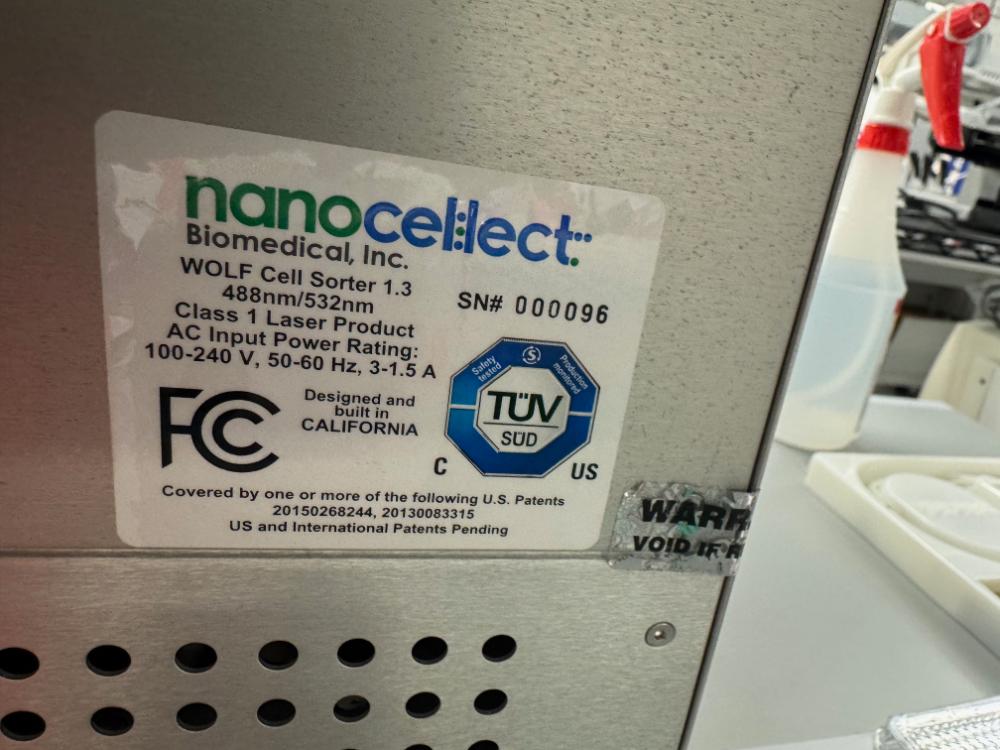
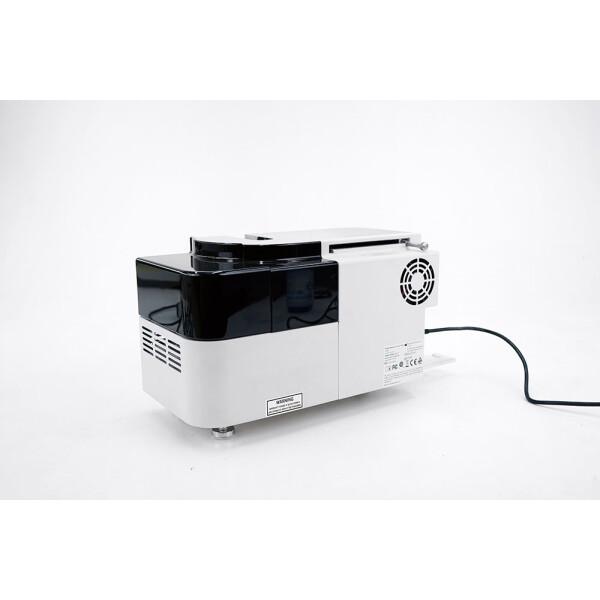
The NanoCellect Biomedical Wolf G2 Cell Sorter is an advanced benchtop microfluidic cell sorting system designed for gentle, low-pressure sorting of sensitive and primary cells. Featuring dual laser excitation at 488 nm (blue) and 561 nm (yellow), it enables precise fluorescence discrimination across a wide spectral range with multiple emission detectors for multiparametric flow cytometry. Its droplet-free, sterile cartridge-based sorting workflow preserves high cell viability and reduces contamination risks, making it ideal for single-cell workflows, molecular diagnostics, and biotechnology research.
Key technical specifications include:
This cell sorter is widely adopted in biotechnology, molecular biology, synthetic biology, and clinical diagnostics labs for enrichment of fluorescently labeled cell subsets, isolation of rare cell populations, and high-viability sorting critical in biopharmaceutical production pipelines and bioprocessing applications. The compact, benchtop design supports sterile operation in biosafety cabinets and reduces contamination risk in biomanufacturing workflows.
The included chiller-stirrer accessory maintains uniform sample suspension and temperature, essential for highly sensitive cell populations used in gene editing and single-cell analytics. The system's cartridge-based, droplet-free sorting eliminates aerosol generation, making it suitable for sensitive live-cell imaging and fluorescence analysis preceding downstream molecular assays.
Please note, the instrument is sold as-is without software license activation; a manufacturer visit is required for software configuration. Power controller for the CS1 accessory is not included.
Primary keywords: microfluidic cell sorter, benchtop cell sorter, dual-laser cell sorter, sterile cartridge-based sorting Long-tail keywords: gentle cell sorting for sensitive cell types, droplet-free sorting for high cell viability, widely used in molecular diagnostics and synthetic biology research, essential for single-cell workflows and bioprocessing applications.
Lab equipment markets are fragmented. Buyers spend weeks calling distributors, comparing quotes, and verifying supplier reliability. Sellers struggle to reach global research labs.
We built Questpair to fix this. Every supplier on the platform is verified before listing. Every quote you receive comes from a real, vetted seller. AI prepares your case in minutes, then a real specialist takes over.
We're an independent team based in The Netherlands, working with research labs and procurement teams across Europe and worldwide.
With a service contract, ten to fifteen years is normal for most benchtop instruments. Detectors and pumps are the parts that wear first.
Yes. Every verified supplier states which service partners cover the instrument, and we list that alongside the offer.
Ask a scientist through the request button. Parts are often available even when the instrument itself is discontinued.
Two to six weeks, depending on refurbishment scope and whether calibration is included.
We ship to 38 countries. Crating and customs handling are quoted with the instrument.
Tell us what you need and a scientist finds it for you, usually within the hour.
Last updated 19 October 2026
The middle half of the 89 with a price runs from €71 to €10,257.