Price on request
In stock
Can't find what you're looking for?
Pre-Owned
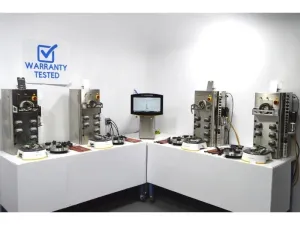
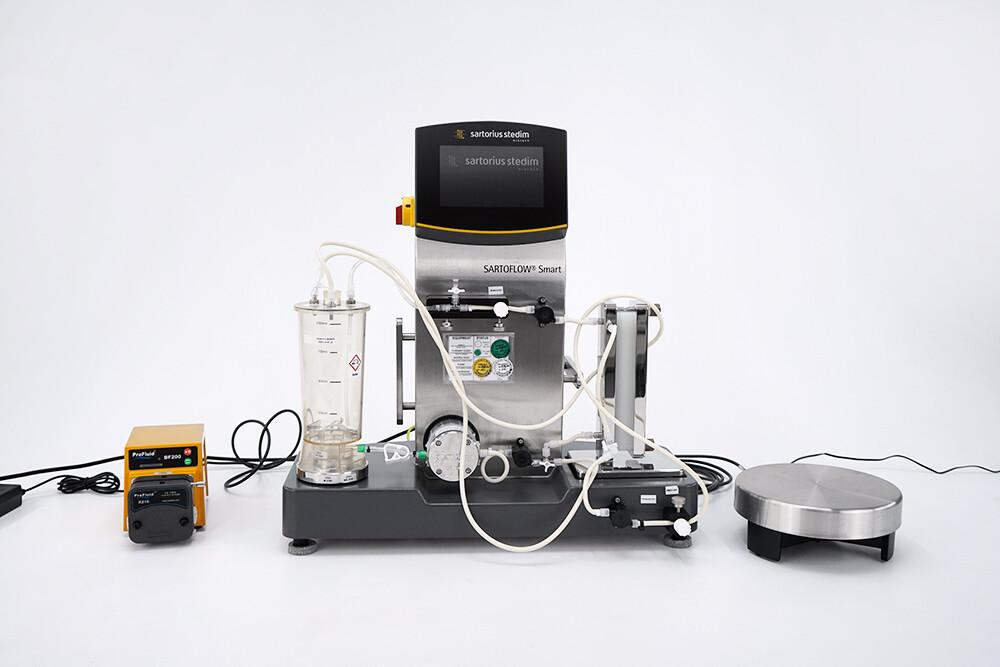
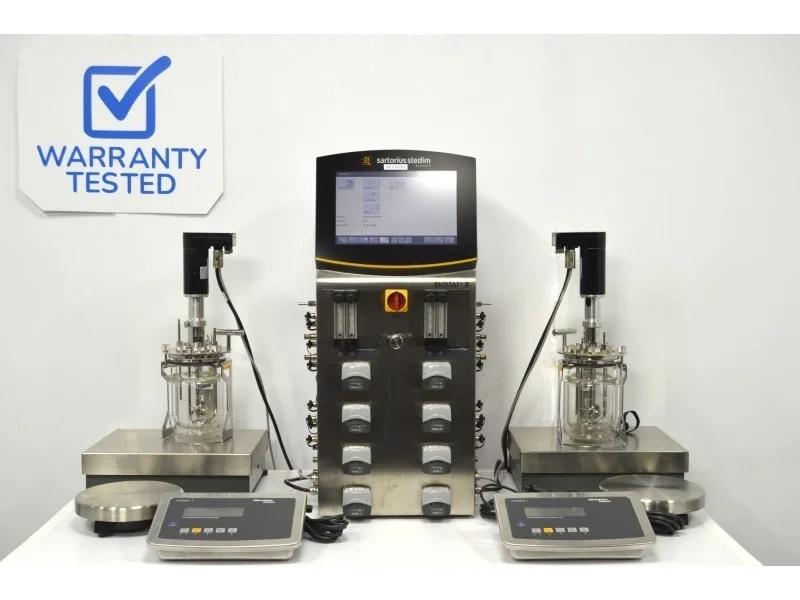
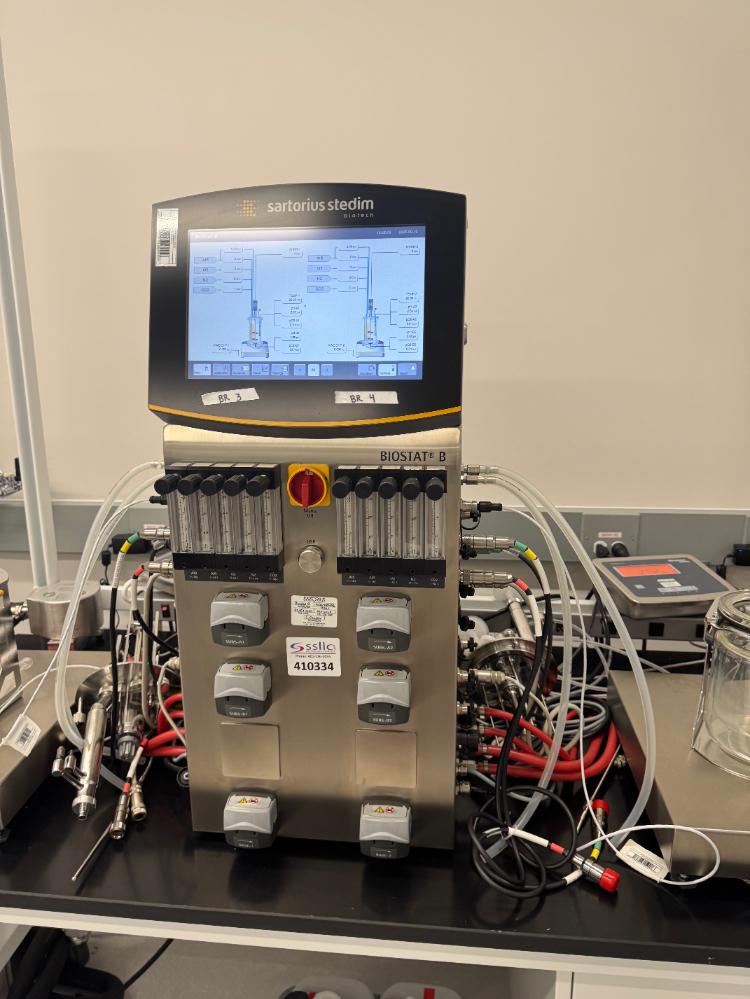
Four-station Sartorius single-use bioreactor system with 4-gas control, peristaltic pumps, scales, and heating blankets.
The Sartorius Biostat B-DCU is a four-station single-use bioreactor system for parallel cell culture, microbial fermentation, process development, and bioprocess scale-up studies. The system includes one BioPAT DCU Tower and four Biostat B-DCU bioreactor stations for simultaneous cultivation experiments.
The Biostat B-DCU provides four-gas aeration using Air, O₂, N₂, and CO₂. Six thermal mass flow controllers provide precision flow control across six gas lines.
This configuration supports oxygen transfer, carbon dioxide control, inert gas stripping, and gas-mixing studies used in mammalian cell culture and microbial fermentation.
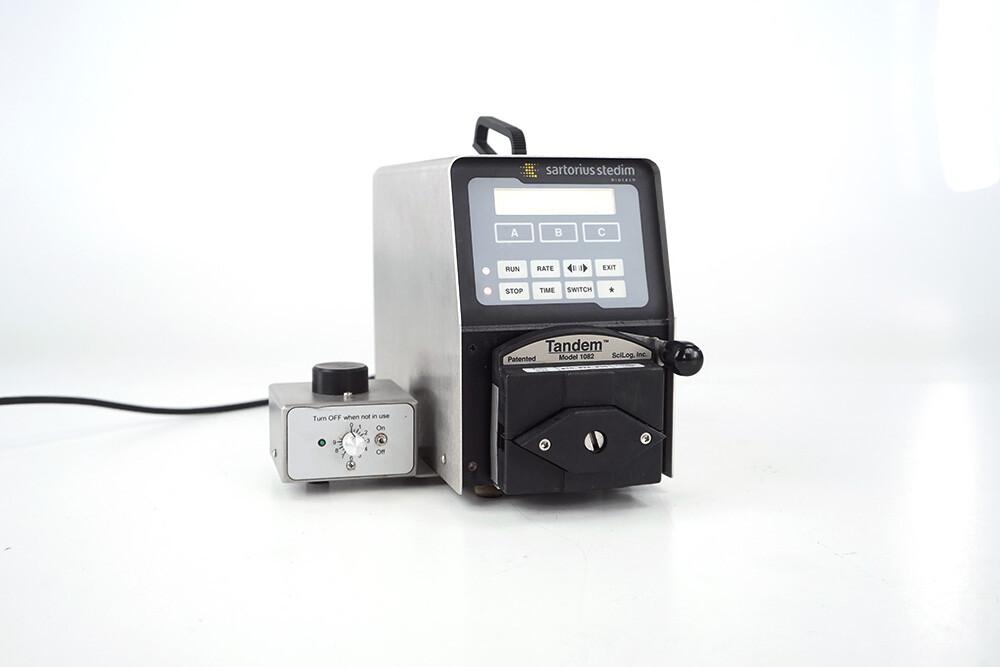
Each station includes six Watson-Marlow 114 fixed-speed peristaltic pumps with on/off control through rotary switches. Integrated gravimetric scales support real-time monitoring of feed bottles, supply containers, and reactor vessels for mass-based process control.
The Univessel SU culture vessel configuration includes:
The system uses external heating blankets for Univessel glass and single-use vessels.
Available configuration options include additional temperature sensors, exhaust filter heaters for condensation control, off-gas O₂/CO₂ analyzers, additional pumps, motor adaptors, glass vessel configurations, and a BioPAT Mass Control System.
This parallel bioreactor platform is suitable for:
The listing describes the used system as fully functional and tested for power supply, touchscreen operation, station communication, Univessel SU holder communication, peristaltic pump operation, agitation motors, temperature probes, heating blankets, gas-mixing components, and integrated scale accuracy. Warranty, setup, training, shipping, and technical support are commercial services and are not included as product features.
Lab equipment markets are fragmented. Buyers spend weeks calling distributors, comparing quotes, and verifying supplier reliability. Sellers struggle to reach global research labs.
We built Questpair to fix this. Every supplier on the platform is verified before listing. Every quote you receive comes from a real, vetted seller. AI prepares your case in minutes, then a real specialist takes over.
We're an independent team based in The Netherlands, working with research labs and procurement teams across Europe and worldwide.
With a service contract, ten to fifteen years is normal for most benchtop instruments. Detectors and pumps are the parts that wear first.
Yes. Every verified supplier states which service partners cover the instrument, and we list that alongside the offer.
Ask a scientist through the request button. Parts are often available even when the instrument itself is discontinued.
Two to six weeks, depending on refurbishment scope and whether calibration is included.
We ship to 38 countries. Crating and customs handling are quoted with the instrument.
Tell us what you need and a scientist finds it for you, usually within the hour.
Last updated 19 October 2026
The middle half of the 240 with a price runs from €61 to €1,960.
5 other listings of this model are available.