58k+ listingsShips to NLResponse within one hour+31 73 711 4717info@questpair.com

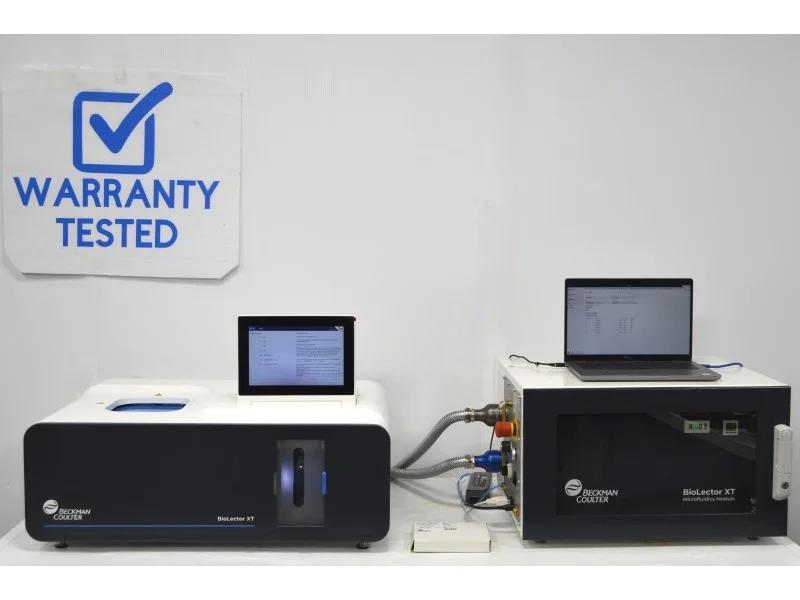
Beckman Coulter BioLector XT Microbioreactor with Microfluidic Module M2P-G-BLXT

Price on request

In stock

Can't find what you're looking for?

Stock
In Stock
Product Code
67728
Number of Vessels
32 vessels
Detail
Software Included
All 6 specifications
  • Ships to NL
  • Response within 1 hour
  • Warranty available. Buy without worry
  • Support from a scientist

Specifications 6

Brands
Beckman Coulter
New/Used
Used
Stock
In Stock
Product Code
67728
Number of Vessels
32 vessels
Detail
Software Included

Pre-Owned

Product description

32-well microbioreactor with microfluidic feeding, optical biomass, pH and DO monitoring, and 1500 rpm shaking.

Beckman Coulter BioLector XT Microbioreactor

The Beckman Coulter BioLector XT is a 32-well high-throughput microbioreactor for parallel microbial cultivation, real-time process monitoring, and microfluidic bioprocess development. It is suited to bacteria, yeast, and fungi screening, recombinant protein expression, synthetic biology workflows, and bioprocess scale-down studies.

Included configuration

  • BioLector XT microbioreactor, part number M2P-G-BLXT
  • Valve control unit, part number M2P-E-MFXT
  • Computer with BioLector 5.5.4 Software
  • Biomass filter modules
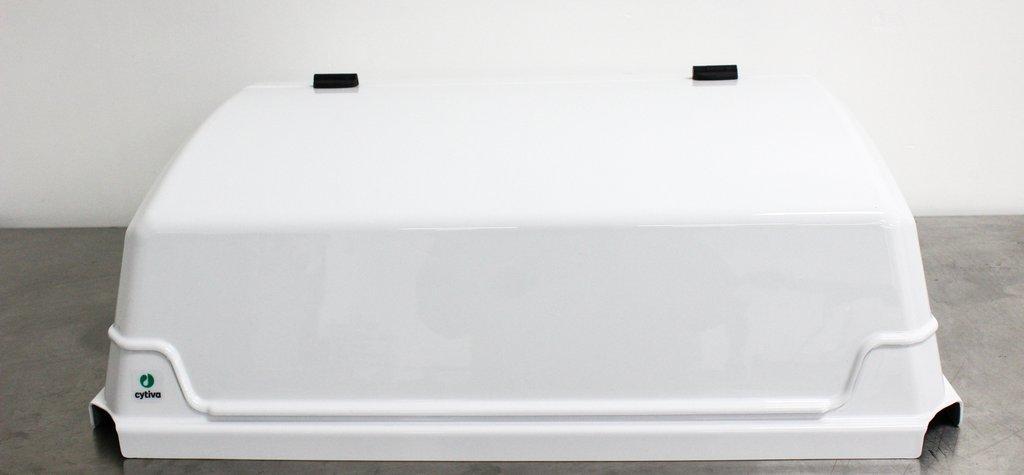
  • E-BD32 microfluidic gassing lid for standard microfluidic experiments
  • Foil applicator
  • 110 VA power supply: 100–240 VAC, 50/60 Hz input, 24 VDC output
  • Compressed-air hose
  • Small and large access keys for the valve control unit
  • Communication and power cables

Technical specifications

  • Plate format: 32 wells
  • Cultivation well filling volume: 800–2400 µL, dependent on shaking speed and microtiter plate type
  • Maximum reservoir well volume: 1800 µL with FlowerPlate; 2000 µL with Round Well Plate
  • Temperature range: approximately 8 °C below ambient to 50 °C
  • Shaker orbit: 3 mm
  • Shaking frequency: 100–1500 rpm
  • Filter capacity: up to 6 different filters
  • Installed filters: biomass; 3 pH filters (HP8, LG1, ph51); 2 dissolved oxygen filters (Pst3, RF)
  • Wavelength range: 365–800 nm
  • Microtiter plate read time: approximately 1.8 minutes per parameter per 32 wells, depending on the measured parameter
  • pH measurement range: approximately 5.0–7.5, with deviation below 0.1
  • Dissolved oxygen measurement range: 0–100% oxygen saturation
  • pH control: acid and/or base addition
  • Integrated optical measurement of biomass, pH, dissolved oxygen, and fluorescence

Applications

  • High-throughput microbial strain screening
  • Media and growth-condition optimization
  • Automated fed-batch cultivation using microfluidic feeding profiles
  • Real-time biomass, pH, dissolved oxygen, and fluorescence monitoring
  • Recombinant protein expression and strain development
  • Early-stage bioprocess development and scale-down modeling
  • Metabolite production screening, including organic acids and enzymes
  • Synthetic biology pathway testing and workflow optimization
  • Biotechnology, molecular biology, and biopharmaceutical process development

Functional testing

The pre-owned BioLector XT was powered up, initialized, and tested by the service team. Testing included sensor calibration, door and door-lock verification, shaker operation to 1500 rpm, heater operation to 50 °C, manual humidity control, vacuum and pressure performance, and execution of a microfluidic pH protocol without errors.

Why Questpair exists

Lab equipment markets are fragmented. Buyers spend weeks calling distributors, comparing quotes, and verifying supplier reliability. Sellers struggle to reach global research labs.

We built Questpair to fix this. Every supplier on the platform is verified before listing. Every quote you receive comes from a real, vetted seller. AI prepares your case in minutes, then a real specialist takes over.

We're an independent team based in The Netherlands, working with research labs and procurement teams across Europe and worldwide.

Frequently asked questions

How long does laboratory equipment typically last?

With a service contract, ten to fifteen years is normal for most benchtop instruments. Detectors and pumps are the parts that wear first.

Can I get service for older equipment?

Yes. Every verified supplier states which service partners cover the instrument, and we list that alongside the offer.

Where can I buy parts?

Ask a scientist through the request button. Parts are often available even when the instrument itself is discontinued.

What is the typical lead time for refurbished equipment?

Two to six weeks, depending on refurbishment scope and whether calibration is included.

Does laboratory equipment ship internationally?

We ship to 38 countries. Crating and customs handling are quoted with the instrument.

Reply in one hour

Can't find the exact configuration?

Tell us what you need and a scientist finds it for you, usually within the hour.

Last updated 19 October 2026