
SCIEX equipment
We personally find you the right new, used & refurbished SCIEX instruments & equipment from verified suppliers
SCIEX is a Canadian manufacturer of mass spectrometry and capillary electrophoresis instruments for life science analytical technologies, founded by scientists from the University of Toronto Institute for Aerospace Studies to develop mass spectrometer systems based on atmospheric pressure ionisation. The company is now headquartered in Marlborough, United States, and has operated as a subsidiary of Danaher Corporation since its acquisition in 2009. Its instruments cover mass spectrometry systems, liquid chromatography-mass spectrometry, capillary electrophoresis, HPLC and analytical software. On Questpair, 92 used SCIEX items are listed by 6 verified suppliers and distributors across 4 countries.
Updated:
SCIEX product list
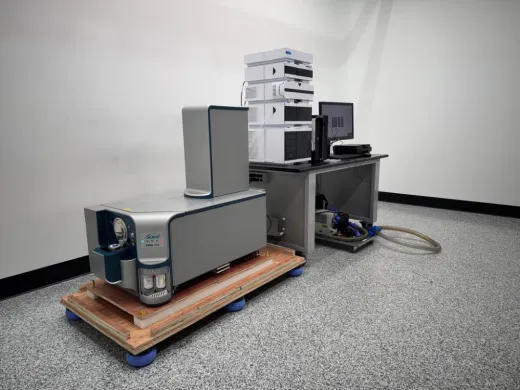
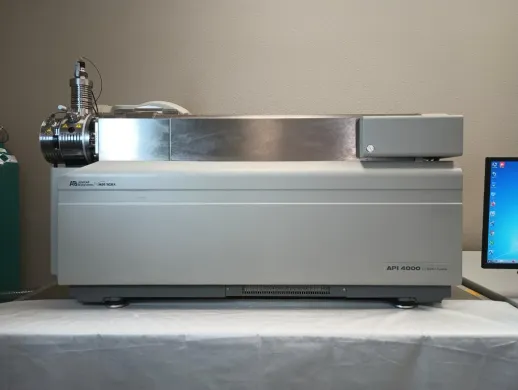
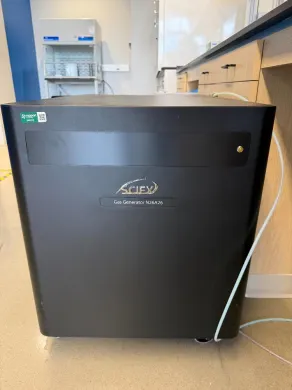
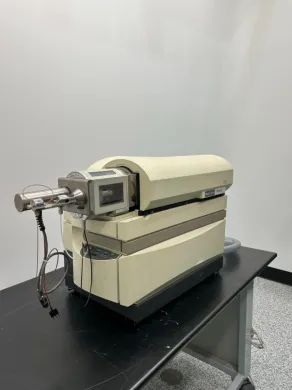
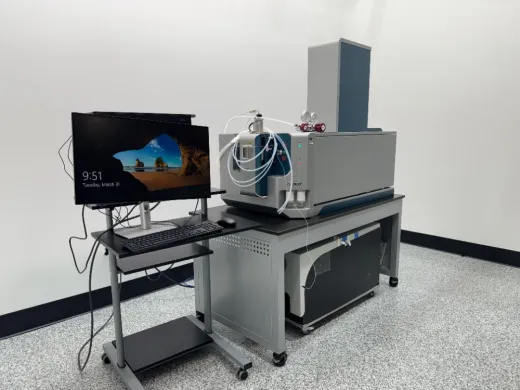
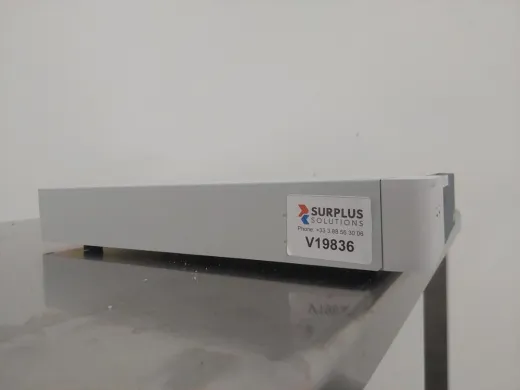
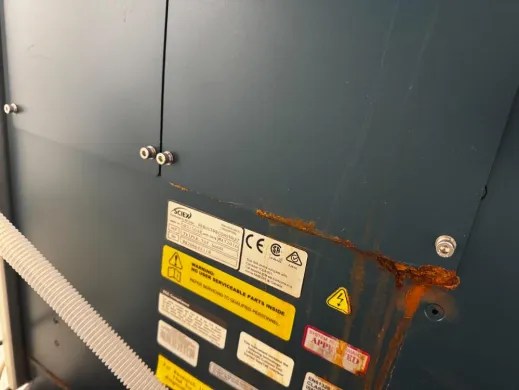
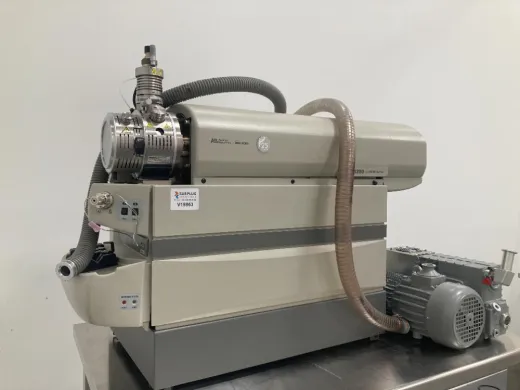
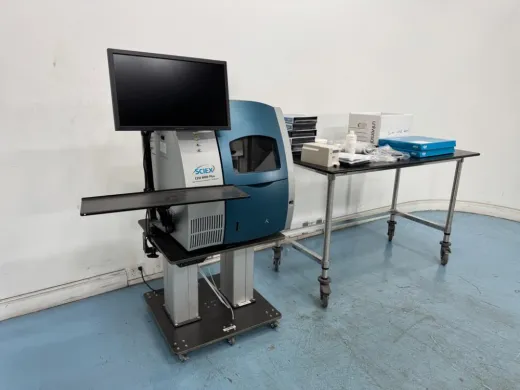
Applied Biosystems Sciex API 150EX LC/MS System
- Category
- Hplc systems
- Brand
- SCIEX
- Suppliers
- 1 verified


Not the exact instrument you need?
Tell our scientists what you are after. We track it down, including off-market supply.
About SCIEX
SCIEX is a Canadian manufacturer of mass spectrometry and capillary electrophoresis instruments for life science analytical technologies. The company was founded by scientists from the University of Toronto Institute for Aerospace Studies to develop mass spectrometer systems based on atmospheric pressure ionisation, the technique that lets a liquid sample enter the gas phase at ambient pressure before analysis. It is headquartered in Marlborough, United States, and has been a subsidiary of Danaher Corporation since the 2009 acquisition. Its catalogue covers mass spectrometry systems, liquid chromatography-mass spectrometry, capillary electrophoresis, HPLC and the analytical software that runs them. The product range splits between targeted quantification platforms and high-resolution discovery platforms, with capillary electrophoresis instruments forming a separate line. On Questpair, these systems are listed used and sourced from independent sellers.
SCIEX mass spectrometry and capillary electrophoresis lines
The named product families divide along the work they do. The Triple Quad and QTRAP lines are triple quadrupole systems built for targeted quantification, the measurement of a known compound against a calibration standard, and this is the core of bioanalysis and of molecular diagnostics assays that report a concentration rather than a discovery. The TripleTOF, X500B QTOF and ZenoTOF lines are time-of-flight instruments that record a full high-resolution spectrum, which is what untargeted work needs: these platforms do proteomics, the large-scale identification of proteins in a sample, and they are also used for metabolomics and for screening where the analyte is not defined in advance. The ExionLC name covers the front-end liquid chromatography that feeds an LC-MS system, separating a mixture before it reaches the mass analyser. Two further lines sit outside the mass spectrometry families. The PA 800 Plus and BioPhase 8800 are capillary electrophoresis instruments, which separate molecules by their movement through a narrow capillary under an electric field; capillary electrophoresis is a standard method in protein characterisation and in the quality analysis of biologic drugs, so these instruments do the separation science behind biomanufacturing release testing. The Echo MS+ pairs acoustic sample ejection with mass spectrometry for high-throughput screening, and the X500B QTOF again serves high-resolution identification.
For a laboratory, the choice between these lines is really a choice between knowing the answer and looking for it. A targeted triple quadrupole system measures what you tell it to measure, which suits routine LC-MS quantification and diagnostic throughput. A time-of-flight system records everything, which is what proteomics, metabolomics and method development demand. The capillary electrophoresis instruments answer a separation question that chromatography handles differently, and they are the ones a biologics laboratory reaches for in characterisation and formulation work.
SCIEX instruments on Questpair
The Questpair catalogue lists 92 SCIEX items from 6 verified suppliers and distributors across 4 countries. 100 percent of the listings are used, so every instrument here is pre-owned rather than new. Prices run from EUR 129 to EUR 236.745, with an average of EUR 32.534; the lower figures cover components and accessories while the higher ones reflect complete configured systems with their chromatography front end. Because the listings come from several independent sellers, a buyer comparing two instruments of the same family is often comparing two sources on condition and configuration rather than two entries from one seller.
Where a listing leaves a question about documentation, specialists respond within one hour through Questpair. Parts can be sourced via Questpair, and a warranty is often possible and is arranged in consultation for the specific listing. A used SCIEX platform is listed below the price of a new system of the same class, which is the clearest reason a smaller laboratory looks to this catalogue for atmospheric pressure ionisation mass spectrometry.
Questpair review of SCIEX
Our take based on listings data and supplier feedback
A buyer approaching SCIEX on the second-hand market is usually choosing between platforms rather than brands, and the catalogue reflects that. The three benefits above all trace back to one fact about the maker: it builds several distinct mass spectrometry lines rather than one flagship, and each line answers a different kind of question in the laboratory.
The breadth starts with the triple quadrupole and QTRAP families. These are the targeted quantification workhorses, the instruments that sit behind routine molecular diagnostics assays and the bioanalytical runs that measure a known compound against a known standard. A clinical or pharmaceutical lab buying a second-hand Triple Quad or QTRAP is replacing a tool whose role is already defined, so the decision turns on configuration and condition rather than on what the instrument can do in principle. The time-of-flight side of the range, the TripleTOF, X500B QTOF and ZenoTOF lines, serves a different purpose: these are high-resolution systems used where the compound is not known in advance, which is the territory of proteomics and untargeted metabolomics screening. Having both families in one catalogue means a buyer can weigh a targeted platform against a discovery platform without leaving the search, and that is rare enough on the used market to matter.
The price span is the second point, and it is wider than a single instrument class would suggest. Prices run from EUR 129 to EUR 236.745. The low end covers components and accessories rather than complete systems, while the upper figure reflects a configured high-resolution instrument with its front-end chromatography. The average sits at EUR 32.534, which is a more honest guide to what a working LC-MS system actually costs on this market. For a smaller laboratory, the practical value is that a used SCIEX platform brings atmospheric pressure ionisation mass spectrometry within reach of a budget that would not stretch to a new instrument of the same class.
The third point is about where the instruments come from. 100 percent of the listings are used. The 92 items are offered by 6 verified suppliers and distributors spread across 4 countries, so a buyer comparing two QTRAP systems is often comparing two independent sellers rather than two listings from the same source. That independence is useful when condition is the deciding factor, because it lets a buyer judge a platform on more than one example. Where a listing raises a question about configuration or available accessories, parts can be sourced via Questpair, and a warranty is arranged in consultation for the specific listing rather than fixed across the catalogue.
What the review cannot tell a buyer is which SCIEX line fits a given protocol, because that depends on the analytes and the throughput a lab works with. The catalogue's strength is that it keeps the targeted and the high-resolution options side by side, at a price range that lowers the barrier to both, from several sellers a buyer can play off against each other.
**Breadth of mass spectrometry platforms**
Listings span the triple quadrupole, QTRAP and time-of-flight families, so a lab replacing one platform and a lab buying its first LC-MS instrument browse the same catalogue.
**Price range that opens the technology to smaller budgets**
Across the Questpair listings prices run from EUR 129 to EUR 236.745, which places both a single accessory and a complete high-resolution system within the same search.
**A used-only catalogue from multiple independent sellers**
Every instrument listed is pre-owned and comes from 6 verified suppliers and distributors across 4 countries, giving a buyer several sources to compare on condition and configuration.
Frequently asked questions
Where can I find manuals and documentation for a SCIEX instrument?
When a listing leaves a question about documentation open, you can contact Questpair and specialists respond within one hour. Documentation availability depends on the specific listing and its source.
How much does a used SCIEX system cost?
Across the Questpair catalogue, SCIEX listings range from EUR 129 to EUR 236.745, with an average of EUR 32.534. The lower end covers components and accessories, while complete configured systems with a chromatography front end sit at the higher end.
What is the difference between refurbished and used SCIEX equipment?
Both are pre-owned, but a refurbished unit has been reconditioned before resale while a used unit is sold in its existing state. The condition of each listing is described individually, so a buyer comparing two units of the same family is usually comparing their condition and configuration.
Can I get a warranty on a used SCIEX instrument?
A warranty is often possible and is arranged in consultation for the specific listing. Terms are not set centrally, so they depend on the individual seller and unit.
Are SCIEX instruments suitable for clinical and research use?
The Triple Quad and QTRAP triple quadrupole lines target quantification, which is the core of bioanalysis and of molecular diagnostics assays that report a concentration. The TripleTOF, X500B QTOF and ZenoTOF time-of-flight lines record full high-resolution spectra for proteomics, metabolomics and untargeted research.
How long does a SCIEX mass spectrometer last?
Lifespan depends on usage, maintenance history and the generation of the platform rather than a fixed figure. A used system that has been maintained can continue in routine quantification or research work, and each listing describes its condition.
Can I get parts for a SCIEX system?
Parts can be sourced via Questpair. Availability for a specific model depends on what the verified suppliers and distributors currently hold.
What are the alternatives to SCIEX for LC-MS and mass spectrometry?
The comparison depends on the class you need: for targeted triple quadrupole quantification and for high-resolution time-of-flight work, several other mass spectrometry makers build equivalent platforms. Within SCIEX itself, the practical choice is between a triple quadrupole that measures a known compound and a time-of-flight instrument that records a full spectrum for discovery.
What is the lead time on a used SCIEX instrument?
Lead time depends on the individual seller, the location of the unit and whether it is a complete system or a component. Listings on Questpair come from 6 verified suppliers and distributors across 4 countries, so timing varies by source.
What is the difference between parts and spares for SCIEX equipment?
In practice the two terms are used interchangeably for the components that keep an instrument running, such as ion source parts, pumps or capillaries. Both can be sourced via Questpair depending on what is listed.
Can a SCIEX instrument be shipped internationally?
Listings come from verified suppliers and distributors across 4 countries, so cross-border shipping is common. The arrangements and cost depend on the individual seller and the destination.
What product lines does SCIEX make and how do they differ?
Triple Quad and QTRAP are triple quadrupole systems for targeted quantification, while TripleTOF, X500B QTOF and ZenoTOF are time-of-flight systems for high-resolution untargeted work. ExionLC is the liquid chromatography front end, PA 800 Plus and BioPhase 8800 are capillary electrophoresis instruments, and Echo MS+ pairs acoustic sample ejection with mass spectrometry for high-throughput screening.
Which types of SCIEX instruments are listed on Questpair and in what condition?
The catalogue includes triple quadrupole mass spectrometers, tandem mass spectrometers, LC-MS/MS systems, analytical mass spectrometers, mass spectrometry software and capillary electrophoresis systems. 100 percent of the 92 SCIEX listings are used, so every instrument here is pre-owned rather than new.
Why are some SCIEX listings so much cheaper than others?
The lowest prices cover individual components and accessories, while the highest cover complete configured systems that include a chromatography front end. Condition and configuration also separate two units of the same family, since the listings come from several independent sellers.
About Questpair
Questpair is the European marketplace for lab equipment, where AI-prepared cases and personal specialists guide every purchase. We work with 247 verified suppliers across 38 countries to find buyers the right new, used or refurbished instruments, with response within 1 hour and significant savings vs buying new.
Personal · Fast · Reliable · Affordable