
KUBOTA equipment
We personally find you the right new, used & refurbished KUBOTA instruments & equipment from verified suppliers
Kubota is a Japanese laboratory centrifuge manufacturer founded in April 1920 in Hongo, Bunkyo-ku, Tokyo, where it began as a maker of medical instruments and became the first company to locally produce a centrifuge for medical use in Japan. The business reorganized as KUBOTA Corporation in 1962 and still operates from Tokyo today. Its range covers general purpose, benchtop, refrigerated, high-speed and large-capacity models, alongside specialised blood bag, hematocrit and plate instruments. On Questpair, 67 used Kubota units are listed by verified suppliers and distributors.
Updated:
KUBOTA product list
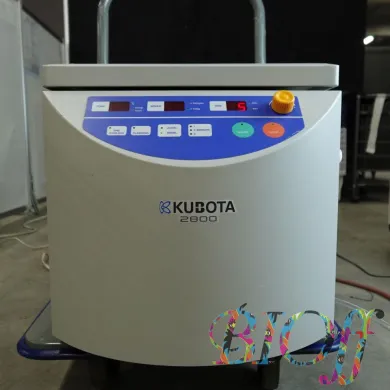
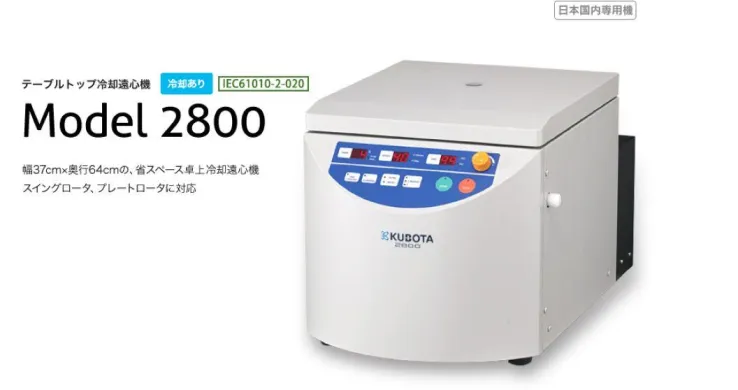


Not the exact instrument you need?
Tell our scientists what you are after. We track it down, including off-market supply.
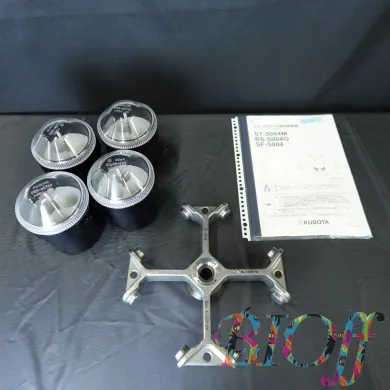
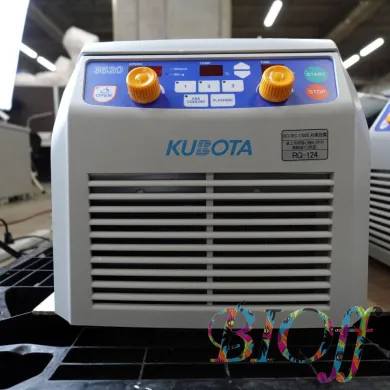
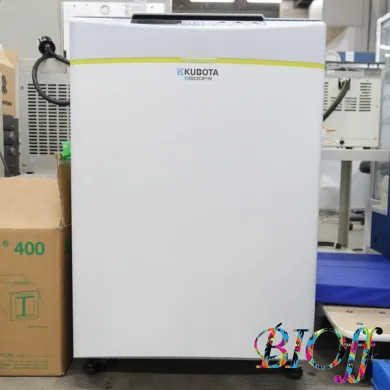
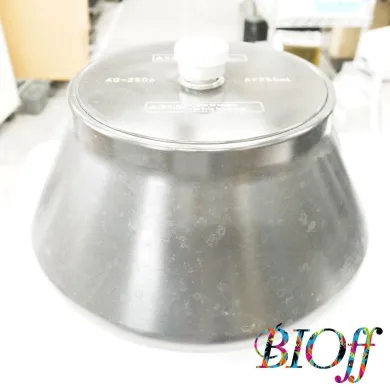
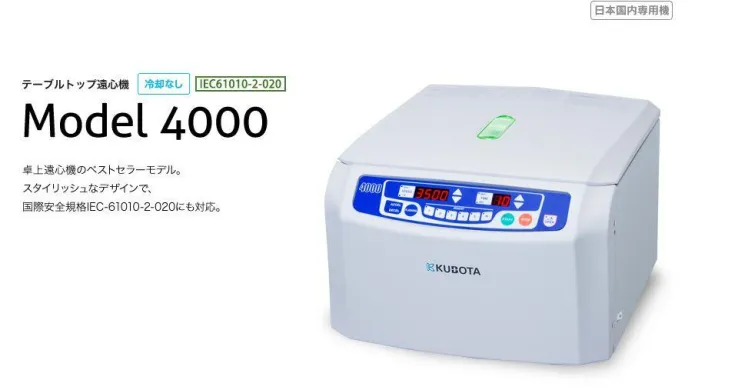
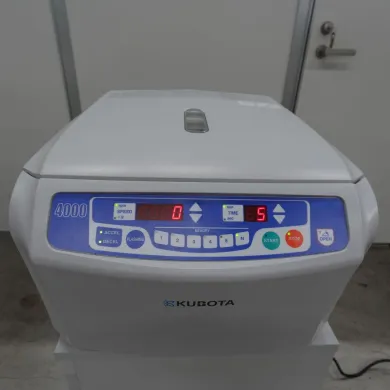
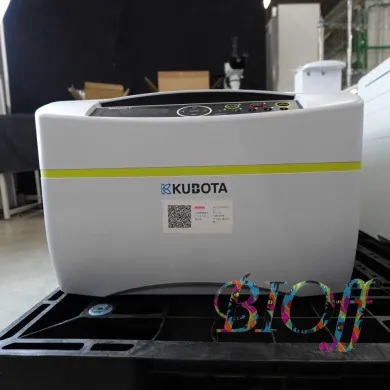
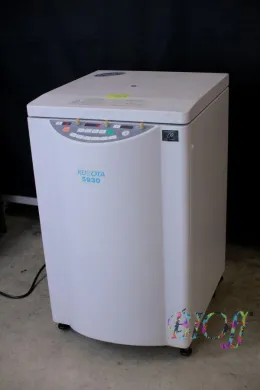
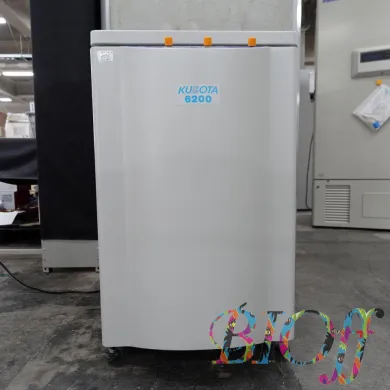
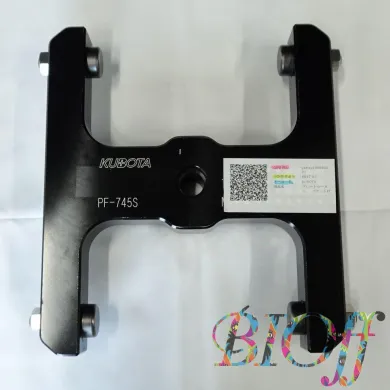
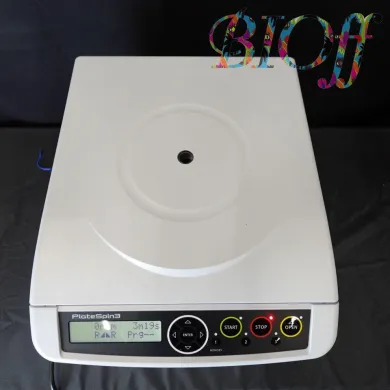
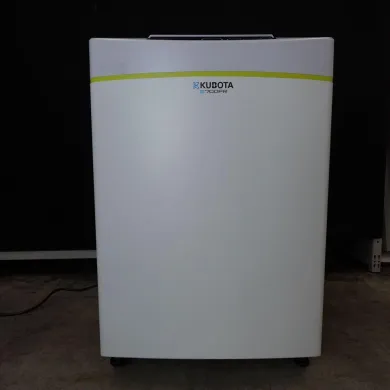
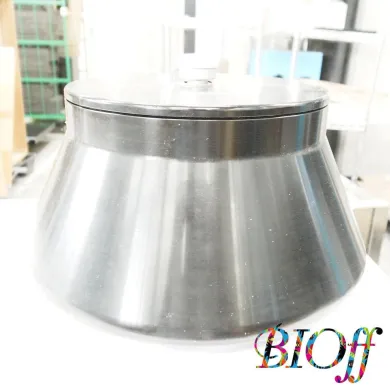
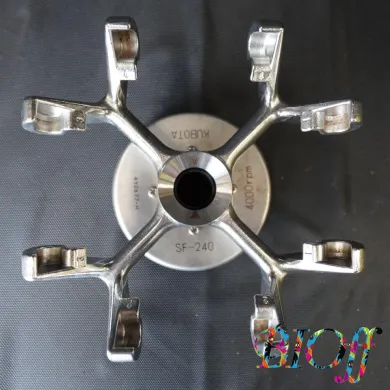
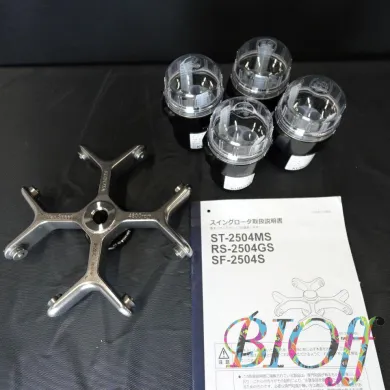
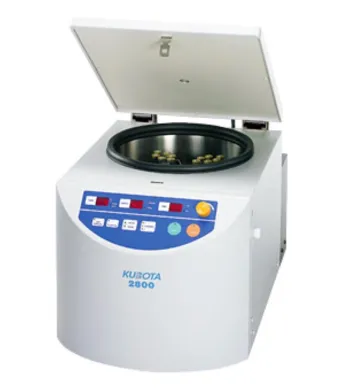
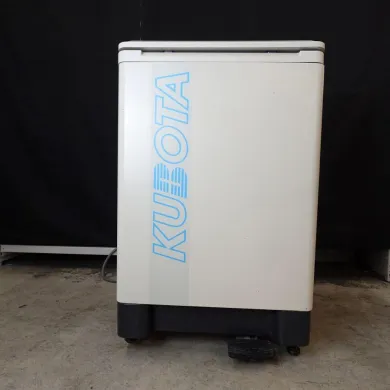
Not the exact instrument you need?
Tell our scientists what you are after. We track it down, including off-market supply.
Showing 1–40 of 61 listings
Show 21 more listingsAbout KUBOTA
Kubota is a Japanese laboratory centrifuge manufacturer headquartered in Bunkyo-ku, Hongo, Tokyo. The company was founded in April 1920 as Kubota Yonezo Co., a maker of medical instruments, and was the first firm to locally manufacture a centrifuge for medical use in Japan. It reorganized as KUBOTA Corporation in 1962. The product range spans general purpose centrifuges, benchtop and refrigerated models, high-speed and large-capacity systems, and specialised formats including blood bag, micro, hematocrit and plate centrifuges, as well as ultrasonic homogenizers. On Questpair, 67 used Kubota units are listed by verified suppliers and distributors.
Kubota centrifuge series and families
Kubota organises its output into several named families, and recognising them helps when reading individual listings. The S Series, covering the S300, S500 and S700, sits in the benchtop and general purpose space. The M Series, including the M300FR and M500TR, is the refrigerated line, built for temperature-controlled separation. The 3000 Series, with the 3300 and 3220, extends the general-purpose range. At the top of the capacity scale, the Large Capacity and Blood Bag Series, the 8730, 9920 and 9942, handles high-volume and transfusion-specific work. The PlateSpin line is built for microplate centrifugation, and the KA Series, including the KA-2200, covers further benchtop needs. Because this catalogue is used-only, the family a listing belongs to is the first thing to confirm, since it indicates capacity, whether refrigeration is present, and which rotor formats the unit was designed around.
Clinical, haematology and life sciences work
Centrifugation underpins a large share of clinical and life sciences preparation, and Kubota's formats map directly onto that work. Hematocrit centrifuges perform the packed-cell-volume measurement that haematology relies on, and the blood bag models serve the component separation that transfusion services and blood banking depend on. Refrigerated general-purpose and high-speed instruments handle the cold separation steps common in molecular biology and protein purification, where pelleting cells or clarifying lysates has to happen without warming the sample. Plate centrifuges are also used for cell culture and immunoassay plates, spinning down 96-well and deep-well formats before an assay is read. Micro centrifuges carry the small-volume work of genomics and proteomics sample preparation, from DNA and RNA spins to tube-scale clarification. Across these fields the common thread is the same: separation by density under controlled speed and, where needed, controlled temperature, which is precisely what this class of instrument exists to do.
On Questpair
The Kubota listings on Questpair are drawn from the used market. 100 percent of the listings are used. Prices run from EUR 62 to EUR 6.824, with an average around EUR 2.271, a span that reflects the difference between a bare benchtop spinner and a complete refrigerated or large-capacity system. The supply is currently concentrated among a small number of verified suppliers and distributors. Where a particular rotor, adapter or replacement part is needed, it can be sourced via Questpair. A warranty is often possible and is arranged in consultation for the specific listing rather than applied as a standard term, so the right moment to raise it is against the unit you are considering. For a buyer who has settled on Kubota, the practical task is matching a family and model to the separation task at hand, then checking the live entry for condition, rotor complement and configuration, since these details vary from one used unit to the next.
Questpair review of KUBOTA
Our take based on listings data and supplier feedback
Kubota occupies a narrow lane. Where several competitors treat centrifugation as one line among many, Kubota has built the entire company around separation, and the catalogue reflects that focus. That specialisation is the first thing worth examining, because it shapes what a buyer actually gets. The range runs from micro centrifuges sized for a single bench footprint through to large-capacity floor models in the 8730, 9920 and 9942 family. A lab standardising on one maker across several separation tasks can do so here without reaching for a second supplier, which simplifies parts and operator familiarity across a group of instruments rather than across a single purchase.
The second benefit, the clinical and blood-banking heritage, is more than a founding anecdote. Kubota built Japan's first medical centrifuge in 1920, and the current catalogue still carries blood bag models and hematocrit instruments, the specific formats that transfusion services and haematology benches use. The PlateSpin line addresses microplate work, where fixed-angle and swing-out formats differ in how they handle sealed plates. For a buyer whose work sits in molecular diagnostics or routine clinical chemistry, the point is that these are purpose-built formats from a maker that has produced them continuously, not general spinners pressed into a clinical role. The refrigerated M Series, including the M300FR and M500TR, extends that into temperature-controlled separation, which matters wherever sample integrity depends on holding a run cold.
The third benefit is the state of the catalogue itself, and this is where a buyer should read carefully. Every Kubota unit listed is used: 100 percent of the listings are used. Prices run from EUR 62 to EUR 6.824, with an average around EUR 2.271. That span is the single most useful figure here, because it separates two different purchases. At the low end sit bare benchtop units; at the high end sit complete refrigerated or high-speed systems. A listing's position in that range tells you roughly which of those you are looking at before you open it. Because these are used instruments, condition and rotor complement vary by listing, so the individual entry is where the real detail lives.
A used-only catalogue is honest about what it is. There is no refurbished tier to interpret and no new-versus-used trade-off to weigh beyond price, since used units are listed below new pricing. Where a warranty matters, that is arranged in consultation for the specific listing rather than set as a blanket term, so the sensible step is to raise it against the unit you are considering. Parts, where a rotor or adapter is needed, can be sourced via Questpair. The supply side is currently concentrated: the listings come from verified suppliers and distributors, and a buyer tracking a particular model, such as a specific S Series or 3000 Series unit, will want to check availability against the live catalogue rather than assume a given configuration is in stock. For a lab that has already decided on Kubota, the depth of 67 used units across the range gives a real chance of matching a model to a task at a used price.
**Centrifuge specialist with a full capacity range**
Kubota builds the whole spread of laboratory centrifuges, from micro rotors to large-capacity floor models, so a buyer can match one maker's engineering to several separation tasks rather than mixing brands.
**Clinical and blood-banking heritage**
The firm built Japan's first medical centrifuge and still produces blood bag and hematocrit models, which makes its instruments a known quantity in transfusion and haematology workflows.
**A used-only catalogue at a wide price span**
Every Kubota listing on Questpair is a used unit, and prices run from EUR 62 to EUR 6.824, covering both bare benchtop spinners and complete refrigerated systems.
Frequently asked questions
Where can I find manuals and documentation for a Kubota centrifuge?
Manuals and documentation can be requested through Questpair, where specialists respond within one hour. Because the catalogue is used-only, confirming the exact model and series first helps match the right documentation to your unit.
How much does a Kubota centrifuge cost?
Across the Questpair listings prices range from EUR 62 to EUR 6.824, with an average around EUR 2.271. The position within that span depends on whether the unit is a bare benchtop spinner or a complete refrigerated or large-capacity system.
What's the difference between a refurbished and a used Kubota unit?
A used unit is sold in its existing condition, while a refurbished one has been reconditioned before resale. Both are listed below the price of new equipment, and the specific condition, rotor complement and configuration are described on each individual listing.
Is a warranty available on a used Kubota centrifuge?
A warranty is often possible and is arranged in consultation for the specific listing rather than applied as a standard term. The right moment to raise it is against the unit you are considering.
Are Kubota centrifuges suitable for clinical and research work?
Yes. Hematocrit models cover packed-cell-volume measurement, blood bag models handle component separation for transfusion services, refrigerated and high-speed units handle cold separation in molecular biology, and micro and plate centrifuges serve genomics, proteomics and immunoassay preparation.
How long does a Kubota centrifuge last?
Lifespan depends on usage, maintenance history and rotor wear rather than age alone. On a used unit, check the stated condition and rotor complement on the listing, since these vary from one entry to the next.
Can I get replacement parts for a Kubota centrifuge?
Parts such as rotors, adapters and replacement components can be sourced through Questpair. Specifying the exact series and model helps identify compatible parts, since rotor formats differ across the S, M, 3000 and Large Capacity families.
What are the alternatives to Kubota for a laboratory centrifuge?
The alternative depends on the format you need: benchtop, refrigerated, high-speed, large-capacity or a specialised blood bag, hematocrit or plate centrifuge. Comparing against another maker means matching capacity, refrigeration and rotor format to the separation task, which you can do across the Questpair catalogue.
What is the lead time on a Kubota centrifuge?
Lead time depends on the individual listing and the supplier holding the unit. Because supply is drawn from the used market and concentrated among a small number of verified suppliers and distributors, timing is confirmed per listing.
What's the difference between parts and spares when buying a Kubota centrifuge?
The terms are used interchangeably for replacement components such as rotors, buckets and adapters. Any of these can be sourced through Questpair once you confirm the model they need to fit.
Can a Kubota centrifuge be shipped internationally?
Listings come from verified suppliers and distributors across 1 countries, so international shipping depends on the specific supplier and listing. Shipping arrangements are confirmed against the unit you are considering.
Which product lines does Kubota make and how do they differ?
The S Series (S300, S500, S700) covers benchtop and general purpose work, the M Series (M300FR, M500TR) is the refrigerated line, and the 3000 Series (3300, 3220) extends the general-purpose range. The Large Capacity and Blood Bag Series (8730, 9920, 9942) handles high-volume and transfusion work, PlateSpin is built for microplate centrifugation, and the KA Series (KA-2200) covers further benchtop needs.
Which types of Kubota centrifuge are actually listed on Questpair and in what condition?
The listings include benchtop centrifuges, laboratory centrifuges, swing rotor centrifuges, benchtop refrigerated centrifuges and refrigerated centrifuges. 100 percent are used, and each entry states its own condition, rotor complement and configuration.
What separates the cheapest Kubota listings from the most expensive?
The lower end of the EUR 62 to EUR 6.824 range tends to be bare benchtop spinners without refrigeration, while the upper end covers complete refrigerated and large-capacity systems. Rotor complement and configuration also move the price, which is why each listing should be checked individually.
About Questpair
Questpair is the European marketplace for lab equipment, where AI-prepared cases and personal specialists guide every purchase. We work with 247 verified suppliers across 38 countries to find buyers the right new, used or refurbished instruments, with response within 1 hour and significant savings vs buying new.
Personal · Fast · Reliable · Affordable