
Patient Care & Monitoring
We personally find you the right new, used and refurbished patient care & monitoring instruments & equipment from verified suppliers.
Caring for a patient and watching their condition run together, and both demand equipment that stays reliable through long unbroken shifts. A monitored bed needs the vital signs read continuously, the drugs delivered at a controlled rate, and the means to intervene when a reading crosses a line, all within reach of the same staff. Nothing here tolerates a false alarm or a missed one. The Questpair catalogue carries 10635 listings across this work, from bedside instruments to the furniture that positions the patient. Where one device feeds another, a ventilator alarm routed through a monitor, the two have to speak the same language, and that constraint shapes every choice on the ward.
Updated:
Patient Care & Monitoring product list


Not the exact instrument you need?
Tell our scientists what you are after. We track it down, including off-market supply.

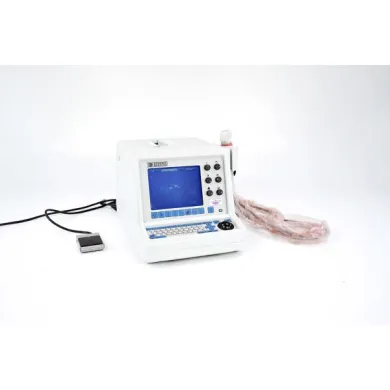

Not the exact instrument you need?
Tell our scientists what you are after. We track it down, including off-market supply.
Showing 1–40 of 2,627 listings
Show 40 more listingsBuying guide
This set spans far more than any single category page, so the price range is wide. Across the catalogue listings run from EUR 1 to EUR 266.971. The low end is consumables and simple handheld instruments, a pulse oximeter probe or a basic Doppler, while the high end is the complex powered equipment: a fully configured anesthesia workstation, a transport ventilator, a networked bank of bedside monitors. The expensive equipment belongs to the treatment and intervention stages, where a device meters drugs, supports breathing, or delivers a shock, and where a failure has immediate consequences. The observation instruments sit lower, and the furniture and lifts spread across the middle.
Condition matters more here than price alone. 92 percent of the listings are used. On a monitor or an infusion pump that has run continuous shifts, readiness is the question: whether the alarms test correctly and the battery holds a charge for transport, because a unit that cannot run off mains during a move is only half the equipment you need. A used defibrillator in particular is bought for the moment it has to work, so its self-test and battery state are what the price should be read against.
Where you have to weigh a used unit against new, the catalogue difference is price: used and refurbished units list below new. Warranty is arranged in consultation for the specific listing rather than set across the board, so check the individual listing for what it carries. Parts can be sourced via Questpair.
Types of Patient Care & Monitoring
This work draws on patient monitors, infusion devices, defibrillators, ventilators and the furniture and lifts that move and position the patient, and it runs as a sequence rather than a shelf of unrelated kit. A patient is assessed, connected to continuous observation, treated, and moved, and the equipment at each stage constrains the one before and after it. The stages below follow that order.
Reading the vital signs continuously
The bedside monitor is the hub of everything else. A multi-parameter unit tracks heart rhythm through ECG leads, oxygen saturation through a pulse oximeter probe, and blood pressure through a cuff or an arterial line, and it holds the thresholds that raise an alarm. Simpler setups split these out: a standalone pulse oximeter for a stable patient, a dedicated ECG or EKG cart for a diagnostic trace, a Doppler for a vascular check. Cardiology work adds cardiac stress systems and the leads that go with them. What matters at this stage is that the monitor reads what the downstream devices need it to read, because a monitor blind to one parameter leaves that parameter unwatched.
Delivering treatment at the bedside
Once the patient is observed, treatment runs through infusion devices that meter fluids and drugs at a controlled rate, fluid warmers that bring those fluids to temperature, and medical respirators or ventilators where breathing is supported. Anesthesia equipment belongs here for the surgical patient. Each of these produces its own alarms, and the ward has to decide whether they stand alone or route into the central monitor. Electrosurgical and cautery units sit alongside for procedures done at the bedside or in theatre.
What happens when a reading crosses the line?
This is the stage the monitoring exists for. A defibrillator has to be charged and within reach, not in a store room, and emergency or rescue kit has to be laid out so staff reach it in seconds. The constraint here runs backward into the first stage: a monitor whose alarms are ignored or badly set defeats the whole arrangement, because the intervention depends on the alarm that triggers it. Readiness is a property of the setup, not of any single box.
How does moving the patient constrain the monitoring?
A patient rarely stays still. Gurneys, patient lifts and medical furniture move and position them, and every move risks a dislodged lead or a disconnected line. Home care and nursing supplies extend the same work beyond the ward. The question each move raises is whether observation continues through it: a transport monitor that keeps reading, or a gap while the patient is between the bed and the scanner. The furniture and the monitor are chosen together for this reason, not separately.
Among the listings that specify a type, patient monitors, defibrillators and infusion devices make up the bulk of what this work carries, with the furniture and lifts behind them.
Frequently asked questions
What equipment do you need at minimum to start monitoring a patient?
The baseline is a way to read oxygen saturation and heart rate continuously, which a pulse oximeter handles alone or a bedside patient monitor handles alongside several other traces. An ECG or EKG unit tracks the electrical rhythm, and a working alarm on whichever instrument you choose is the part that turns a reading into a warning.
Which part of the setup costs the most to put together?
The acting equipment at the acute end sits highest: ventilators, full multi-parameter monitoring stations, and large anaesthesia or electrosurgical consoles. A price near EUR 266.971 is almost always one of those rather than a bedside monitor that has drifted upward.
What can I buy used and what is better bought new?
Gurneys, medical furniture and bedside monitors tend to show age cosmetically while still working, so used is unremarkable there. For defibrillators, ventilators and infusion devices the decision rests on whether the unit has been tested under its real load and whether pads, filters and batteries are current, which is what you confirm on the specific listing rather than assuming from age.
What has to match between the bedside equipment and the transport equipment?
A transport monitor has to hold its own battery charge for the full length of a move, and the cabling has to reach from a bed to a gurney or lift without strain on the lines. A setup that reads cleanly at the bedside can still fail the moment it travels, so the monitor and the moving equipment are chosen as a pair.
Roughly what does a complete setup cost?
Prices across this field run from EUR 1 to EUR 266.971, and a full setup spans the band because it combines cheap single-job instruments with critical-care consoles. The total depends on how far toward the acute end you need to go: a routine bedside watch and a ventilator-plus-monitor acute station sit at opposite ends of that range.
Where does cutting the budget come back to bite you later?
Skimping on the acting equipment is where it shows: a cheap defibrillator that passes a visual check but fails a discharge test reads as present and is not there when called. Expired consumables, pads, filters and batteries, are the other hidden cost, since a unit bought without current stock is not ready until you replace them.
Which of this equipment gets used outside patient monitoring too?
Gurneys, patient lifts and medical furniture serve any stay where a body has to be positioned or moved, not just monitored cases. Infusion devices and ventilators also appear in theatre and intensive care settings, so they rarely belong to one procedure alone.
What should I check on used equipment before buying?
On monitors, oximeters and ECG units, confirm the alarm thresholds and audio still work as set, because that is the part a listing photo cannot show. On defibrillators, ventilators and infusion devices, check whether it has been tested under load, whether the self-test still runs, and whether consumables are current rather than expired; where a part is needed it can be sourced via Questpair, and warranty is arranged in consultation for the specific listing.
About Questpair
Questpair is the European marketplace for lab equipment, where AI-prepared cases and personal specialists guide every purchase. We work with 247 verified suppliers across 38 countries to find buyers the right new, used or refurbished instruments, with response within 1 hour and significant savings vs buying new.
Personal · Fast · Reliable · Affordable