From€800excl. VAT
In stock
Can't find what you're looking for?
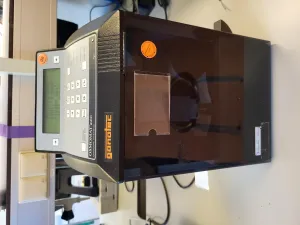
Gonotec OSMOMAT auto cryoscopic osmometer for osmolality testing, with 50 µL samples, automatic 20 sample handling and integrated printer.
The Gonotec OSMOMAT auto cryoscopic osmometer is an automated osmometry instrument for determining the total osmolality of aqueous solutions by freezing point depression. It is used in clinical, pharmaceutical and research laboratories, medical diagnostics, nephrology, urology, veterinary medicine, physiology, hemodialysis and pharmacy applications.
The instrument provides automatic measurement and storage of up to 20 samples in one procedure when complete. An integrated alphanumeric dot matrix printer documents the date, time, sample number and measurement result. The LCD display and menu controlled keypad support guided operation.
The used unit powers on and reaches its operating temperature and cooling state. The sample holder or sample tray for the measuring vessels is missing, so a full measurement test with samples was not performed. The unit is power-on tested and cooling-tested, but not fully function-tested. It is not calibrated and is supplied as pictured. It can be returned if it proves to be malfunctioning in practice.
The Gonotec OSMOMAT auto is a fully automatic cryoscopic osmometer for determining the total osmolality of aqueous solutions. It uses the freezing point depression principle. A Peltier cooling system cools the sample, and crystallization starts automatically through injection of ice crystals. The freezing point is detected electronically and converted into an osmolality result.
The unit is used and has a missing sample holder or sample tray for the measuring vessels. It powers on and reaches the operating temperature and cooling state. A full measurement test was not performed because the sample holder is missing. The unit is not calibrated and is supplied as pictured.
The 50 µL sample volume supports osmolality measurements when only a small aqueous sample quantity is available. The approximately 70 second measuring time per sample and automatic handling of up to 20 samples support sequential osmolality testing in a single procedure when the sample holder is present.
Lab equipment markets are fragmented. Buyers spend weeks calling distributors, comparing quotes, and verifying supplier reliability. Sellers struggle to reach global research labs.
We built Questpair to fix this. Every supplier on the platform is verified before listing. Every quote you receive comes from a real, vetted seller. AI prepares your case in minutes, then a real specialist takes over.
We're an independent team based in The Netherlands, working with research labs and procurement teams across Europe and worldwide.
With a service contract, ten to fifteen years is normal for most benchtop instruments. Detectors and pumps are the parts that wear first.
Often, yes. Verified suppliers frequently work with service partners converting the instrument. If applicable, we can list servicing options alongside the offer.
Ask a scientist through the request button. Parts are often available even when the instrument itself is discontinued.
Two to six weeks, depending on refurbishment scope and whether calibration is included.
We ship to 38 countries. Crating and customs handling are quoted with the instrument.
Tell us what you need and a scientist finds it for you, usually within the hour.
Last updated 6 November 2026
€800 sits in the middle range analytical devices here. The middle half of the 84 with a price runs from €492 to €2,500.