From€527.86excl. VAT
In stock
Can't find what you're looking for?
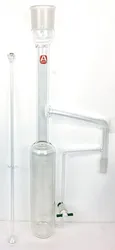
Aldrich Modified Convertible liquid-liquid continuous extractor, 1000 mL borosilicate glass assembly with diffusion tube and PTFE stopcock.
The Aldrich Modified Convertible liquid-liquid continuous extractor is a 1000 mL glass apparatus for continuous solvent extraction and sample preparation.
The assembly includes the large extractor body and a long, thin glass diffusion tube with a plunger adapter. The diffusion tube is used with solvents lighter than water, including ether, hexanes and ethyl acetate. A PTFE stopcock valve assembly supports operation with heavier solvents by allowing pooled solvent to drain back into the boiling flask. The top 45/50 joint accepts heavy-duty high-reflux Allihn or Friedrichs condensers. The bottom return ST/NS 24/40 joint fits a recycling round-bottom solvent reservoir flask. The condensers and reservoir flask are not included.
The unit is used. The extractor is made from Type I Class A borosilicate glass with a chemical-resistant PTFE stopcock valve assembly.
The unit is used.
The diffusion tube and plunger adapter define the light-solvent configuration. They are intended for ether, hexanes and ethyl acetate. They are not intended for chloroform, dichloromethane or other solvents heavier than water.
The stopcock operating position changes with solvent density. It typically remains closed for light solvents because solvent returns through the upper horizontal sidearm overflow. It must remain open for heavy solvents so solvent pooling at the bottom can drain continuously into the boiling flask. The 45/50 and ST/NS 24/40 joints also determine compatibility with the condenser and solvent reservoir flask.
Lab equipment markets are fragmented. Buyers spend weeks calling distributors, comparing quotes, and verifying supplier reliability. Sellers struggle to reach global research labs.
We built Questpair to fix this. Every supplier on the platform is verified before listing. Every quote you receive comes from a real, vetted seller. AI prepares your case in minutes, then a real specialist takes over.
We're an independent team based in The Netherlands, working with research labs and procurement teams across Europe and worldwide.
With a service contract, ten to fifteen years is normal for most benchtop instruments. Detectors and pumps are the parts that wear first.
Often, yes. Verified suppliers frequently work with service partners converting the instrument. If applicable, we can list servicing options alongside the offer.
Ask a scientist through the request button. Parts are often available even when the instrument itself is discontinued.
Two to six weeks, depending on refurbishment scope and whether calibration is included.
We ship to 38 countries. Crating and customs handling are quoted with the instrument.
Tell us what you need and a scientist finds it for you, usually within the hour.
Last updated 28 November 2026
Questpair lists 3,089 similar items in Sample preparation, going up to around €9,500.