53k+ listingsShips to NLResponse within one hour+31 73 711 4717info@questpair.com

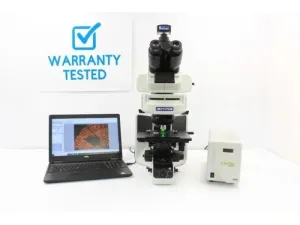
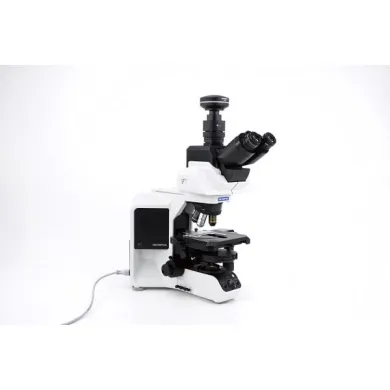
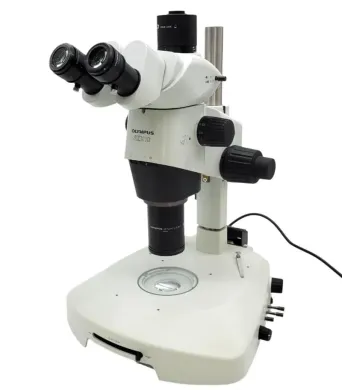
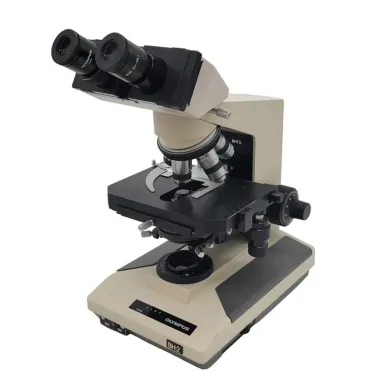
Olympus BX53 Upright Fluorescence Microscope with New Fluorescence Filters

Price on request

In stock

Can't find what you're looking for?

Stock
In Stock
Product Code
SM100209-HALMECH
All 4 specifications
  • Ships to NL
  • Response within 1 hour
  • Warranty available. Buy without worry
  • Support from a scientist

Specifications 4

Brands
Olympus
New/Used
Used
Stock
In Stock
Product Code
SM100209-HALMECH

Pre-Owned

Product description

Modular Olympus BX53 upright fluorescence microscope with EXFO X-Cite lamp, trinocular head, and customizable filter sets.

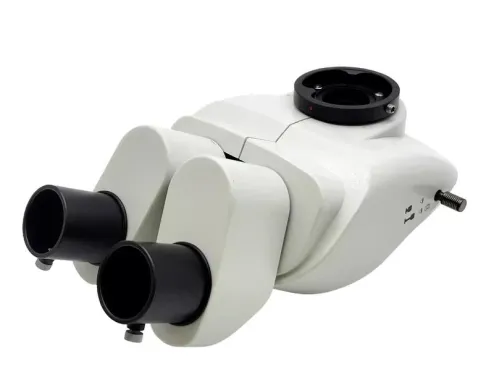
The Olympus BX53 Upright Fluorescence Microscope is a modular research-grade system designed for advanced brightfield and fluorescence imaging of biological and material science samples. It features the BX53F upright microscope base, a U-TTR-2 trinocular head with camera port, and a mechanical 8-position fluorescence light path compatible with multiple filter cubes.

  • Fluorescence Illumination: Equipped with an EXFO X-Cite metal halide lamp, collimating adapter, and liquid light guide providing stable excitation for commonly used fluorochromes.
  • Filter Sets: Includes three new fluorescence filter cubes selectable from DAPI, FITC/EGFP, TRITC/Cy3, Texas Red, and Cy5 sets—critical for multiplex fluorescence imaging in molecular biology and biotechnology workflows.
  • Objectives: Standard 6-position mechanical nosepiece loaded with 4x/0.13, 10x/0.30, and 20x/0.50 UPlanFL objectives, suitable for live-cell imaging and detailed tissue analysis.
  • Brightfield Features: Halogen illumination and mechanical condenser support brightfield microscopy with mechanical XY stage and slide holder.
  • Imaging and Documentation: The trinocular head allows flexible image capture via the included camera port with image acquisition supported by computer software and ImageJ analysis suite.
  • Customizability: The system supports upgrades including additional filter cubes, LED or Xenon light sources, high-end apochromatic objectives, motorized XY stages, and advanced cameras (CCD, sCMOS, EMCCD), enabling adaptation for bioprocessing, gene editing, and synthetic biology research environments.
  • Applications: Widely used for fluorescence labeling in cellular and molecular diagnostics, pharmacological studies, biotechnology applications including gene expression analysis, and educational purposes.
  • Service and Warranty: Fully serviced with preventive maintenance completed, verified for field distortion and fluorescence intensity at the specimen plane; 180-day continental USA warranty and 60-day international warranty included.
  • Special Features: Mechanical fluorescence path, photo port splitting options (100% eyes, 50/50 eyes/camera), and remote microscope training enhance practical laboratory usability.
  • Additional Techniques: Can be configured with phase contrast, DIC, or polarization techniques, supporting diverse contrast methods essential in biomedical engineering and neuroimaging.

This microscope is essential for researchers seeking a reliable, customizable upright fluorescence microscope platform, offering superior optical quality and versatile imaging capabilities critical in biopharmaceutical production pipelines and advanced molecular biology research.

Why Questpair exists

Lab equipment markets are fragmented. Buyers spend weeks calling distributors, comparing quotes, and verifying supplier reliability. Sellers struggle to reach global research labs.

We built Questpair to fix this. Every supplier on the platform is verified before listing. Every quote you receive comes from a real, vetted seller. AI prepares your case in minutes, then a real specialist takes over.

We're an independent team based in The Netherlands, working with research labs and procurement teams across Europe and worldwide.

Frequently asked questions

How long does laboratory equipment typically last?

With a service contract, ten to fifteen years is normal for most benchtop instruments. Detectors and pumps are the parts that wear first.

Can I get service for older equipment?

Often, yes. Verified suppliers frequently work with service partners converting the instrument. If applicable, we can list servicing options alongside the offer.

Where can I buy parts?

Ask a scientist through the request button. Parts are often available even when the instrument itself is discontinued.

What is the typical lead time for refurbished equipment?

Two to six weeks, depending on refurbishment scope and whether calibration is included.

Does laboratory equipment ship internationally?

We ship to 38 countries. Crating and customs handling are quoted with the instrument.

Reply in one hour

Can't find the exact configuration?

Tell us what you need and a scientist finds it for you, usually within the hour.

Last updated 1 November 2026