52k+ listingsShips to NLResponse within one hour+31 73 711 4717info@questpair.com
Procurable · sourced on request

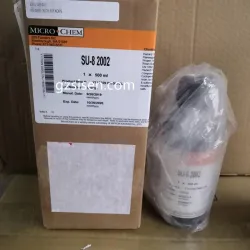
Microchem SU-8

UsedMicrochemPhotolithographyNetherlands
Procurable

Not in stock, available to order through our sourcing team

Not in stock, but we can get it for you

We source this model through our supplier network. Request a quote and we'll come back within one hour.

  1. Request a quote
  2. We confirm price and lead time
  3. You approve, we ship to you
Film Thickness Range
1 µm to over 300 µm
Exposure Wavelength
365 nm
Softening Point (DMA)
210 °C
Thermal Stability in Nitrogen (onset/5% weight loss)
295 °C/327 °C
Thermal Stability in Air (onset/5% weight loss)
279 °C/311 °C
Availability
Procurable
Lead time
Confirmed with your quote
All 19 specifications
  • Ships to NL
  • Response within 1 hour
  • Warranty available. Buy without worry
  • Support from a scientist

Specifications 19

Brands
Microchem
New/Used
Used
Film Thickness Range
1 µm to over 300 µm
Exposure Wavelength
365 nm
Softening Point (DMA)
210 °C
Thermal Stability in Nitrogen (onset/5% weight loss)
295 °C/327 °C
Thermal Stability in Air (onset/5% weight loss)
279 °C/311 °C
Young’s Modulus
2.0 GPa
Coefficient of Thermal Expansion (CTE)
52 ppm/°C
Tensile Strength
60 MPa
Elongation at Break
6.5 %
Thermal Conductivity
0.3 W/m·K
Dielectric Constant (1 GHz, 50% RH)
4.1
Dielectric Loss (1 GHz)
0.015
Dielectric Strength
112 V/µm
Volume Resistivity
2.8 × 10¹⁶ Ω·cm
Surface Resistivity
1.8 × 10¹⁷ Ω·cm
Availability
Procurable
Lead time
Confirmed with your quote

Product description

High-performance epoxy negative photoresist with near-UV sensitivity for high-aspect-ratio microstructures.

Microchem SU-8 31591 is a high-performance, epoxy-based negative photoresist engineered for advanced microfabrication applications. This material is pivotal in creating high-aspect-ratio microstructures with near-vertical sidewalls, essential for various scientific and industrial processes.

Key features:

  • High aspect ratio imaging: Enables the fabrication of structures with aspect ratios exceeding 20:1, crucial for intricate microfabrication.
  • Wide thickness range: Achieves film thicknesses from below 1 µm up to over 300 µm in a single coating, offering versatility for diverse applications.
  • Near-UV sensitivity: Optimised for exposure at 365 nm, facilitating compatibility with standard photolithography equipment.
  • Exceptional chemical and thermal stability: Ensures durability and reliability in harsh processing environments.
  • Excellent dry etch resistance: Provides robustness during etching processes, maintaining structural integrity.

Applications:

  • Microfluidics: Fabrication of channels and components for lab-on-a-chip devices, essential in biotechnology and biomedical research.
  • Microelectromechanical systems (MEMS): Development of sensors and actuators for various technological applications.
  • Bio-MEMS: Creation of biocompatible microstructures for life science applications, including cellular studies and diagnostics.
  • Micro-optics: Production of micro-lenses and optical components for advanced imaging systems.

Commonly used in:

  • University laboratories: Research and development in microfabrication and biotechnology.
  • Biomedical research centres: Development of diagnostic devices and biosensors.
  • Microelectronics industry: Fabrication of semiconductor devices and MEMS components.

Since its commercial introduction in 1996, SU-8 has remained a cornerstone in microfabrication, continually evolving to meet the demands of cutting-edge research and industrial applications.

Why Questpair exists

Lab equipment markets are fragmented. Buyers spend weeks calling distributors, comparing quotes, and verifying supplier reliability. Sellers struggle to reach global research labs.

We built Questpair to fix this. Every supplier on the platform is verified before listing. Every quote you receive comes from a real, vetted seller. AI prepares your case in minutes, then a real specialist takes over.

We're an independent team based in The Netherlands, working with research labs and procurement teams across Europe and worldwide.

Frequently asked questions

How long does laboratory equipment typically last?

With a service contract, ten to fifteen years is normal for most benchtop instruments. Detectors and pumps are the parts that wear first.

Can I get service for older equipment?

Often, yes. Verified suppliers frequently work with service partners converting the instrument. If applicable, we can list servicing options alongside the offer.

Where can I buy parts?

Ask a scientist through the request button. Parts are often available even when the instrument itself is discontinued.

What is the typical lead time for refurbished equipment?

Two to six weeks, depending on refurbishment scope and whether calibration is included.

Does laboratory equipment ship internationally?

We ship to 38 countries. Crating and customs handling are quoted with the instrument.

Reply in one hour

Can't find the exact configuration?

Tell us what you need and a scientist finds it for you, usually within the hour.

Last updated 8 November 2026