Price on request
In stock
Can't find what you're looking for?
Pre-Owned
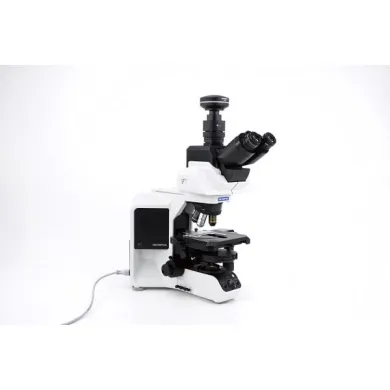
High-precision Olympus IX83 motorized inverted fluorescence microscope with LED illumination, phase contrast, and ZDC drift compensation.
The Olympus IX83 Motorized Inverted LED Fluorescence Phase Contrast Microscope integrates advanced automation and optical capabilities to support diverse imaging applications in biotechnology, molecular diagnostics, and cell biology research. Featuring a motorized inverted microscope base with an LED-based Lumencor Aura 4 fluorescence light source, this system provides versatile illumination modes including brightfield, fluorescence, and phase contrast microscopy.
Key technical specifications include:
The system supports seamless switching among illumination modes and automatic light source intensity control, increasing efficiency in fluorescence assays and immunolocalization studies. Optional upgrades include differential interference contrast (DIC), polarization components, and advanced CCD/sCMOS/EMCCD cameras for enhanced sensitivity and resolution suitable for high-throughput biomanufacturing quality control and cancer research.
This microscope configuration is extensively serviced with preventive maintenance, backed by warranty and remote training, making it a reliable platform widely used in molecular biology, neuroimaging, stem cell research, and clinical diagnostics. Its modular design allows customization to reflect specific laboratory needs, including expanded fluorescence filter sets and objectives, supporting versatile applications such as organoid development, drug screening, and microbiology.
The Olympus IX83 microscope excels in delivering stable, high-resolution imaging with motorized automation, facilitating complex experimental protocols in biotechnology and life sciences research.
Lab equipment markets are fragmented. Buyers spend weeks calling distributors, comparing quotes, and verifying supplier reliability. Sellers struggle to reach global research labs.
We built Questpair to fix this. Every supplier on the platform is verified before listing. Every quote you receive comes from a real, vetted seller. AI prepares your case in minutes, then a real specialist takes over.
We're an independent team based in The Netherlands, working with research labs and procurement teams across Europe and worldwide.
With a service contract, ten to fifteen years is normal for most benchtop instruments. Detectors and pumps are the parts that wear first.
Often, yes. Verified suppliers frequently work with service partners converting the instrument. If applicable, we can list servicing options alongside the offer.
Ask a scientist through the request button. Parts are often available even when the instrument itself is discontinued.
Two to six weeks, depending on refurbishment scope and whether calibration is included.
We ship to 38 countries. Crating and customs handling are quoted with the instrument.
Tell us what you need and a scientist finds it for you, usually within the hour.
Last updated 18 November 2026
Questpair lists 3,380 similar items in Microscope accessories, going up to around €6,500.