58k+ listingsShips to NLResponse within one hour+31 73 711 4717info@questpair.com

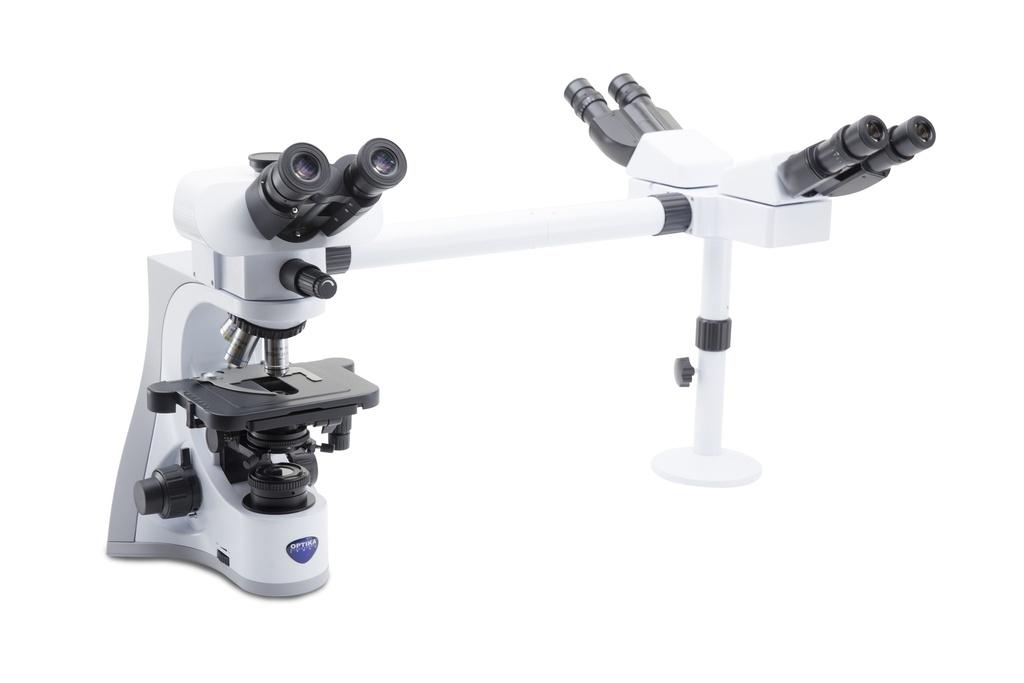
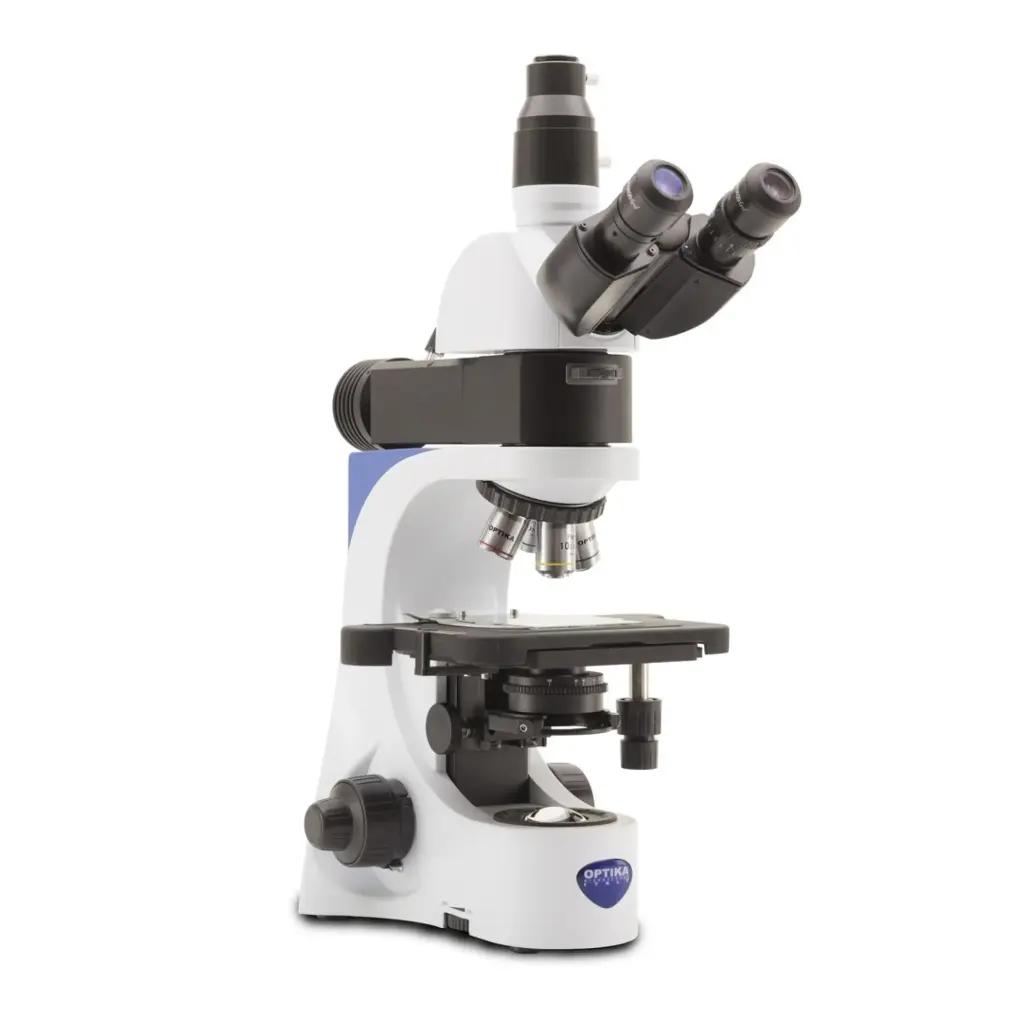
B-510 Trinocular Polarizing Microscope with Incident & Transmitted Koehler Illumination, 500x Magnification

NewMicroscopesUnited States

€8,883.23excl. VAT

In stock

Can't find what you're looking for?

New/Used
New
  • Ships to NL
  • Response within 1 hour
  • Warranty available. Buy without worry
  • Support from a scientist

Product description

Polarizing trinocular microscope with 500x magnification, incident/transmitted Koehler illumination, and IOS PLAN LWD POL objectives.

The B-510 Trinocular Polarizing Microscope is designed for advanced microscopy applications in *biotechnology, molecular diagnostics,* and *materials research*. It features versatile observation modes including brightfield, transmitted and incident polarized light, and conoscopy for detailed birefringence and phase analysis.

Key technical specifications include:

  • Illumination System:
  • Incident light via X-LED8 with white 8 W LED (6300 K) and brightness control, incorporating a polarizer, rotating analyzer (0°–90° graduated scale), aperture, and field diaphragms.
  • Transmitted light using Full Koehler illumination powered by X-LED³ white 3.6 W LED (6300 K) with brightness control.
  • Optical Components:
  • Strain-free IOS LWD W-PLAN POL objectives at 5x/0.12, 10x/0.25, 20x/0.40, and 50x/0.75 magnifications, all anti-fungus treated to support long-term use in humid lab environments.
  • Bertrand lens for conoscopic/orthoscopic observations with swing-out design and centering mechanism.
  • Tint plates (1st order red λ, λ/4, Quartz wedge) support detailed polarization studies vital in *synthetic biology* and *bioprocess monitoring*.
  • Ergonomics and Mechanics:
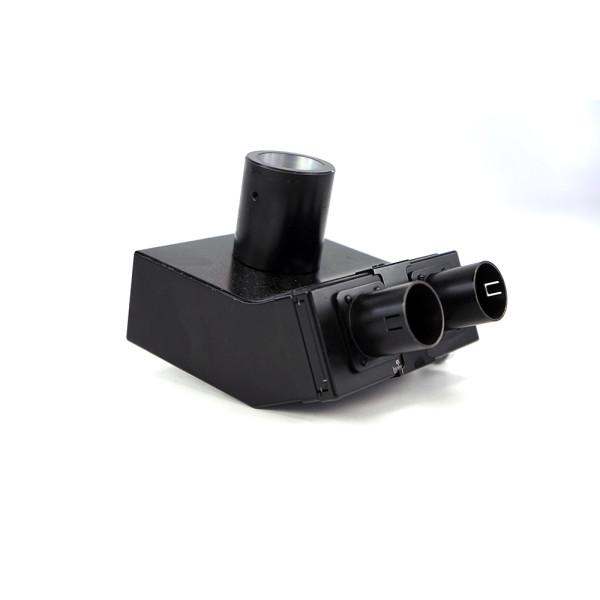
  • Trinocular head with fixed 50/50 light split, angled 30° and rotatable 360° for flexible eyepiece and camera use.
  • Adjustable interpupillary distance (50–75 mm) with dioptric adjustment on the left eyepiece.
  • Quadruple revolving nosepiece on ball bearings ensures precise objective centering.
  • Rotatable specimen stage (145 mm diameter) with locking mechanism and 0.1 mm vernier scale accuracy for precise sample positioning during *cell imaging* and *molecular cloning workflows*.
  • Coaxial coarse and fine focus system with adjustable tension and contact limit stop to protect specimens and optics.
  • Condenser:
  • Swing-out condenser with Numerical Aperture 0.2/0.9, iris diaphragm, focusable and centerable with rotating polarizing filter, supporting enhanced contrast and resolution in *live-cell imaging* and *fluorescence analysis*.

This microscope's comprehensive polarized light features and high-quality optics make it essential for advanced biomedical engineering, clinical diagnostics, and biopharmaceutical production pipelines. The trinocular configuration facilitates simultaneous observation and digital imaging, supporting modern documentation and analysis workflows in research and quality control laboratories.

Why Questpair exists

Lab equipment markets are fragmented. Buyers spend weeks calling distributors, comparing quotes, and verifying supplier reliability. Sellers struggle to reach global research labs.

We built Questpair to fix this. Every supplier on the platform is verified before listing. Every quote you receive comes from a real, vetted seller. AI prepares your case in minutes, then a real specialist takes over.

We're an independent team based in The Netherlands, working with research labs and procurement teams across Europe and worldwide.

Frequently asked questions

How long does laboratory equipment typically last?

With a service contract, ten to fifteen years is normal for most benchtop instruments. Detectors and pumps are the parts that wear first.

Can I get service for older equipment?

Yes. Every verified supplier states which service partners cover the instrument, and we list that alongside the offer.

Where can I buy parts?

Ask a scientist through the request button. Parts are often available even when the instrument itself is discontinued.

What is the typical lead time for refurbished equipment?

Two to six weeks, depending on refurbishment scope and whether calibration is included.

Does laboratory equipment ship internationally?

We ship to 38 countries. Crating and customs handling are quoted with the instrument.

Reply in one hour

Can't find the exact configuration?

Tell us what you need and a scientist finds it for you, usually within the hour.

Last updated 19 October 2026