From€1,307.9excl. VAT
In stock
Can't find what you're looking for?
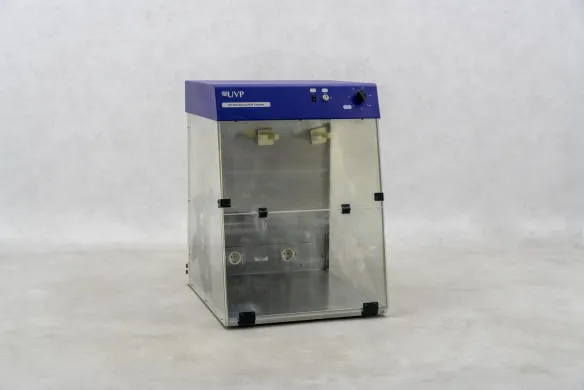
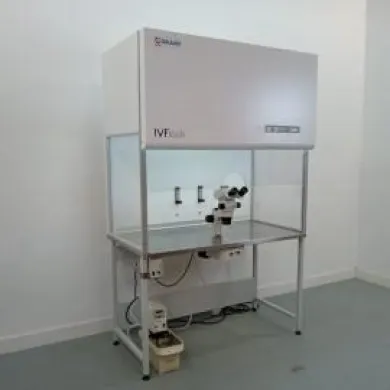
HEPA-filtered PCR cabinet with antimicrobial stainless steel, UV irradiation (non-functional), and laminar airflow for contamination control.
The UVP UV3 Hepa PCR Cabinet Model 95-0434-01 is a specialized PCR workstation designed to provide a controlled and contamination-reduced environment for molecular biology workflows such as PCR amplification and gene editing. This unit features a four-stage HEPA filter system including pre-filter, carbon filter, HEPA filter, and a ZerOzone catalyst grid, delivering 99.99% filtration efficiency of particles ≥0.3 microns. The cabinet incorporates antimicrobial coated stainless steel surfaces to minimize microbial contamination and leverages positive pressure laminar airflow to maintain a sterile workspace critical in biotechnology and molecular diagnostics.
Although the built-in 254 nm shortwave UV irradiation system is currently non-operational, the cabinet design includes a UV/air recirculating system intended for additional sterilization in gene editing and synthetic biology applications. The interior dimensions measure approximately 19.7 x 21.4 inches (500 x 544 mm), accommodating typical PCR workflows. The unit also includes two removable shelves, side access with a slide-out design for ease of use and maintenance, and built-in power outlets suitable for powering laboratory instruments.
Ideal for laboratories focusing on molecular cloning, clinical diagnostics, and bioprocessing, this PCR cabinet supports contamination control essential in advanced synthetic biology and biomanufacturing research pipelines. Although sold AS-IS due to UV non-functionality, it retains valuable electrical components and robust filtration systems, making it a candidate for refurbishment or parts recovery in specialized biotechnology labs.
Primary keywords such as “PCR workstation,” “HEPA filtration,” and “laminar flow cabinet” are integrated naturally, along with biotechnology-specific phrases like “molecular diagnostics,” “gene editing,” and “bioprocessing contamination control.” This cabinet is widely used in biomedical engineering and synthetic biology research environments where stringent contamination barriers are critical.
Lab equipment markets are fragmented. Buyers spend weeks calling distributors, comparing quotes, and verifying supplier reliability. Sellers struggle to reach global research labs.
We built Questpair to fix this. Every supplier on the platform is verified before listing. Every quote you receive comes from a real, vetted seller. AI prepares your case in minutes, then a real specialist takes over.
We're an independent team based in The Netherlands, working with research labs and procurement teams across Europe and worldwide.
With a service contract, ten to fifteen years is normal for most benchtop instruments. Detectors and pumps are the parts that wear first.
Often, yes. Verified suppliers frequently work with service partners converting the instrument. If applicable, we can list servicing options alongside the offer.
Ask a scientist through the request button. Parts are often available even when the instrument itself is discontinued.
Two to six weeks, depending on refurbishment scope and whether calibration is included.
We ship to 38 countries. Crating and customs handling are quoted with the instrument.
Tell us what you need and a scientist finds it for you, usually within the hour.
Last updated 4 November 2026
€1,308 sits in the middle range biological safety cabinets here.