Price on request
In stock
Can't find what you're looking for?
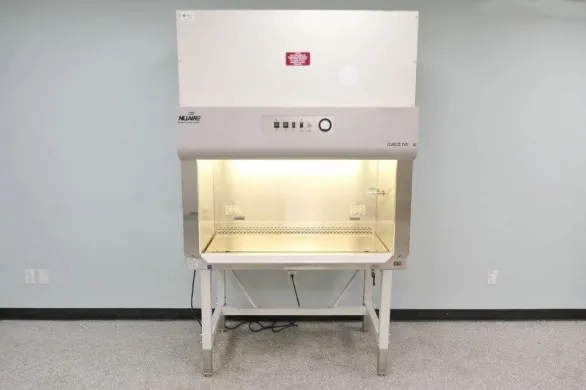
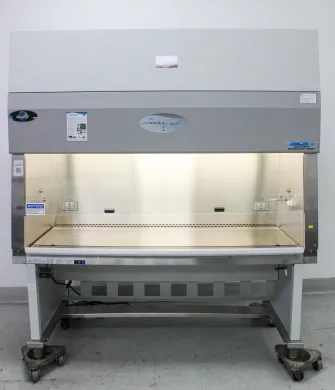
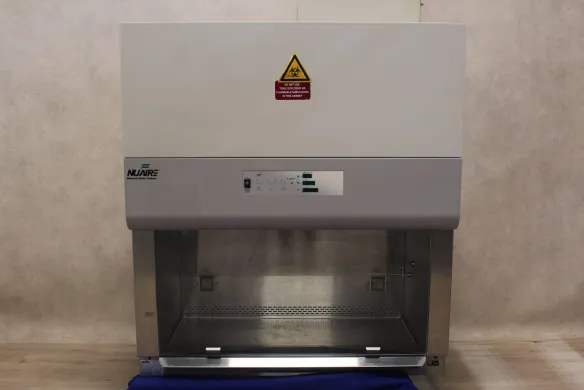
6ft NuAire Class II A/B3 biosafety cabinet with HEPA filtration, ergonomic design, and 30% exhaust for molecular diagnostics.
The NuAire LabGard NU-425-600 Class II A/B3 Biological Safety Cabinet is engineered for laboratory safety and optimal ergonomics, providing a controlled environment essential for molecular diagnostics, bioprocessing, and synthetic biology workflows. Constructed from 16 gauge stainless steel, this 6-foot biosafety hood features a monolithic all-welded cabinet with a pressure-tight design, ensuring containment and durability in biomedical and biopharmaceutical applications.
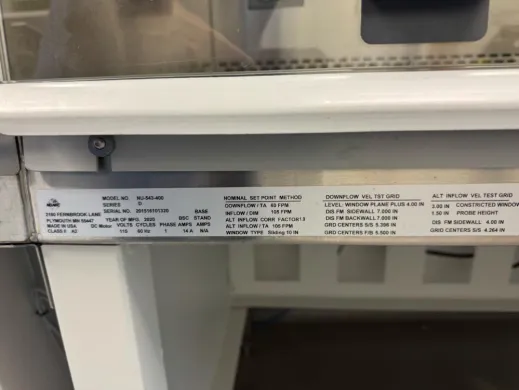
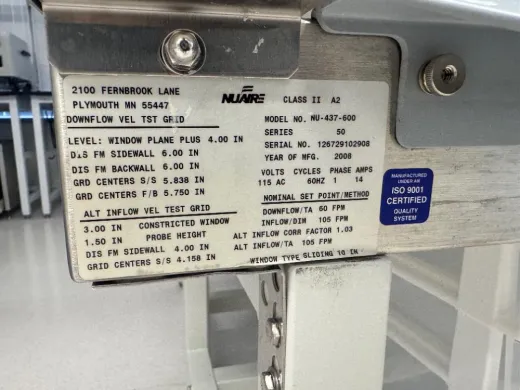
Key technical specifications include:
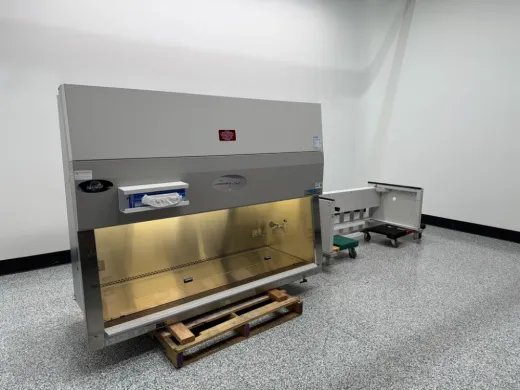
The unit includes a motor voltage regulator, audible window alarm, minihelic pressure gauge, and switches controlling exterior-mounted fluorescent and ultraviolet lights, enhancing safety and usability during extended operations in clinical diagnostics and biomanufacturing environments. Additional built-in services comprise two back-wall duplex outlets, a gas valve coupling, and a blower motor switch.
Ergonomic enhancements minimize fatigue during prolonged use by providing maximum knee and thigh clearance, an adjustable base stand, heavy-duty armrests, and cool white glare-free lighting—attributes particularly valued in cell culture and neuroscience research laboratories.
This biosafety cabinet is widely adopted in synthetic biology research and critical in biopharmaceutical production pipelines, offering reliable protection for low to minimal risk biological agents without volatile toxic chemical presence. The robust HEPA filtration system supports contamination control, making it essential for molecular cloning workflows and live-cell imaging applications.
Maintenance includes hydrogen peroxide decontamination compatibility, with HEPA filters available for replacement to meet validation and certification standards required in regulated lab environments.
This NuAire biosafety cabinet provides a technically advanced, energy-efficient containment solution tailored for biotechnology professionals requiring consistent pathogen containment and environmental control.
Lab equipment markets are fragmented. Buyers spend weeks calling distributors, comparing quotes, and verifying supplier reliability. Sellers struggle to reach global research labs.
We built Questpair to fix this. Every supplier on the platform is verified before listing. Every quote you receive comes from a real, vetted seller. AI prepares your case in minutes, then a real specialist takes over.
We're an independent team based in The Netherlands, working with research labs and procurement teams across Europe and worldwide.
With a service contract, ten to fifteen years is normal for most benchtop instruments. Detectors and pumps are the parts that wear first.
Often, yes. Verified suppliers frequently work with service partners converting the instrument. If applicable, we can list servicing options alongside the offer.
Ask a scientist through the request button. Parts are often available even when the instrument itself is discontinued.
Two to six weeks, depending on refurbishment scope and whether calibration is included.
We ship to 38 countries. Crating and customs handling are quoted with the instrument.
Tell us what you need and a scientist finds it for you, usually within the hour.
Last updated 4 September 2026