58k+ listingsShips to NLResponse within one hour+31 73 711 4717info@questpair.com

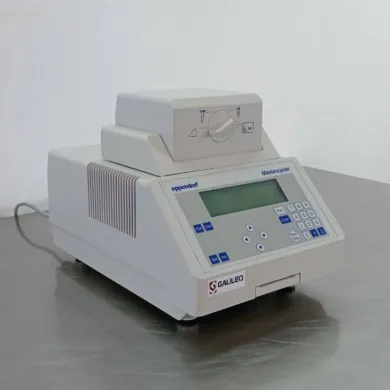
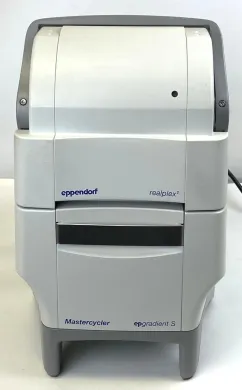
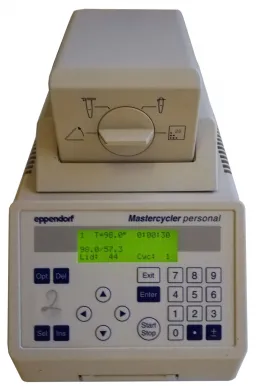
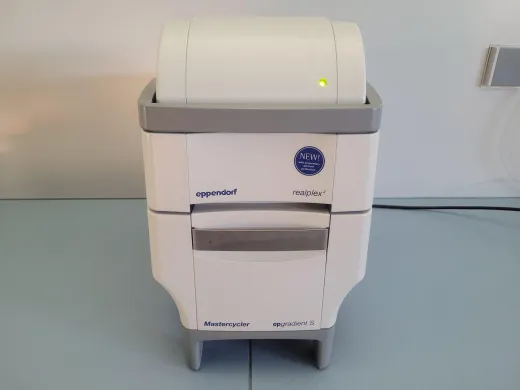
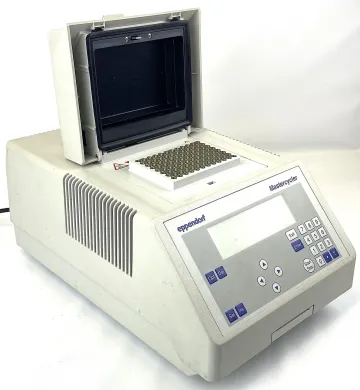
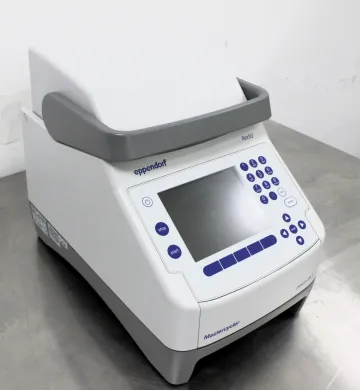
Eppendorf Mastercycler Pro S Mini Satellite Thermal Cycler System with Gradient and Vapo.protect Technology

UsedEppendorfPCR equipmentUnited States

Price on request

In stock

Can't find what you're looking for?

Thermoblock
Silver
Temperature control range of the block
4 – 99 °C
Temperature Uniformity
≤±0.4°C at 95°C
Temperature control mode
Fast, Standard, Safe
Heating technology
Peltier elements, Triple Circuit Technology
All 20 specifications
  • Ships to NL
  • Response within 1 hour
  • Warranty available. Buy without worry
  • Support from a scientist

Specifications 20

Brands
Eppendorf
New/Used
Used
Thermoblock
Silver
Temperature control range of the block
4 – 99 °C
Temperature Uniformity
≤±0.4°C at 95°C
Temperature control mode
Fast, Standard, Safe
Heating technology
Peltier elements, Triple Circuit Technology
Sample capacity
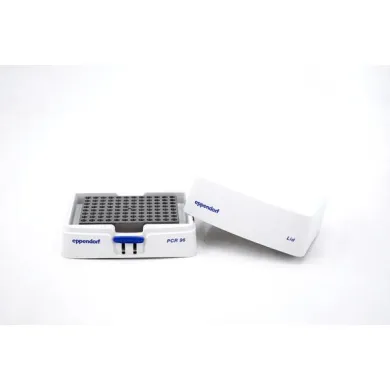
96 x 0.2mL PCR tubes or 1 PCR plate 8 x 12 (unskirted, semi skirted, skirted,SBS standard)
Gradient range
1 – 24 °C
Gradient temperature range
30 – 99 °C
Lid temperature range
37 – 110 °C
Block homogeneity
@20–72 °C ±0.3 °C
Block temperature accuracy
±0.2 °C
Heating rate
6 °C/s 1
Cooling rate
4.5 °C/s 1
Interfaces
1 × Centronics, 1 × RS-232, USB at Control Panel, one each of CAN_in/CAN_out
Total weight
40 lbs each ~125 lbs with 3 units and controller
Power supply
115/130V, 50/60Hz
Max. power consumption
950 W each unit
Dimensions
Each unit has a compact footprint of approximately 10 × 22 × 15 inches. When installed together as a satellite system, the total bench width is about 3 feet.

Product description

Modular Eppendorf Mastercycler Pro S Mini Satellite thermal cycler system with fast ramp rates, gradient control, and vapor protection.

The Eppendorf Mastercycler Pro S Mini-Satellite System is a high-performance thermal cycler designed for advanced PCR workflows, especially in molecular diagnostics, biotechnology, and synthetic biology research requiring flexible and scalable throughput. This modular system comprises three daisy-chained thermal cycler units controlled by a single Eppendorf 6320 Mastercycler controller, enabling asynchronous high-throughput PCR with independent protocol execution across satellites.

Key technical features include:

  • Silver block technology supports fast ramp rates of heating at up to 6 °C/s and cooling at 4.5 °C/s, optimizing cycling speed critical in gene editing and bioprocessing workflows.
  • Gradient PCR capability over a 1–24 °C range on 12 rows facilitates precise temperature optimization across samples, essential for complex molecular cloning and sequence variant analysis.
  • The vapo.protect lid system minimizes sample evaporation, advantageous for low reaction volumes common in biopharmaceutical production pipelines.
  • Temperature control precision: block uniformity ≤±0.4 °C at 95 °C, block temperature accuracy ±0.2 °C, ensuring reproducible results in clinical diagnostics and cell imaging sample preparation.
  • Flexible operation modes: stand-alone, mini-satellite, or fully networked PC-controlled daisy-chain systems, supporting scalable laboratory setups focusing on biomanufacturing research.
  • User-friendly graphical interface with intuitive gradient programming, suitable for both routine PCR assays and advanced protocols.

Specifications:

  • Sample capacity: 96 x 0.2 mL PCR tubes or one 96-well PCR plate (SBS standard)
  • Temperature control range: 4 – 99 °C
  • Lid temperature range: 37 – 110 °C with integrated thermal protection
  • Interfaces: Centronics, RS-232, USB, CAN_in/out for seamless connectivity
  • Dimensions per unit approx. 10 × 22 × 15 in; total bench width ~3 ft for full system
  • Power: 115/130V, 50/60Hz; max consumption 950W per unit

The Mastercycler Pro S Mini Satellite system is widely used in biotechnology laboratories for its fast cycling times, scalable throughput in molecular biology research, and superior evaporation control, making it a critical instrument in molecular diagnostics and synthetic biology applications. Its modular architecture supports expanding bioprocessing demands while maintaining precise thermal control and robust data connectivity for integrated laboratory automation.

Why Questpair exists

Lab equipment markets are fragmented. Buyers spend weeks calling distributors, comparing quotes, and verifying supplier reliability. Sellers struggle to reach global research labs.

We built Questpair to fix this. Every supplier on the platform is verified before listing. Every quote you receive comes from a real, vetted seller. AI prepares your case in minutes, then a real specialist takes over.

We're an independent team based in The Netherlands, working with research labs and procurement teams across Europe and worldwide.

Frequently asked questions

How long does laboratory equipment typically last?

With a service contract, ten to fifteen years is normal for most benchtop instruments. Detectors and pumps are the parts that wear first.

Can I get service for older equipment?

Often, yes. Verified suppliers frequently work with service partners converting the instrument. If applicable, we can list servicing options alongside the offer.

Where can I buy parts?

Ask a scientist through the request button. Parts are often available even when the instrument itself is discontinued.

What is the typical lead time for refurbished equipment?

Two to six weeks, depending on refurbishment scope and whether calibration is included.

Does laboratory equipment ship internationally?

We ship to 38 countries. Crating and customs handling are quoted with the instrument.

Reply in one hour

Can't find the exact configuration?

Tell us what you need and a scientist finds it for you, usually within the hour.

Last updated 22 October 2026