53k+ listingsShips to NLResponse within one hour+31 73 711 4717info@questpair.com

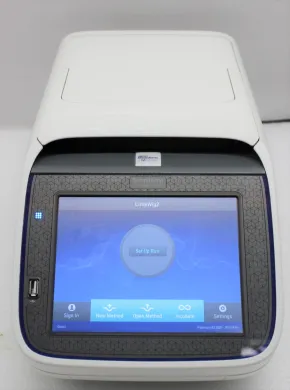
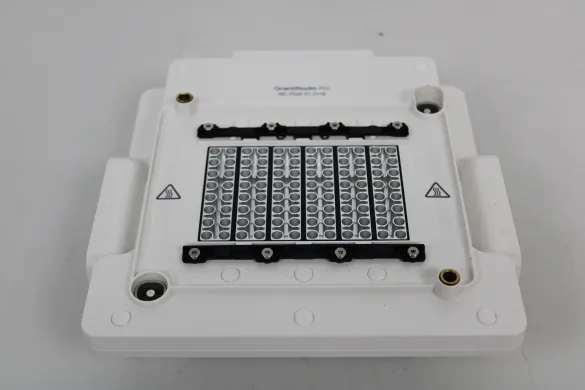
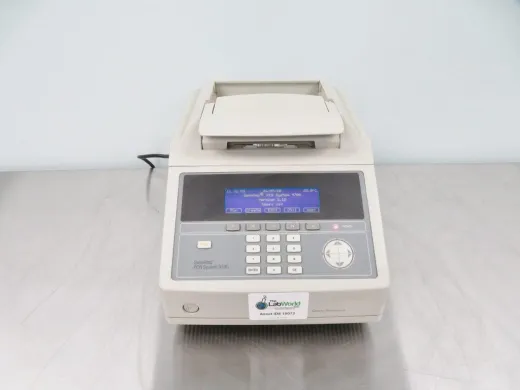
Applied Biosystems StepOne Real-Time PCR System for qPCR and Genotyping

Price on request

In stock

Can't find what you're looking for?

Format
48-well Plate, 0.1 ml Tubes
Reaction volume Range
10-30 µl (Standard curve experiments: 40 µl in standard mode is validated)
Optics
LED, 3 emission filters, and photodiode
Reaction Speed
Fast, Standard
Detection Method
SYBR, Primer-Probe Detection
All 19 specifications
  • Ships to NL
  • Response within 1 hour
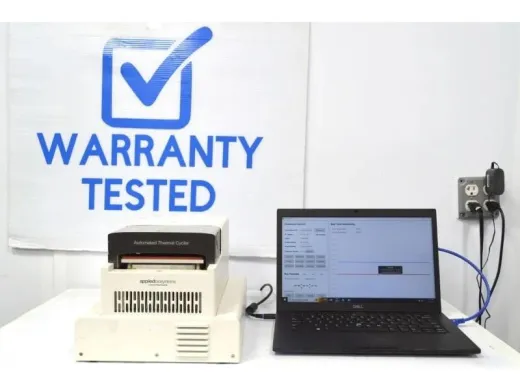
  • Warranty available. Buy without worry
  • Support from a scientist

Specifications 19

Brands
Applied Biosystems
New/Used
Used
Format
48-well Plate, 0.1 ml Tubes
Reaction volume Range
10-30 µl (Standard curve experiments: 40 µl in standard mode is validated)
Optics
LED, 3 emission filters, and photodiode
Reaction Speed
Fast, Standard
Detection Method
SYBR, Primer-Probe Detection
Fast Block
Yes
Run Time
<2 hrs⁄run (Standard Mode), <40 min⁄run (Fast Mode)
High-throughput Compatibility
Multiplexing
Dynamic Range
9 logs of linear dynamic range
Sensitivity
1 copy
Temperature Range
4-100°C
Temperature Uniformity
0.25°C (35 to 95°C) of setpoint/display temperature
Thermal Cycling System
Peltier-based System
Peak Block Ramp Rate
4.6°C⁄s
Power
115V 50/60Hz
Dimensions (W x D x H)
10x19x21”
Weight
45 lbs

Product description

Fast, precise 48-well real-time PCR with LED optics, multiplexing, and SNP genotyping for molecular diagnostics.

The Applied Biosystems StepOne Real-Time PCR System is a _quantitative PCR (qPCR)_ instrument designed for robust amplification and real-time fluorescence detection. Featuring a 48-well format and capable of processing reaction volumes from 10–30 µL, this system supports both standard and fast PCR protocols with run times under 2 hours (standard) and 40 minutes (fast mode).

Key technical features include:

  • LED-based optical system with 3 emission filters and photodiode detection optimized for TaqMan probe-based assays (FAM, VIC) and SYBR Green dye chemistries.
  • Peltier thermal cycling with a temperature range of 4–100°C, excellent uniformity of ±0.25°C, and rapid ramp rate of 4.6°C/s enables precise temperature control essential for PCR fidelity.
  • Support for automated SNP genotype calling, melt curve analysis, and multiplex assays, making it an ideal platform for molecular diagnostics, gene expression profiling, and genotyping workflows.
  • Intuitive touchscreen GUI and integrated Design Wizard assist in method setup, facilitating customization of experimental parameters including ramp speeds and quantitation methods.
  • PC compatibility with StepOne software allows advanced multi-plot data analysis and export to Excel or PowerPoint, supporting bioinformatics workflows in biotechnology and biomedical research.
  • Compact footprint (10 x 19 x 21 inches), weighing 45 lbs, suitable for benchtop use in clinical and research laboratories.

This system's high sensitivity, able to detect down to 1 copy, and a dynamic range spanning 9 logs, make it indispensable for applications including molecular cloning, synthetic biology, bioprocessing, and molecular diagnostics. The StepOne Real-Time PCR System is widely adopted in biotechnology research fields requiring quantitative gene expression analysis and precise genotyping, contributing to advanced biomanufacturing and gene editing projects.

Why Questpair exists

Lab equipment markets are fragmented. Buyers spend weeks calling distributors, comparing quotes, and verifying supplier reliability. Sellers struggle to reach global research labs.

We built Questpair to fix this. Every supplier on the platform is verified before listing. Every quote you receive comes from a real, vetted seller. AI prepares your case in minutes, then a real specialist takes over.

We're an independent team based in The Netherlands, working with research labs and procurement teams across Europe and worldwide.

Frequently asked questions

How long does laboratory equipment typically last?

With a service contract, ten to fifteen years is normal for most benchtop instruments. Detectors and pumps are the parts that wear first.

Can I get service for older equipment?

Often, yes. Verified suppliers frequently work with service partners converting the instrument. If applicable, we can list servicing options alongside the offer.

Where can I buy parts?

Ask a scientist through the request button. Parts are often available even when the instrument itself is discontinued.

What is the typical lead time for refurbished equipment?

Two to six weeks, depending on refurbishment scope and whether calibration is included.

Does laboratory equipment ship internationally?

We ship to 38 countries. Crating and customs handling are quoted with the instrument.

Reply in one hour

Can't find the exact configuration?

Tell us what you need and a scientist finds it for you, usually within the hour.

Last updated 4 November 2026