58k+ listingsShips to NLResponse within one hour+31 73 711 4717info@questpair.com

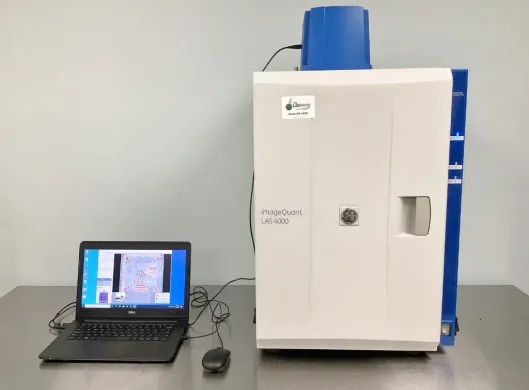
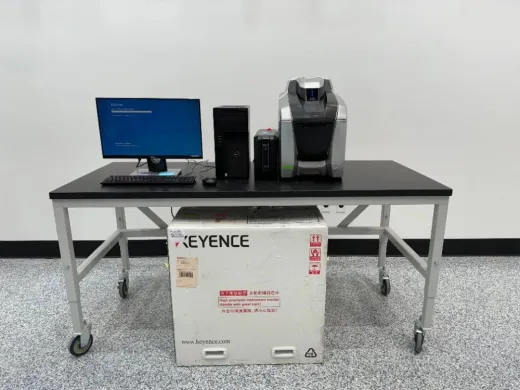
GE ImageQuant LAS-4000 Multi-Mode Luminescent Imager for Gel and Membrane Analysis

UsedGEImmunofluorescenceUnited States

Price on request

In stock

Can't find what you're looking for?

Lens
High-sensitivity lens F0.85 43 mm
Cooling
Two-stage thermoelectric module with air circulation
Cooling temperature
-25°C
Dynamic Range
4 orders of maagnitude
Focusing and aperture
Automatic, remote operation
All 19 specifications
  • Ships to NL
  • Response within 1 hour
  • Warranty available. Buy without worry
  • Support from a scientist

Specifications 19

Brands
GE
New/Used
Used
Lens
High-sensitivity lens F0.85 43 mm
Cooling
Two-stage thermoelectric module with air circulation
Cooling temperature
-25°C
Dynamic Range
4 orders of maagnitude
Focusing and aperture
Automatic, remote operation
Capture modes
Automatic, manual (normal/incremental/repetitive/program)
Exposure time
1/100 s to 2 h (Images can be continuously exposed for up to 30 hours using ImageQuant LAS 4000 Control Software.)
Shading correction Software system
Image quality correction
Binning, smoothing
Binning modes
1 × 2, 2 × 4, 4 × 8, 8 × 16
Maximum sample size
210 x 140 mm with F0.85 43 mm lens
Environmental Tolerances
15°C to 28°C, Humidity 30% to 70% (no condensation)
Interface
USB 2.0
Dimensions
21x20x35”
Internal Dimensions
13x12x10”
Weight
150 lbs total
Electrical
100-240V, 50/60Hz, 3.0-1.5A

Product description

High-sensitivity GE ImageQuant LAS-4000 multimode imager for chemiluminescence, UV fluorescence, and gel documentation.

The GE ImageQuant LAS-4000 Multi-Mode Imager is a versatile luminescent image analyzer designed for sensitive digital imaging of gels, membranes, and films in molecular biology and biotechnology research. Ideal for chemiluminescence detection, UV fluorescence analysis, and biomolecular imaging, it supports a wide range of bioprocessing and molecular diagnostics workflows.

Key technical features include:

  • High-sensitivity F0.85 43 mm lens with a large 21 × 14 cm field of view capturing images at 6.3-megapixel resolution through an innovative diagonal pixel configuration
  • Cooled CCD camera operating down to -25°C (max -35°C) providing extended exposure times up to 30 hours with reduced background noise, essential for quantifying weak signals in biopharmaceutical production pipelines
  • Wide dynamic range spanning four orders of magnitude, enabling precise quantitation of weak and strong signals without multiple film exposures
  • Flexible automatic and manual capture modes including incremental, repetitive, and programmed exposure sequences, enhancing control for fluorescence and chemiluminescence imaging
  • Modular design featuring a dark box, high sensitivity lens, cooled camera, and five-position filter wheel allowing quick switching of lighting conditions using epi or trans illumination setups
  • Integration of shading correction and image quality enhancement software with binning options (1×2, 2×4, 4×8, 8×16) for optimized image clarity
  • Remote automatic focusing and iris control for streamlined operation without opening the cabinet

This system is widely used in synthetic biology research, molecular cloning, and clinical diagnostics environments requiring robust quantitative imaging of fluorescent and chemiluminescent assays. Users should note that an EPI trans tray (sold separately) is required for optimal use of Epi White illumination.

The ImageQuant LAS-4000 supports USB 2.0 interface for data transfer and operates within environmental conditions of 15°C to 28°C and 30% to 70% relative humidity without condensation. The unit measures 21×20×35 inches and weighs 150 lbs, powered by 100-240V, 50/60Hz electrical input.

This biomolecular imager is critical in live-cell imaging, fluorescence analysis, and gene editing applications, making it a trusted tool among researchers focusing on molecular diagnostics and biomanufacturing.

Why Questpair exists

Lab equipment markets are fragmented. Buyers spend weeks calling distributors, comparing quotes, and verifying supplier reliability. Sellers struggle to reach global research labs.

We built Questpair to fix this. Every supplier on the platform is verified before listing. Every quote you receive comes from a real, vetted seller. AI prepares your case in minutes, then a real specialist takes over.

We're an independent team based in The Netherlands, working with research labs and procurement teams across Europe and worldwide.

Frequently asked questions

How long does laboratory equipment typically last?

With a service contract, ten to fifteen years is normal for most benchtop instruments. Detectors and pumps are the parts that wear first.

Can I get service for older equipment?

Often, yes. Verified suppliers frequently work with service partners converting the instrument. If applicable, we can list servicing options alongside the offer.

Where can I buy parts?

Ask a scientist through the request button. Parts are often available even when the instrument itself is discontinued.

What is the typical lead time for refurbished equipment?

Two to six weeks, depending on refurbishment scope and whether calibration is included.

Does laboratory equipment ship internationally?

We ship to 38 countries. Crating and customs handling are quoted with the instrument.

Reply in one hour

Can't find the exact configuration?

Tell us what you need and a scientist finds it for you, usually within the hour.

Last updated 8 June 2026