52k+ listingsShips to NLResponse within one hour+31 73 711 4717info@questpair.com
Procurable · sourced on request

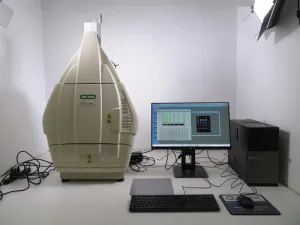
Bio-Rad ChemiDoc XRS+ System

UsedBio-RadWestern blottingNetherlands
Procurable

Not in stock, available to order through our sourcing team

Not in stock, but we can get it for you

We source this model through our supplier network. Request a quote and we'll come back within one hour.

  1. Request a quote
  2. We confirm price and lead time
  3. You approve, we ship to you
Maximum sample size
28 x 36 cm
Maximum image area
26 x 35 cm
Detector type
Supercooled CCD
Pixel size
6.45 x 6.45 µm
Filter selector positions
3 positions (2 for filters, 1 without filter for chemiluminescence)
Availability
Procurable
Lead time
Confirmed with your quote
All 27 specifications
  • Ships to NL
  • Response within 1 hour
  • Warranty available. Buy without worry
  • Support from a scientist

Specifications 27

Brands
Bio-Rad
New/Used
Used
Maximum sample size
28 x 36 cm
Maximum image area
26 x 35 cm
Detector type
Supercooled CCD
Pixel size
6.45 x 6.45 µm
Filter selector positions
3 positions (2 for filters, 1 without filter for chemiluminescence)
Emission filters included
1 standard, 3 optional
Dynamic range
>4.0 orders of magnitude
Pixel density (gray levels)
65,535
Dynamic flat fielding
Application specific, for all applications
Workflow automation
Application driven, user selected or recalled by a protocol
Workflow execution
Controlled by a protocol via application-specific setup for image area, illumination source, filter, analysis, and reporting
Workflow reproducibility
100% repeatability via recallable protocols; from image capture to quantitative analysis and reports
Autofocus
Pre-calibrated focus for any zoom setting or sample height
Autoexposure modes
2 user-defined modes (intense or faint bands)
Excitation source
Epi-white light and trans-UV (302 nm); optional 365 nm lamp
Illumination control modes
5 modes (trans-UV, epi-white, and no illumination for chemiluminescence; trans-white and XcitaBlue conversion screens optional)
Cooling system
Peltier
Camera cooling temperature
-30°C
Operating temperature
10–28°C (21°C recommended)
Operating humidity
<70% non-condensing
Instrument dimensions
36 x 60 x 96 cm
Instrument weight
32 kg
Operating voltage
110/115/230 V AC nominal
Availability
Procurable
Lead time
Confirmed with your quote

Product description

High-performance imaging system with CCD camera for fluorescence, chemiluminescence, and colorimetric gel documentation.

Bio-Rad ChemiDoc XRS+ Imaging System

The Bio-Rad ChemiDoc XRS+ Imaging System is a high-performance instrument designed for the rapid and accurate documentation and analysis of gels, membranes, and microplates stained with visible, fluorescent, or chemiluminescent reagents. This system is essential for researchers requiring precise imaging in applications such as Western blotting, gel electrophoresis, and DNA/RNA analysis.

Key features include:

  • High-resolution, high-sensitivity CCD camera with Peltier cooling for enhanced detection of faint signals.
  • Versatile detection methods supporting fluorescence, colorimetry, densitometry, chemiluminescence, and chemifluorescence.
  • Automated, hands-off routines with Image Lab™ software for fast, integrated, and automated image capture and analysis.
  • Dynamic flat fielding technology ensuring uniformity and accurate quantitation across the imaging area.
  • Accommodates a wide range of sample sizes, from large handcast polyacrylamide gels to small ReadyAgarose™ gels and various blots.

This imaging system is widely used in fields such as molecular biology, biochemistry, and biotechnology, making it indispensable for applications like protein purification, genetic fingerprinting, and restriction fragment length polymorphism (RFLP) analysis. It is commonly found in university laboratories, biomedical research centres, and biopharmaceutical companies.

First released in the early 2000s, the ChemiDoc XRS+ remains relevant and widely used in laboratories today, reflecting Bio-Rad's commitment to innovation and quality in scientific imaging solutions.

Why Questpair exists

Lab equipment markets are fragmented. Buyers spend weeks calling distributors, comparing quotes, and verifying supplier reliability. Sellers struggle to reach global research labs.

We built Questpair to fix this. Every supplier on the platform is verified before listing. Every quote you receive comes from a real, vetted seller. AI prepares your case in minutes, then a real specialist takes over.

We're an independent team based in The Netherlands, working with research labs and procurement teams across Europe and worldwide.

Frequently asked questions

How long does laboratory equipment typically last?

With a service contract, ten to fifteen years is normal for most benchtop instruments. Detectors and pumps are the parts that wear first.

Can I get service for older equipment?

Often, yes. Verified suppliers frequently work with service partners converting the instrument. If applicable, we can list servicing options alongside the offer.

Where can I buy parts?

Ask a scientist through the request button. Parts are often available even when the instrument itself is discontinued.

What is the typical lead time for refurbished equipment?

Two to six weeks, depending on refurbishment scope and whether calibration is included.

Does laboratory equipment ship internationally?

We ship to 38 countries. Crating and customs handling are quoted with the instrument.

Reply in one hour

Can't find the exact configuration?

Tell us what you need and a scientist finds it for you, usually within the hour.

Last updated 9 November 2026