52k+ listingsShips to NLResponse within one hour+31 73 711 4717info@questpair.com

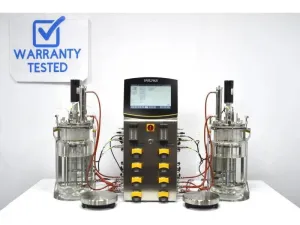
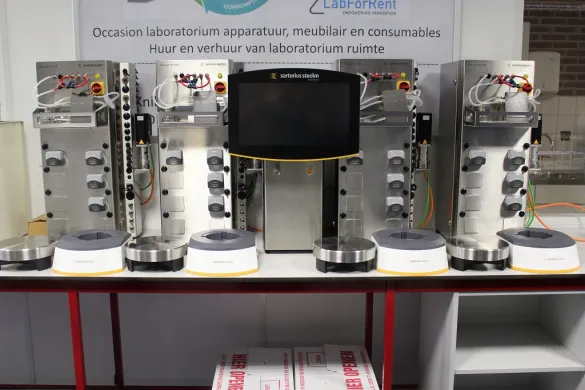
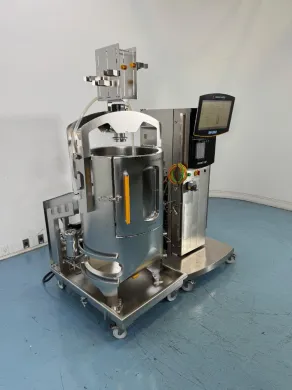
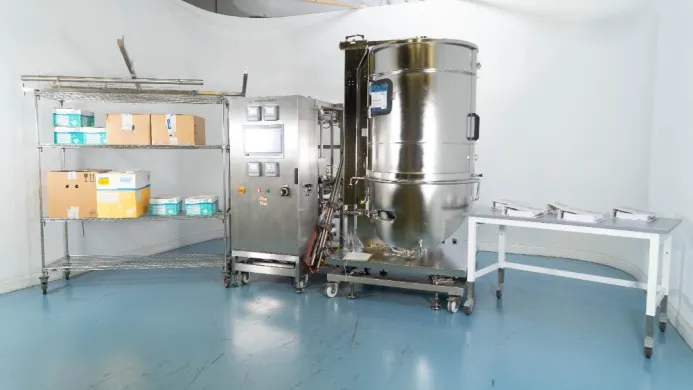
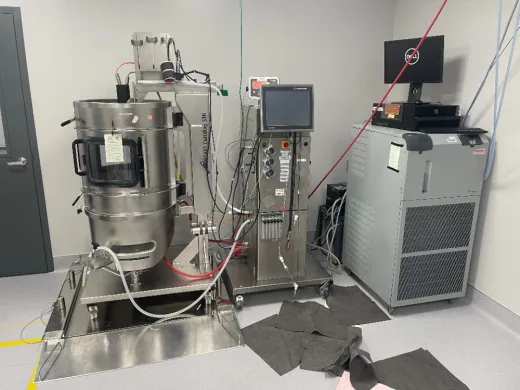
Sartorius Biostat B Twin Benchtop Bioreactor with Two 10 L Jacketed Autoclavable Glass Vessels

Price on request

In stock

Can't find what you're looking for?

Stock
In Stock
Product Code
68155
Capacity
13 L
Working Volume
10 L
Vessel Type
Glass Autoclavable
All 11 specifications
  • Ships to NL
  • Response within 1 hour
  • Warranty available. Buy without worry
  • Support from a scientist

Specifications 11

Brands
Sartorius
New/Used
Used
Stock
In Stock
Product Code
68155
Capacity
13 L
Working Volume
10 L
Vessel Type
Glass Autoclavable
Number of Vessels
2 vessels
Control Parameters
pH, DO, Temperature, Agitation, Gas Mix (O2/CO2)
Detail
Jacketed Vessel
Sterilization
Autoclavable

Pre-Owned

Product description

Twin 10 L jacketed glass bioreactor for controlled microbial fermentation, pH, DO, temperature, agitation, and gas mixing.

The Sartorius Biostat B Twin is a dual-vessel benchtop bioreactor system designed for controlled microbial cultivation, fermentation process development, and small-scale bioprocess optimization. It includes two 10 L jacketed, autoclavable glass culture vessels with a 13 L total vessel volume.

  • Configuration: Twin control tower supporting 2 vessels with independent parallel fermentation runs
  • Working volume: 1.5 to 10 L per vessel
  • Vessel type: Autoclavable double-wall glass vessels with jacketed temperature control
  • Mixing: Rushton impellers and foam disc
  • Aeration: Ring sparger
  • Agitation: Direct-drive 200 W motor; 20–2000 rpm, with 800 rpm specified for the 10 L double-wall configuration
  • Gas control: Air and O₂ supply through 2 thermal mass flow controllers and 2 flow meters
  • Gas precision: Thermal mass flow controllers, ±1% full scale; flow meters, ±5% full scale
  • Gas supply pressure: Maximum 1.5 barg
  • Gas flow: Air up to 20 L/min and O₂ up to 20 L/min through mass flow controller outputs
  • Temperature control: Open thermostat system with recirculation pump and automatic cooling-water valve
  • Temperature range: 8°C above cooling-water inlet temperature to 80°C
  • Heating capacity: 600 W
  • Integrated pumps: Four Watson-Marlow 114 fixed-speed pumps for pH control and substrate addition
  • Pump speeds: SUBS A, SUBS B, and ACID at 5 rpm; BASE at 44 rpm
  • Sensors included: Two pH sensors with cables, two dissolved oxygen sensors with cables, and two temperature sensors
  • Feed monitoring: Two EVO1S1-WV4 feed/supply weight scales, 4 kg maximum capacity
  • Turbidity: Turbidity-capable controller input; turbidity sensors are sold separately
  • Controller connections: RS-232 scale inputs, turbidity input, Pt100 temperature input, pH/redox input, pO₂ input, thermostat interfaces, exhaust cooler controls, sparger aeration control, external signal inputs, and external peristaltic pump connections
  • Temperature sensor specification: Pt100, 0–150°C, ±0.1°C accuracy
  • Power requirements: 120 V ±10%, 60 Hz, maximum power consumption 12 A
  • Dimensions: 35 × 82.2 × 43 cm (14 × 32 × 17 in)
  • Net weight: 55 kg (121 lb)

This parallel bioreactor system is suitable for microbial fermentation, strain screening, media and nutrient optimization, batch and fed-batch studies, aeration and agitation strategy testing, and bioprocess development. It supports controlled pH, dissolved oxygen, temperature, agitation, gas mixing, substrate feeding, and oxygen-transfer studies used in biotechnology, synthetic biology, and biopharmaceutical production workflows.

Why Questpair exists

Lab equipment markets are fragmented. Buyers spend weeks calling distributors, comparing quotes, and verifying supplier reliability. Sellers struggle to reach global research labs.

We built Questpair to fix this. Every supplier on the platform is verified before listing. Every quote you receive comes from a real, vetted seller. AI prepares your case in minutes, then a real specialist takes over.

We're an independent team based in The Netherlands, working with research labs and procurement teams across Europe and worldwide.

Frequently asked questions

How long does laboratory equipment typically last?

With a service contract, ten to fifteen years is normal for most benchtop instruments. Detectors and pumps are the parts that wear first.

Can I get service for older equipment?

Often, yes. Verified suppliers frequently work with service partners converting the instrument. If applicable, we can list servicing options alongside the offer.

Where can I buy parts?

Ask a scientist through the request button. Parts are often available even when the instrument itself is discontinued.

What is the typical lead time for refurbished equipment?

Two to six weeks, depending on refurbishment scope and whether calibration is included.

Does laboratory equipment ship internationally?

We ship to 38 countries. Crating and customs handling are quoted with the instrument.

Reply in one hour

Can't find the exact configuration?

Tell us what you need and a scientist finds it for you, usually within the hour.

Last updated 7 November 2026