From€450excl. VAT
In stock
Can't find what you're looking for?
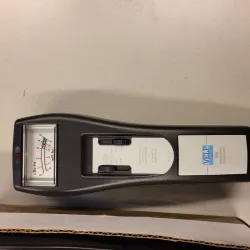
Velp Scientific SE radiation detector with Geiger-Müller tube, alpha, beta, gamma and X-ray detection across three measurement ranges.
The Velp Scientific SE radiation detector is a portable Geiger-Müller instrument for measuring alpha, beta, gamma and X-ray radiation.
The unit includes a Geiger-Müller tube with a thin mica end window. Radiation is shown on a graduated scale, a blinking LED and an acoustic signal.
The unit is used and was probably never used in practice. Factory calibration uses a pulse generator and is within ±15% of full scale relative to Cesium-137. The detector operates from a 9 V alkaline battery.
The Velp Scientific SE uses a Geiger-Müller tube with a thin mica end window to detect:
The detector provides readings in three unit systems:
Radiation indication uses a graduated scale, a blinking LED and an acoustic signal. An anti-saturation circuit operates up to a value equivalent to 100 times the maximum reading in the greatest interval.
This used Velp Scientific SE radiation detector includes the Geiger-Müller tube with thin mica end window.
The detector sensitivity defines the radiation energies it can register. Alpha radiation is detected down to 2.5 MeV, beta radiation at 150 keV, and gamma and X-ray radiation down to 10 keV through the end window or 40 keV through the case. The thin mica window supports the stated alpha and low-energy radiation detection.
The three measurement scales provide readings in milliroentgens per hour, counts per minute and microsieverts per hour. The available ranges extend from 0.5 to 50 mR/h, 500 to 50,000 CPM and 5 to 500 µSv/h. An anti-saturation circuit protects the unit up to a value equivalent to 100 times the maximum reading in the greatest interval.
Lab equipment markets are fragmented. Buyers spend weeks calling distributors, comparing quotes, and verifying supplier reliability. Sellers struggle to reach global research labs.
We built Questpair to fix this. Every supplier on the platform is verified before listing. Every quote you receive comes from a real, vetted seller. AI prepares your case in minutes, then a real specialist takes over.
We're an independent team based in The Netherlands, working with research labs and procurement teams across Europe and worldwide.
With a service contract, ten to fifteen years is normal for most benchtop instruments. Detectors and pumps are the parts that wear first.
Often, yes. Verified suppliers frequently work with service partners converting the instrument. If applicable, we can list servicing options alongside the offer.
Ask a scientist through the request button. Parts are often available even when the instrument itself is discontinued.
Two to six weeks, depending on refurbishment scope and whether calibration is included.
We ship to 38 countries. Crating and customs handling are quoted with the instrument.
Tell us what you need and a scientist finds it for you, usually within the hour.
Last updated 6 November 2026
€450 sits in the middle range counters here.
1 other listing of this model is available.