
Retsch equipment
We personally find you the right new, used & refurbished Retsch instruments & equipment from verified suppliers
Retsch is a German manufacturer of laboratory sample preparation and particle size analysis instruments, founded in 1915 when Friedrich Kurt Retsch started a wholesale supply business in Duesseldorf before moving into manufacturing. The company is based in Haan, Germany, and has belonged to the Verder Group, within its Verder Scientific division, since 1990. Its product range covers laboratory mills and crushers, sieve shakers and test sieves, sample dividers, pellet presses, and particle sizing systems. On Questpair, 127 used Retsch items are offered by verified suppliers and distributors across 6 countries.
Updated:
Retsch product list


Not the exact instrument you need?
Tell our scientists what you are after. We track it down, including off-market supply.

Not the exact instrument you need?
Tell our scientists what you are after. We track it down, including off-market supply.
Showing 1–40 of 81 listings
Show 40 more listingsAbout Retsch
Retsch is a German manufacturer of laboratory mills, sieve shakers and particle size analysis instruments, based in Haan, Germany. The company was founded in 1915 by Friedrich Kurt Retsch, who began in Duesseldorf as a wholesale supplier of laboratory supplies before the business moved into manufacturing. Since 1990 it has been part of the Verder Group, within the Verder Scientific division. Its catalogue covers laboratory mills and crushers, sieve shakers and test sieves, sample dividers, pellet presses, and particle sizing systems. These instruments do the preparation stage of an analysis, reducing a sample to a defined and uniform particle size so that whatever measures it next reads a representative portion. That work sits upstream of nearly every quantitative method, which is why the range is wide: different materials break in different ways and each needs its own mechanism.
Retsch mill and sieve shaker series
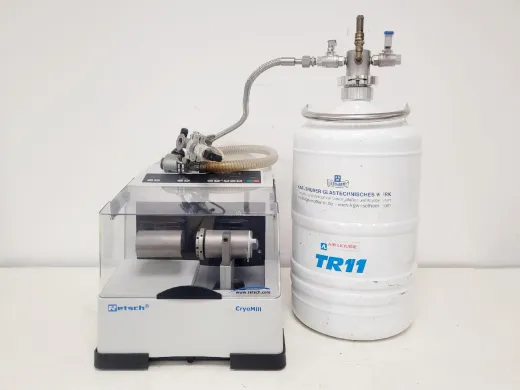
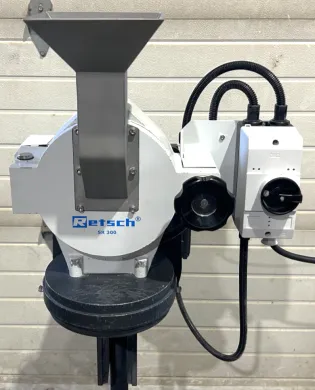
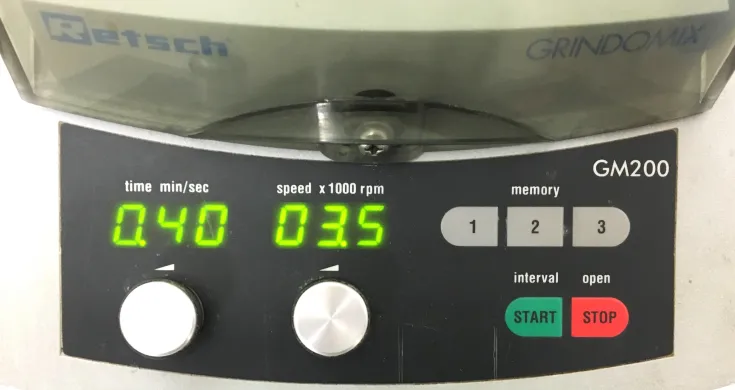
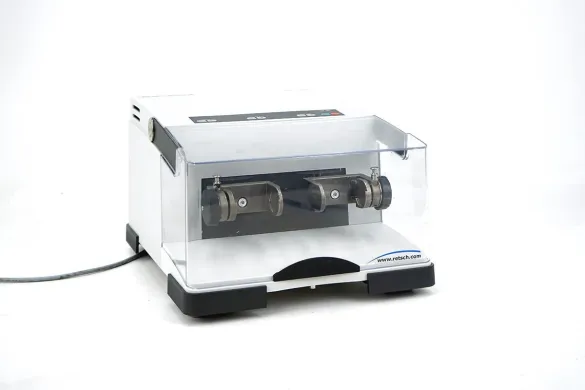
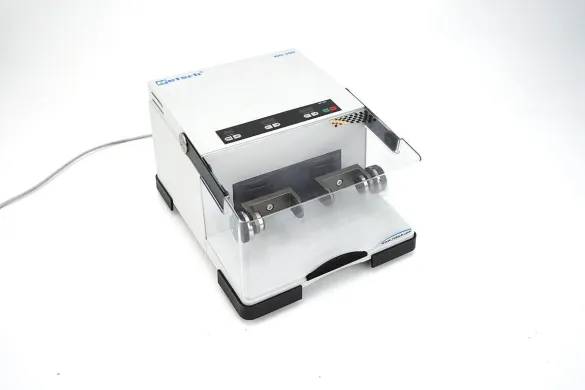
The mills divide by how they apply force. The Emax high energy ball mill and the Planetary Ball Mills PM series reduce hard, brittle material by impact and friction between grinding balls, taking minerals, ceramics and ores down to the fine and sub-micron range. The Mixer Mills MM series shake smaller batches at high frequency and are a common route for disrupting biological tissue, which connects them to molecular biology and genomics sample prep, where cells and tissue must be broken open before nucleic acids or proteins can be extracted. The CryoMill cools the grinding chamber with liquid nitrogen so that elastic or temperature-sensitive material turns brittle and fractures cleanly, a method used for RNA-grade tissue grinding and for plastics that would smear at room temperature. The Cutting Mills SM series and the Grindomix knife mills handle tough and soft organic matter respectively, from polymers to foodstuffs, and the Ultra Centrifugal Mill ZM series grinds soft to medium-hard feed by rapid impact against a ring sieve. The Mortar Grinder RM series reproduces pestle-and-mortar grinding mechanically for gentle, reproducible trituration, and the XRD-Mill McCrone prepares specimens specifically for X-ray diffraction.
Sample preparation of this kind feeds directly into proteomics and microbiology workflows as well, where reproducible homogenisation of tissue or microbial pellets governs how comparable two extractions are. The sieve shakers, led by the AS series, with their test sieves then measure and separate a material by particle size, closing the loop between grinding and gravimetric size analysis. Sample dividers and pellet presses round out the preparation bench, the first for splitting a bulk sample into representative portions, the second for pressing powders into pellets for techniques such as X-ray fluorescence.
Retsch instruments on Questpair
Questpair lists 127 Retsch items from 9 verified suppliers and distributors across 6 countries. 100 percent of the listings are used. Prices range from EUR 50 to EUR 11.499, with an average near EUR 1.879, a spread that reflects the distance between a single test sieve or spare grinding jar and a fully configured high energy mill. Because every unit here is pre-owned, condition and included accessories are described in the individual listing rather than set centrally, so reading each one closely is worth the time, particularly for grinding chambers and jars where wear affects results. Where a warranty matters, it is often possible and is arranged in consultation for the specific listing. Parts can be sourced via Questpair when a used instrument needs them. For a lab assembling a preparation and sizing bench, the practical value of a single maker is dimensional consistency: grinding jars, sieve diameters and accessory fittings stay within one system, which cuts the compatibility checking that mixing makers would otherwise require.
Questpair review of Retsch
Our take based on listings data and supplier feedback
Retsch occupies a specific position in the laboratory supply chain: the step that comes before measurement, where a sample has to be reduced, homogenised and sized before any analytical instrument can read it. That focus shapes what shows up in the Questpair catalogue, and the three benefits above each reflect a part of it.
The grinding breadth is the clearest. A ball mill reduces a hard, brittle mineral by impact; a cutting mill shears a tough, fibrous polymer or a plant stem; a knife mill chops a soft, moist food sample without heating it. These are not interchangeable, and Retsch sells each as a separate line, which is why the listed instruments scatter across the Emax and Planetary PM ball mills, the SM cutting mills, the ZM ultra centrifugal mills and the Grindomix knife mills. For a buyer, the practical reading is that the right machine depends on the feed, not on the brand, and the catalogue here is wide enough to carry more than one answer. The CryoMill extends that further for samples that have to be embrittled under liquid nitrogen before they will break, a route used in nucleic acid and protein work where grinding at room temperature would degrade the target.
The condition split is the second point and the most concrete. Across the 127 Retsch listings, 100 percent are used. That is the whole distribution, and it means the pricing sits below new throughout. Prices run from EUR 50 to EUR 11.499. The spread is genuine rather than an artefact: a single test sieve or a replacement grinding jar sits near the bottom, a high energy ball mill or a configured sieve shaker near the top, with an average around EUR 1.879. A lab that needs a consumable-grade accessory and a lab specifying a complete mill are shopping in the same catalogue but at very different points in it.
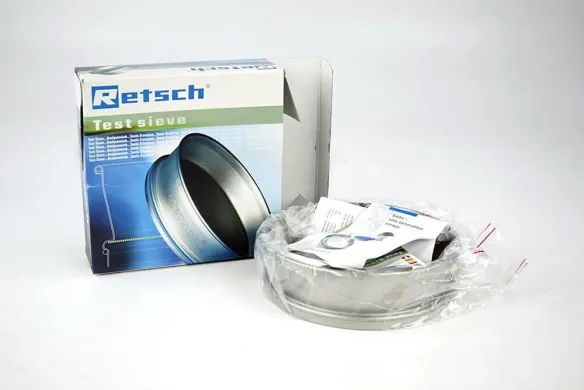
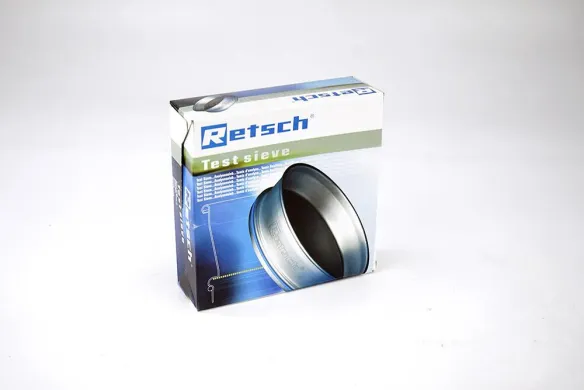
The third benefit, breadth across the preparation workflow, matters to anyone equipping a bench rather than filling a single gap. Sample reduction and particle sizing are consecutive steps, and both are represented here: the mills do the comminution, the AS-series sieve shakers and test sieves do the fractionation and size analysis that follows. Sourcing them from one maker is not a requirement, but it keeps grinding jars, sieve diameters and accessory fittings within one dimensional system, which reduces the compatibility checking a buyer otherwise does line by line.
What the listings do not settle is condition detail, and that is inherent to a used market. Calibration history, wear on grinding surfaces and the completeness of accessory sets vary by unit and are described per listing rather than centrally. The sensible approach is to read the individual listing closely and, where warranty matters, note that it is arranged in consultation for that specific item. Parts, when a used mill needs them, can be sourced via Questpair.
**Proven grinding across hard and soft samples**
Retsch builds mills for materials from mineral ores to plant tissue, with ball mills, cutting mills and knife mills each matched to a different feed hardness.
**A catalogue weighted toward second-hand units**
Of the 127 Retsch listings on Questpair, 100 percent are used, which puts the range below new-equipment pricing from the start.
**Breadth from benchtop grinders to sieve analysis**
The listed instruments span sample reduction and particle sizing, so a lab outfitting a full preparation bench can source several steps from one maker.
Frequently asked questions
Where can I find manuals and documentation for an older Retsch mill or sieve shaker?
Contact Questpair with the series and model number, and specialists respond within the hour. This is useful for older AS series sieve shakers or discontinued mill models where the original paperwork is no longer easy to locate.
How much does a used Retsch instrument cost?
Listings range from EUR 50 to EUR 11.499, with the catalogue average around EUR 1.879. The spread is wide because a benchtop knife mill and a high energy ball mill sit in different price classes, so the two ends describe the range better than the average does.
What is the difference between refurbished and used Retsch equipment?
A used unit is sold in its current working condition, while a refurbished unit has been reconditioned before resale. Both are listed below the price of a new instrument, and the specific condition is described in each individual listing.
Can I get a warranty on a used Retsch mill?
A warranty is often possible and is arranged in consultation for the specific listing. Condition is settled unit by unit rather than across the whole brand, so check the listing and raise the question with the supplier.
Is Retsch equipment suitable for clinical and research work?
Retsch mixer mills and cryogenic mills are used for sample homogenisation ahead of genomics and proteomics workflows, where a cryogenic ball mill grinds frozen tissue for RNA extraction while keeping it cold. The same grinding and pellet-pressing instruments also serve analytical chemistry, spectroscopy and materials work.
How long does a Retsch mill last?
Retsch mills are built for repeated laboratory use and their working life depends on the type of sample, the wear on grinding parts, and maintenance of the drive and seals. Wear components such as grinding jars, sieves and rotors are the parts that typically need replacing over time rather than the machine itself.
Can I get replacement parts for a Retsch instrument?
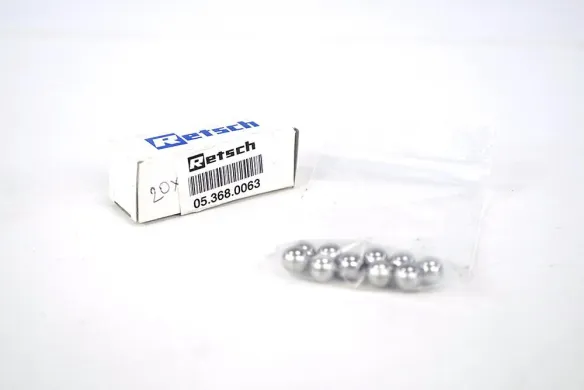
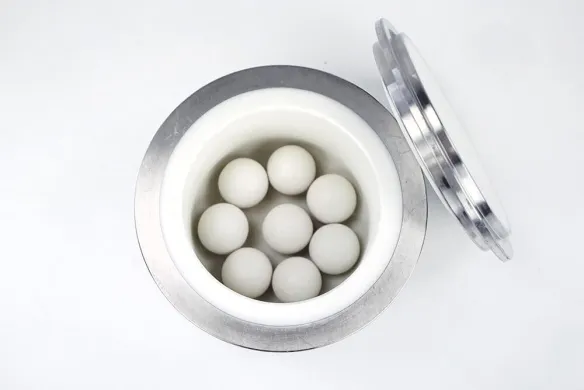
Parts can be sourced via Questpair. For a mill this usually means grinding jars, balls, sieves, rotors or seals, so name the series and the part when you enquire.
What are the alternatives to Retsch for sample preparation and sieving?
The alternative depends on the step you need. For milling and homogenisation the comparison is between ball mills, cutting mills, knife mills and cryogenic mills by grinding mechanism; for classification it is between sieve shaker systems and particle size analysers, so match the instrument class to the sample rather than the brand.
How long does delivery take for a used Retsch unit?
Lead time depends on the individual supplier and the country the unit ships from, since listings come from 9 verified suppliers and distributors across 6 countries. Confirm dispatch and transit time against the specific listing before ordering.
What is the difference between parts and spares for a Retsch mill?
In practice the terms overlap: both refer to replaceable components such as grinding jars, balls, sieves and rotors. Parts can be sourced via Questpair, so identify the series and the component you need when you ask.
Can a Retsch instrument be shipped internationally?
Yes, the listings span 6 countries and 9 verified suppliers and distributors, so international shipping is common. The route and handling are arranged with the supplier holding that particular listing.
What product lines does Retsch make and how do they differ?
The mills map to distinct grinding mechanisms: the Emax high energy ball mill, the Planetary Ball Mills PM series and Mixer Mills MM series apply impact and friction in different geometries, the CryoMill grinds under liquid nitrogen, the Cutting Mills SM series handle fibrous samples, the Ultra Centrifugal Mill ZM series and Grindomix knife mills cover other feed types, and the Mortar Grinder RM series reproduces pestle-and-mortar grinding. On the classification side the Sieve Shakers AS series drive test sieves, and the XRD-Mill McCrone prepares samples for X-ray diffraction.
Which Retsch instrument types are listed here and in what condition?
The catalogue carries particle size analysis equipment, test sieves, sample preparation equipment, laboratory sieves, stainless steel sieves and particle size analysers. Every Retsch unit listed is used: 100 percent of the listings carry that condition.
What separates the cheapest Retsch listings from the most expensive?
The gap tracks the instrument class. A benchtop knife mill, a single test sieve or a sieve shaker sits near EUR 50, while a high energy ball mill or a complete particle size analysis system sits toward EUR 11.499, which is why the catalogue spans such a wide range.
About Questpair
Questpair is the European marketplace for lab equipment, where AI-prepared cases and personal specialists guide every purchase. We work with 247 verified suppliers across 38 countries to find buyers the right new, used or refurbished instruments, with response within 1 hour and significant savings vs buying new.
Personal · Fast · Reliable · Affordable