
Haake equipment
We personally find you the right new, used & refurbished Haake instruments & equipment from verified suppliers
Haake is a German manufacturer of rheology and viscometry instruments, based in Karlsruhe, Germany. The company produces rheometers, capillary and rotational viscometers, temperature control units and circulators, and extensional rheometers, with product families that include the HAAKE MARS rheometer, the HAAKE Viscotester, and the HAAKE CaBER extensional system. Haake was absorbed into Thermo Fisher Scientific by 2012, having previously sat under Thermo Electron Corp before its 2006 merger with Fisher Scientific. On Questpair, 62 used Haake instruments are listed by verified suppliers and distributors across 7 countries.
Updated:
Haake product list


Not the exact instrument you need?
Tell our scientists what you are after. We track it down, including off-market supply.
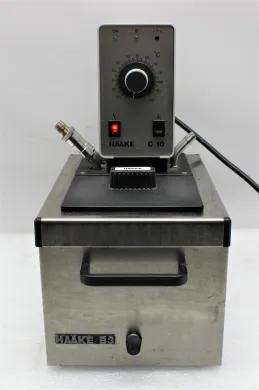
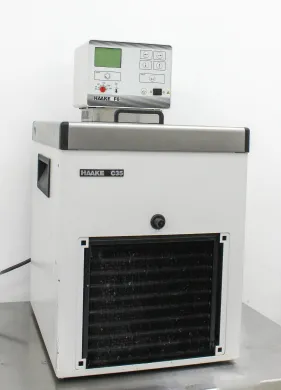
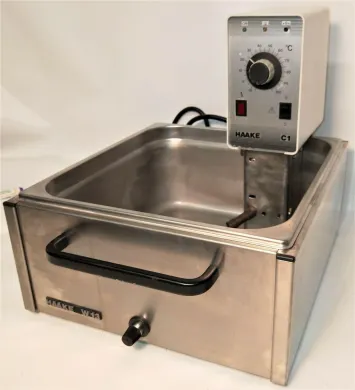
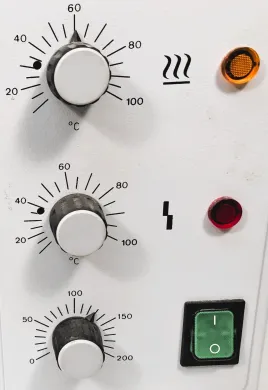
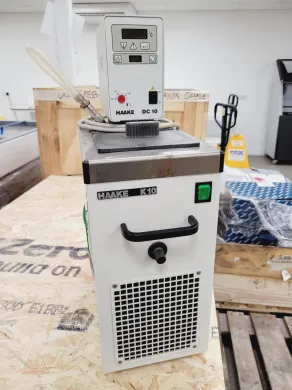
SWB 20 Shaking Water Bath, 19L Capacity
- Category
- Baths or circulators
- Brand
- Haake
- Suppliers
- 1 verified
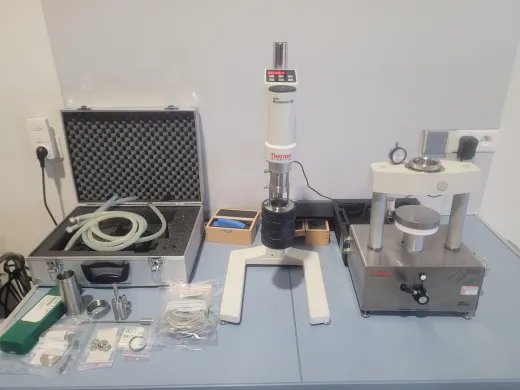
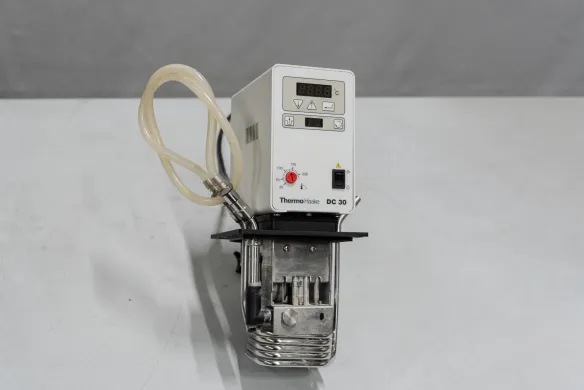
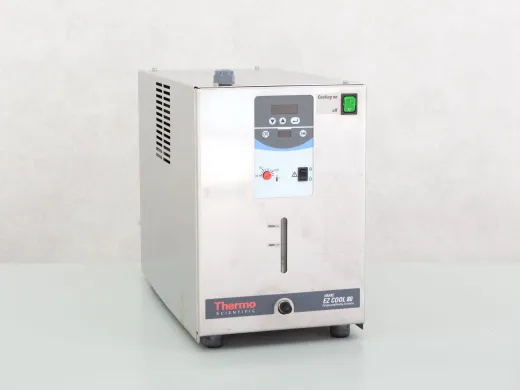
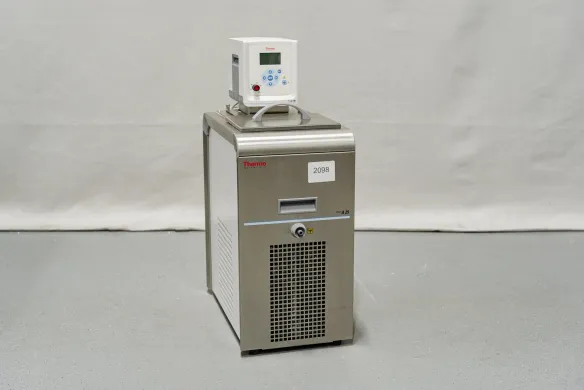
About Haake
Haake is a German manufacturer of rheometers and viscometers, headquartered in Karlsruhe, Germany. The company makes instruments that measure viscosity and viscoelastic behaviour, the properties that describe how a liquid or a soft solid flows and deforms under stress. Its product families include the HAAKE MARS rotational rheometer, the HAAKE Viscotester and Viscotester iQ, the HAAKE CaBER extensional rheometer, and the RheoWin and RheoScope software and imaging modules. Haake also builds temperature control units and circulators that pair with these measurement systems. The brand was absorbed into Thermo Fisher Scientific by 2012, having sat under Thermo Electron Corp before the 2006 merger with Fisher Scientific. On Questpair, 62 used Haake instruments are listed by verified suppliers and distributors.
What instruments does Haake make?
The range centres on viscometry and rheology, two related ways of measuring flow. Viscometers give a single viscosity figure, useful for routine quality checks on oils, paints, foods and polymers. Rheometers go further, characterising how a material responds across a range of stresses, shear rates and temperatures, which is the measurement a formulation or materials lab relies on. The HAAKE Viscotester lines, including the digital Viscotester iQ, cover the viscometry end. The HAAKE MARS covers the research end as a modular rotational rheometer. The HAAKE CaBER measures extensional rheology, how a fluid stretches and thins rather than how it shears, which is a distinct behaviour that shear instruments cannot capture.
Viscosity and rheology measurement feed directly into life sciences work. These instruments are used for the characterisation of biological fluids, protein formulations and hydrogels, where flow behaviour governs how a material is processed, injected or printed. In bioprocessing and biomanufacturing, viscosity measurement tracks cell culture broths and the behaviour of concentrated protein solutions during downstream processing. Rheological characterisation of injectable protein formulations is a standard step in biopharmaceutical development, since a solution that is too viscous cannot pass through a fine needle. Extensional rheometry of biopolymer solutions and bioinks supports the growing field of tissue engineering and bioprinting, where the way a fluid stretches determines whether it forms a clean filament or breaks. Across these areas the common thread is the same measurement Haake instruments were built for, flow and deformation, applied to biological rather than industrial materials.
Haake instruments on Questpair
The Questpair catalogue lists 62 used Haake instruments from 11 verified suppliers and distributors across 7 countries. 100 percent of the listings are used. Prices run from EUR 134 to EUR 24.524. The average listing price is EUR 1.657. The lower prices correspond to simpler viscometers for routine viscosity checks, while the higher figures reflect research rheometers such as the MARS configured with temperature control and measuring geometries.
Because every unit is pre-owned, the comparison a buyer makes is on condition and specification at the level of the individual listing. A used Haake unit is listed below the price of a new one, and that price difference is the clearest reason a lab turns to the used market for this kind of instrument. Where warranty matters, it is arranged in consultation for the specific listing rather than applied as a blanket policy. If a buyer needs manuals or documentation for a particular model, Questpair specialists respond within one hour, and parts can be sourced via Questpair. For a rheometer in particular, the detail worth confirming before purchase is which sensors, measuring geometries and temperature modules are included, since a complete system and a bare instrument are different things even when the model name is the same.
Questpair review of Haake
Our take based on listings data and supplier feedback
Haake instruments occupy a narrow, well-defined corner of laboratory measurement: how materials flow and deform. That focus is the first thing worth noting about the catalogue. Where a general instrument maker spreads across many unrelated classes, this one stays inside rheology and viscometry, so a buyer scanning the listings is choosing between a rotational rheometer such as the HAAKE MARS, a benchtop Viscotester, or an extensional system like the CaBER, rather than wading through unrelated equipment. The RheoWin software and RheoScope modules that accompany the research instruments mean a listed unit is often part of a recognisable measurement platform rather than a standalone box, which matters when a lab is matching a used purchase to an existing method.
The second point concerns condition and price. The Haake listings on Questpair are used, every one of them. 100 percent of the listings are used. That single condition shapes how the pricing reads. Prices run from EUR 134 to EUR 24.524. The low end covers simpler viscometers, hand-held or benchtop units for routine viscosity checks, while the upper figures reflect research-grade rheometers with temperature control and the sensors a rheology lab expects. The average sits at EUR 1.657. For a lab weighing a used Haake instrument against a new one, the honest comparison is on price alone: used units are listed below new, and warranty on any individual listing is arranged in consultation for that specific unit rather than set centrally.
The third point is supply. 62 listings is a meaningful depth for a single specialist brand, and they come from 11 verified suppliers and distributors spread across 7 countries. That spread is useful in practice. A buyer looking for a particular Viscotester iQ or a MARS configuration is more likely to find a match, and more likely to find more than one, than they would be with a brand held by a single seller. It also means a lab can compare two listings of a comparable instrument rather than taking the only one available.
What the catalogue does not tell you is how complete it is as a snapshot of the Haake range, or which specific accessories and sensors ship with a given rheometer. Those details live in the individual listing, and for a rheometer they matter: a MARS without its intended measuring geometry or temperature module is a different purchase from a complete system. The practical reading, then, is that Haake on Questpair is a focused, used-only selection of rheology and viscometry hardware, priced below new across a wide span, with enough supplier depth to make genuine comparison possible. The work of verifying configuration falls to the buyer and the listing, which is the normal shape of any used instrument purchase.
**Rheology specialists under one maker**
Haake builds rotational rheometers, capillary and falling-ball viscometers, and extensional systems, so the HAAKE MARS and HAAKE Viscotester lines appear on Questpair under a single, identifiable instrument heritage.
**Used-only pricing across a wide span**
Every Haake listing is used, running from EUR 134 to EUR 24.524, which puts benchtop viscometers and research rheometers within reach of labs that would not buy new.
**Supply spread across several countries**
The 62 Haake listings come from 11 verified suppliers and distributors in 7 countries, giving a buyer more than one source for a given model.
Frequently asked questions
Where can I get the manual or documentation for a Haake instrument?
Contact Questpair for manuals or documentation tied to a specific model, and specialists respond within one hour. This matters most for a MARS rheometer, where the measurement procedures depend on the configuration you have.
How much does a used Haake instrument cost?
On Questpair, prices range from EUR 134 to EUR 24.524, with an average of EUR 1.657. Simpler Viscotester units sit at the lower end, while a MARS rheometer with temperature control and geometries sits at the higher end.
What's the difference between a refurbished and a used Haake unit?
Both are pre-owned and listed below the price of a new unit. A refurbished unit has been reconditioned before sale, while a used unit is sold in its existing condition, so check the specific listing for what has been done to it.
Does a used Haake instrument come with a warranty?
A warranty is often possible and is arranged in consultation for the specific listing rather than applied as a blanket policy. Confirm the terms on the listing you are interested in before buying.
Are Haake instruments suitable for clinical or research work?
Yes, the MARS rotational rheometer is built for research-level characterisation across stress, shear rate and temperature, and the CaBER covers extensional behaviour. For routine viscosity checks in a lab, the Viscotester and Viscotester iQ cover that end.
How long does a Haake rheometer or viscometer last?
These are precision laboratory instruments that run for many years when kept within specification and calibrated. On a rheometer, the sensors and temperature modules see the most wear, so their condition tends to govern practical lifespan more than the base unit.
Can I still get parts for a Haake instrument?
Parts can be sourced via Questpair. For a rheometer, name the measuring geometry or temperature module you need, since those are the components most often missing from a used system.
What are the alternatives to Haake for rheology and viscometry?
Other makers of rotational rheometers and viscometers exist in the same measurement space, and the choice depends on whether you need single-figure viscosity or full rheological characterisation. Within Haake itself, the split is the Viscotester lines for viscometry and the MARS for research rheology, with the CaBER for extensional measurement that shear instruments cannot capture.
How long does delivery take for a Haake instrument?
Lead time depends on the individual listing and the supplier holding it, so it varies across the catalogue. The listing itself and the verified supplier behind it are where to confirm dispatch and transit timing.
What's the difference between parts and spares for these instruments?
The two terms are used interchangeably for replacement components such as sensors, geometries and temperature modules. Both can be sourced via Questpair, and the detail that matters is the exact model the part must fit.
Can a Haake instrument be shipped internationally?
The suppliers and distributors on Questpair are spread across 7 countries, so cross-border shipping is common. Shipping arrangements are set per listing with the supplier that holds the unit.
What are Haake's product lines and how do they differ?
The HAAKE MARS is a modular rotational rheometer for research, the HAAKE Viscotester and Viscotester iQ cover routine viscosity measurement, and the HAAKE CaBER measures extensional rheology. RheoWin and RheoScope are the software and imaging modules that pair with the measurement systems, and Haake also builds temperature control units and circulators for them.
Which Haake instruments are actually listed here, and in what condition?
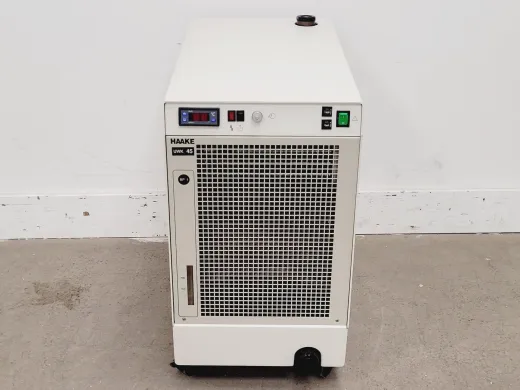
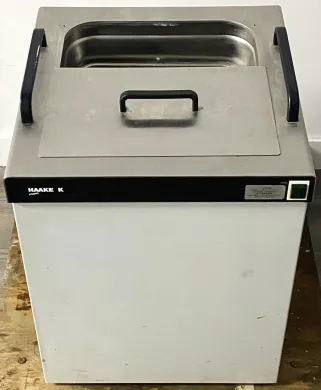
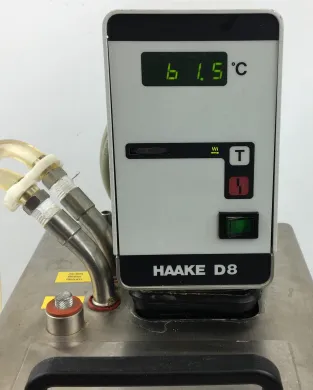
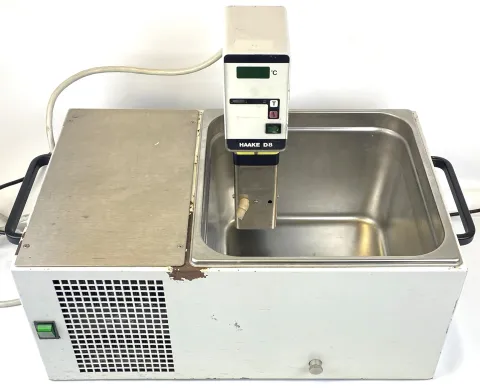
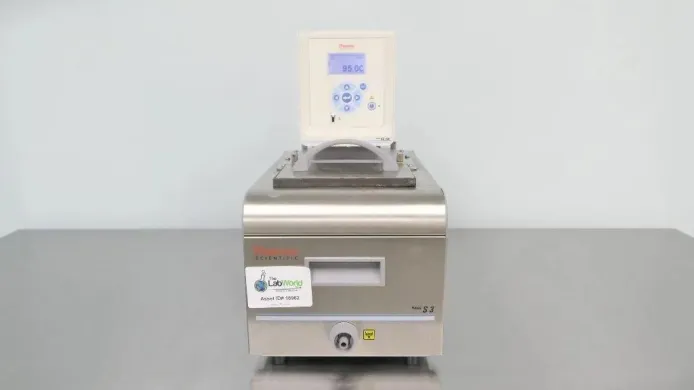
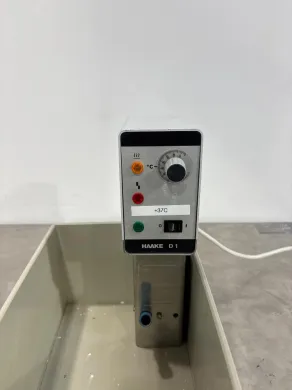
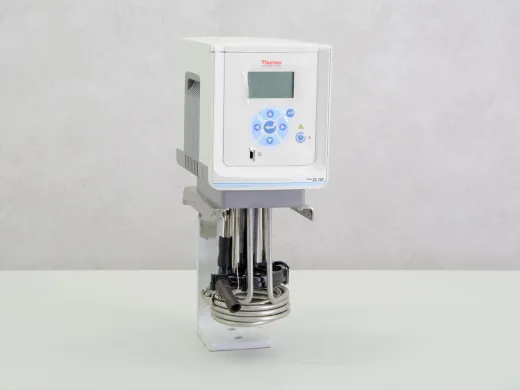
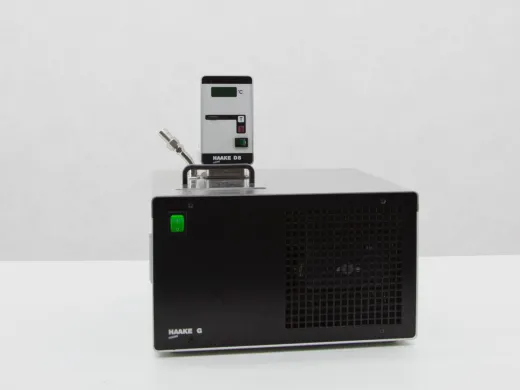
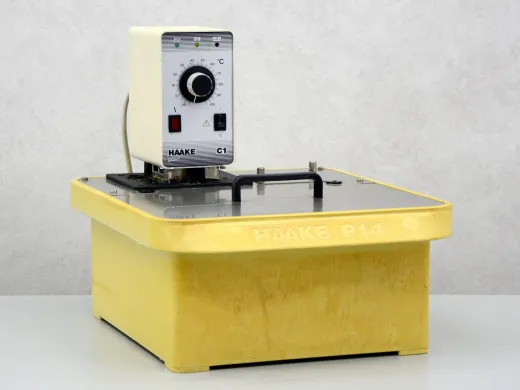
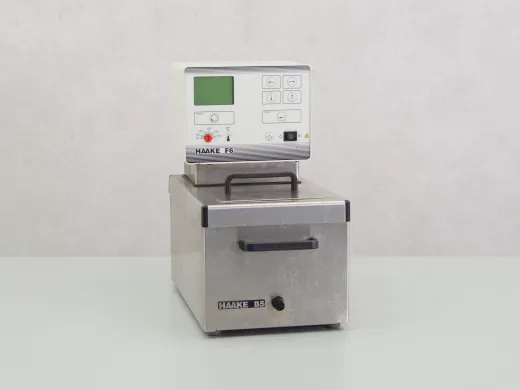
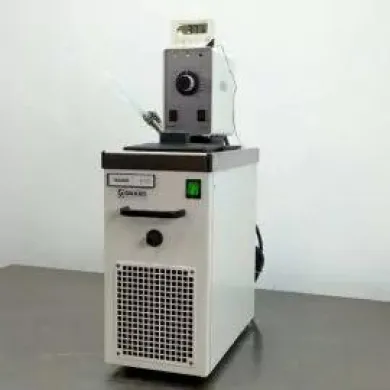
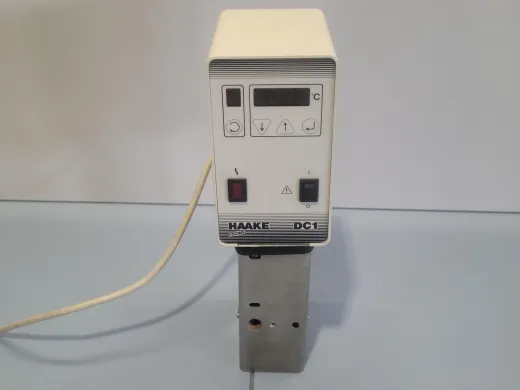
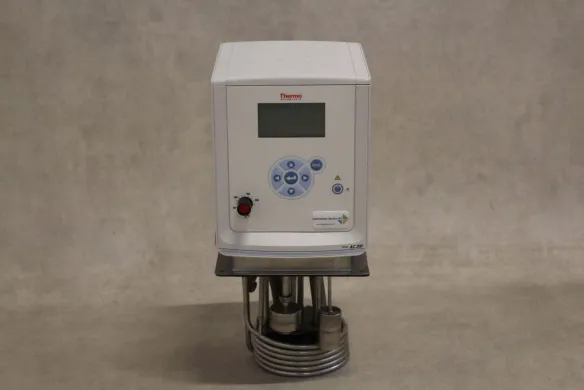
The temperature control side of the range is well represented, with temperature control units, immersion circulators, temperature control baths, laboratory thermostats, laboratory water baths and precision temperature baths among the listed types. Every unit on Questpair is pre-owned, and 100 percent of the listings are used, so condition is judged at the level of each individual listing.
What separates the cheapest Haake listings from the most expensive?
The lower prices correspond to simpler viscometers for routine viscosity checks, while the higher figures reflect a MARS rheometer configured with temperature control and measuring geometries. A complete system and a bare instrument differ in price even under the same model name, so confirm which sensors, geometries and modules are included.
About Questpair
Questpair is the European marketplace for lab equipment, where AI-prepared cases and personal specialists guide every purchase. We work with 247 verified suppliers across 38 countries to find buyers the right new, used or refurbished instruments, with response within 1 hour and significant savings vs buying new.
Personal · Fast · Reliable · Affordable