
Acros Organics equipment
We personally find you the right new, used & refurbished Acros Organics instruments & equipment from verified suppliers
Acros Organics is a Belgian fine chemicals and laboratory reagents manufacturer and distributor, incorporated in 1994 with roots in Janssen Chimica and the Eastman Kodak Laboratory Chemicals business. Fisher Scientific merged those two organic-chemicals operations in the early 1990s to form the brand, which is based in Geel, Belgium, and now sits under Thermo Fisher Scientific as the ultimate parent. The catalogue spans organic chemicals and reagents, inorganic reagents, fine chemicals, biochemicals, laboratory solvents and building blocks for synthesis. On Questpair, 134 Acros Organics items are listed from verified suppliers and distributors.
Updated:
Acros Organics product list


Not the exact instrument you need?
Tell our scientists what you are after. We track it down, including off-market supply.
Not the exact instrument you need?
Tell our scientists what you are after. We track it down, including off-market supply.
Showing 1–40 of 126 listings
Show 40 more listingsAbout Acros Organics
Acros Organics is a Belgian fine chemicals and laboratory reagents manufacturer and distributor based in Geel, Belgium. The brand was incorporated in 1994, with predecessor roots in Janssen Chimica and the Eastman Kodak Laboratory Chemicals business. Fisher Scientific merged the organic-chemicals operations of Eastman Kodak and Belgium-based Janssen Chimica in the early 1990s to create the Acros Organics brand. Its ultimate parent is Thermo Fisher Scientific, formed when Fisher Scientific merged with Thermo Electron in 2006, and the Acros Organics brand has since been consolidated into Thermo Scientific Chemicals. The catalogue spans organic chemicals and reagents, inorganic reagents, fine chemicals, biochemicals, laboratory solvents and building blocks for synthesis. These materials serve synthetic and analytical chemistry rather than a single instrument class, so the brand is read through its product families and its packaging formats.
Several of these reagent classes carry directly into life sciences work. Building blocks for synthesis, including boronic acids and the SAR building blocks, feed medicinal chemistry and the small-molecule end of molecular diagnostics, where a defined reagent set supports the synthesis of probes and labelled compounds. Biochemicals in the catalogue are used for cell culture media preparation and for buffer and reagent formulation in molecular biology, and laboratory solvents of controlled water content underpin protein purification steps and sample preparation for downstream analysis. These are the application areas the material naturally supports, named here because a reagent catalogue is bought against the work it enables rather than against the chemical alone.
Acros Organics product lines
The notable product families fall into a few groups. AcroSeal is a packaging line rather than a chemical: it seals moisture-sensitive and air-sensitive reagents under a septum closure so that anhydrous solvents and reactive materials stay dry through repeated use. SAR building blocks and boronic acids are synthesis building blocks aimed at structure-activity work in medicinal and organic chemistry. Organolithium compounds and metal catalysts serve organometallic and catalytic chemistry, where handling under inert conditions is routine and where the AcroSeal format and the reagent line are designed to work together. Alongside these sit the broader ranges of inorganic reagents, fine chemicals and laboratory solvents that make up the bulk of a working catalogue. On Questpair, the families that appear are drawn from the listings that specify a product line, so the view is of what is currently available rather than a complete brand index.
Acros Organics on Questpair
The Questpair catalogue lists 134 Acros Organics items from verified suppliers and distributors. Prices run from EUR 258 to EUR 430. The average listing price is EUR 266. Of the items on the page, 128 are listed new and 6 used, and 4 percent of the listings are used, which is the expected profile for a reagent catalogue where purity and storage history govern usefulness. Where a buyer needs a safety data sheet, a certificate of analysis or other documentation not shown on a listing, Questpair specialists respond within one hour. Parts and components tied to a listing can be sourced via Questpair, and a warranty, where relevant to a given item, is arranged in consultation for that specific listing rather than set centrally. For a choice between a new and a used listing, the difference the catalogue supports is price, since used items are listed below new; the individual listing is the place to confirm the remaining terms.
Questpair review of Acros Organics
Our take based on listings data and supplier feedback
Acros Organics occupies a recognisable position in synthetic and analytical chemistry: a reagent brand built from two older organic-chemicals operations, Janssen Chimica and Eastman Kodak Laboratory Chemicals, and consolidated under Thermo Scientific Chemicals. For a buyer, the practical value sits less in any single product and more in catalogue breadth, packaging format and the way the listings are priced. The three benefits above each reflect something the marketplace data or the entity record actually supports.
Catalogue breadth is the first point. The Acros Organics range covers organic chemicals and reagents, inorganic reagents, fine chemicals, biochemicals, laboratory solvents and building blocks for synthesis. A synthesis laboratory rarely needs one class of material in isolation; a route calls for a solvent, a catalyst, a protecting-group reagent and a boronic acid or organolithium building block in sequence. Having those classes under one brand reduces the number of separate sources a procurement step has to reconcile. On Questpair the catalogue carries 134 items for this brand, which gives a working view of what is currently available rather than a reference list of everything the brand has ever produced.
The second point is the AcroSeal packaging format, and this is where the brand carries a genuine functional distinction rather than a marketing one. AcroSeal bottles use a septum-and-cap closure designed to keep moisture-sensitive and air-sensitive reagents dry across repeated withdrawals. For materials such as organolithium compounds, metal catalysts and anhydrous solvents, exposure to atmospheric moisture degrades the reagent and the reaction that depends on it. A packaging system that holds a reagent anhydrous through several uses is a measurable operational advantage for a lab running moisture-sensitive chemistry, and it is specific to how this brand ships its sensitive lines.
The third point is pricing structure. Across the Acros Organics listings, prices run from EUR 258 to EUR 430, and the average sits at EUR 266. Of the items listed, 128 are new and 6 are used. 4 percent of the listings are used. That distribution tells a buyer that this is predominantly a new-stock catalogue, which matters for reagents, where condition and shelf life are not abstract concerns. A reagent is not a used instrument that can be recalibrated; its usefulness depends on purity and on how it has been stored, so a catalogue weighted toward new stock is the expected and appropriate profile for this material class.
Where a buyer has to choose between a used and a new listing, the difference the data supports is price: used and refurbished units are listed below new. Warranty, where it applies, is arranged in consultation for the specific listing rather than set centrally, so the individual listing is the place to confirm terms. For documentation or a component not shown, Questpair specialists respond within the hour. Taken together, the brand suits a laboratory that wants reagent breadth and anhydrous packaging from a single catalogue, with pricing visible before a quote is requested.
**Specialist reagents in one catalogue**
The Acros Organics listings cover organic and inorganic reagents, fine chemicals and laboratory solvents, so a synthesis lab sources building blocks and catalysts from a single Questpair catalogue rather than tracking separate part numbers.
**AcroSeal packaging for moisture-sensitive work**
AcroSeal bottles seal anhydrous solvents and air-sensitive reagents under septum closure, which keeps organolithium compounds and dry solvents usable across repeated withdrawals.
**New stock priced across a defined band**
Across the Acros Organics listings prices run from EUR 258 to EUR 430, with 128 items listed new, giving a buyer a clear range before requesting a quote.
Frequently asked questions
Where can I find manuals or documentation for an Acros Organics reagent?
Documentation such as a certificate of analysis or safety data sheet is tied to the specific grade and lot on each listing. If a listing does not show what you need, contact Questpair and specialists respond within an hour.
How much do Acros Organics items cost?
Across the Questpair listings for this brand, prices run from EUR 258 to EUR 430, with an average of EUR 266. Price depends on the chemical, the grade, the pack size, and the packaging type, so two listings of the same compound can differ substantially.
What's the difference between refurbished and used listings here?
For chemicals and reagents the practical distinction is remaining quantity and storage history rather than refurbishment, which applies to hardware. Used and refurbished items are listed below new prices, and the remaining volume and stated storage conditions on the listing decide whether a lower price suits your protocol.
Is there a warranty on Acros Organics reagents?
A warranty is sometimes possible and is arranged in consultation for the specific listing. For a reagent, the grade, expiry, and storage conditions stated on the listing matter more than a warranty in judging whether it fits your work.
Are Acros Organics reagents suitable for clinical or research use?
Suitability depends on the grade and specification of the individual item, which is why fields like purity, grade, and pack size sit on each listing. Match the grade on the listing to your protocol's requirement, since the same compound is often offered at different purities for different uses.
What is the shelf life of these reagents?
Shelf life varies by chemical and is set by the stated expiry and storage conditions on the listing rather than a single brand figure. Moisture-sensitive reagents in the AcroSeal line hold their quality longer because the septum closure allows withdrawal under inert atmosphere without exposing the remaining material to air.
Can I get parts or spares for Acros Organics products?
Parts can be sourced via Questpair. For the AcroSeal packaging line, replacement septa and closures are the relevant consumables rather than mechanical parts.
Is there a difference between parts and spares when ordering?
In practice the terms overlap: a part is any component you order, and a spare is one you hold against future need. For this brand that mostly means packaging consumables like AcroSeal septa, and all of it can be sourced via Questpair.
What are good alternatives to Acros Organics?
Alternatives depend on which chemical class you need. Since the brand has been consolidated into Thermo Scientific Chemicals, a legacy Acros catalogue number may now map to a renamed equivalent, and for a given organic reagent, boronic acid, or metal catalyst you would compare by grade, purity, and pack size across the listings on Questpair.
What's the lead time for an Acros Organics order?
Supply for this brand is currently concentrated, which affects both shipping and lead time. Solvents and regulated reagents face transport restrictions that can extend delivery, so lead time is best confirmed per listing.
Can these reagents ship internationally?
Listings come from verified suppliers and distributors across 1 countries, so international shipping is often feasible. Solvents and certain regulated reagents carry transport restrictions that determine what can cross borders, so check the restrictions on the specific listing.
Which product lines does Acros Organics have and how do they differ?
The named lines serve different purposes: AcroSeal is packaging that seals moisture-sensitive reagents and anhydrous solvents under a septum, while organolithium compounds, boronic acids, and metal catalysts are chemical classes used in deprotonation and cross-coupling chemistry. SAR building blocks are defined fragments for structure-activity relationship work in medicinal chemistry, a different purpose again.
Which Acros Organics product types are actually listed on Questpair and in what condition?
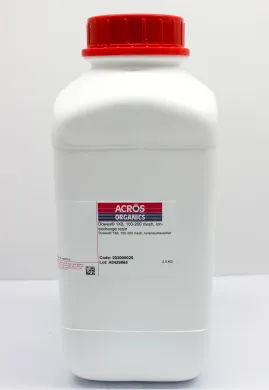
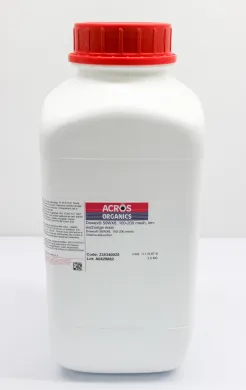
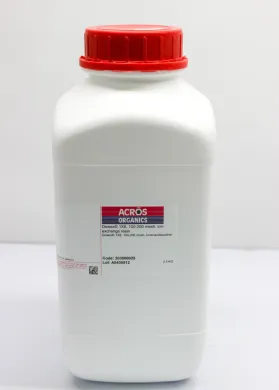
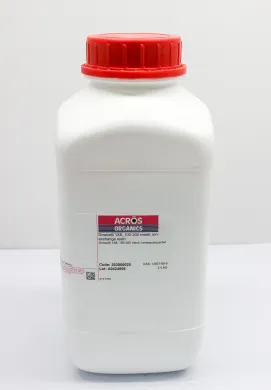
The types currently represented lean toward separation media: ion-exchange resin, sample preparation resin, deionization resin, strong acid cation exchange resin, and analytical separation resin. Of the 134 listings, 128 are new and 6 are used, so 4 percent are used.
What separates the cheapest Acros Organics listings from the most expensive?
The spread from EUR 258 to EUR 430 is driven by grade, pack size, and packaging type. A small pack of a standard-grade reagent sits at the low end, while large pack sizes, high-purity grades, and AcroSeal packaging for air-sensitive material push toward the high end; condition also plays in, since used listings are priced below new.
About Questpair
Questpair is the European marketplace for lab equipment, where AI-prepared cases and personal specialists guide every purchase. We work with 247 verified suppliers across 38 countries to find buyers the right new, used or refurbished instruments, with response within 1 hour and significant savings vs buying new.
Personal · Fast · Reliable · Affordable