
Centrifuges
We personally find you the right used, refurbished and new centrifuges instruments & equipment from verified suppliers.
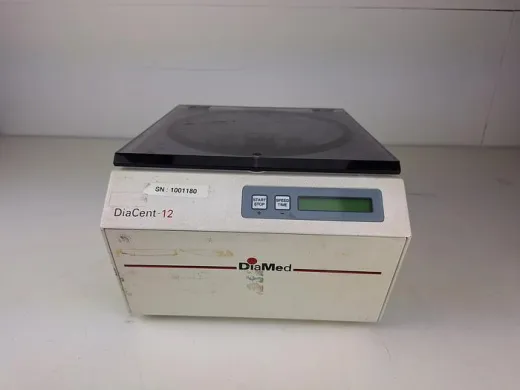
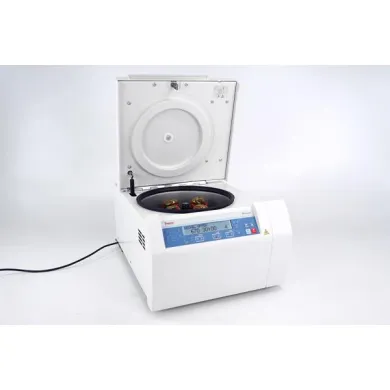
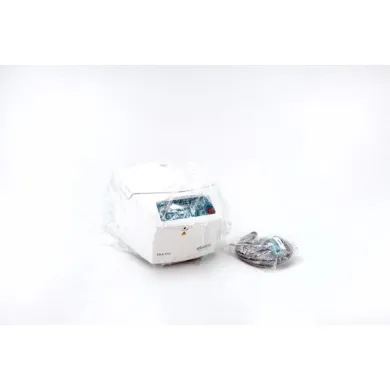
Centrifuges are laboratory instruments that spin samples at high speed to separate components by density, driving denser material outward and lighter material toward the axis. Across the Questpair catalogue, new, used and refurbished units are listed from verified suppliers and distributors, with the majority of entries being rotors and spare parts rather than complete instruments. The force a centrifuge generates, measured in relative centrifugal force, is what separates a plasma sample from a packed cell pellet or clarifies a protein lysate. Centrifugation underpins work from clinical haematology to molecular biology, and the equipment ranges from small benchtop units to heavy floor-standing systems.
Updated:
Centrifuges product list


Not the exact instrument you need?
Tell our scientists what you are after. We track it down, including off-market supply.
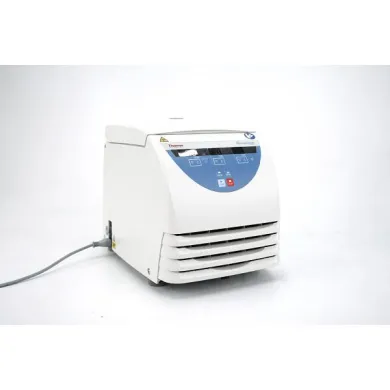
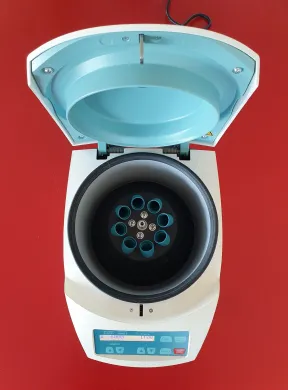
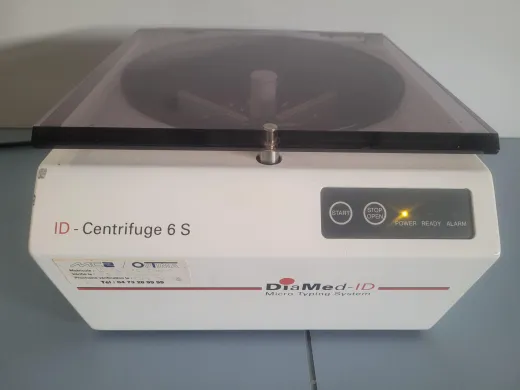
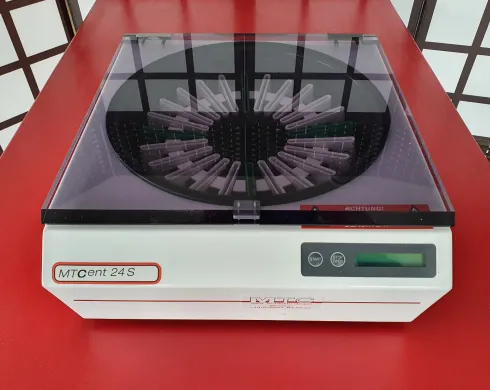
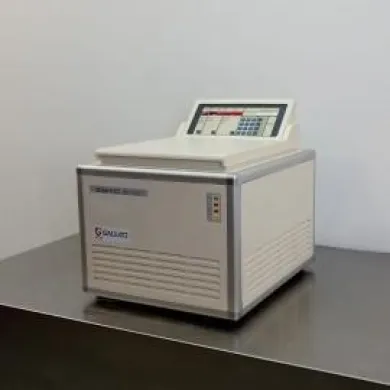
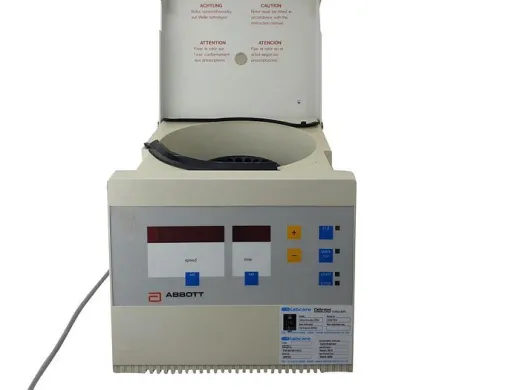
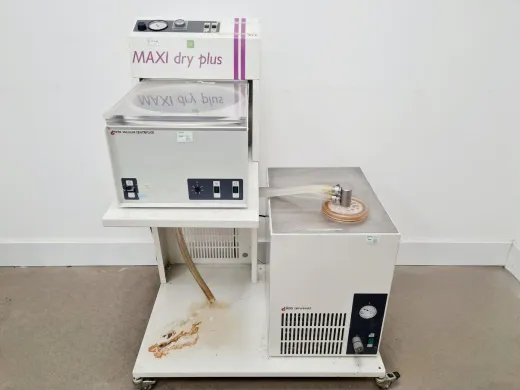
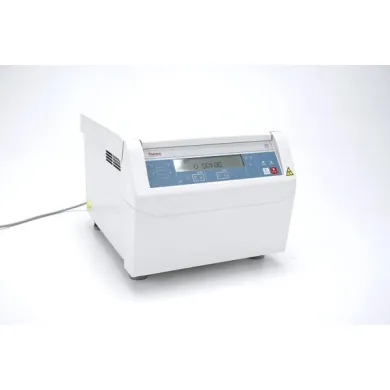
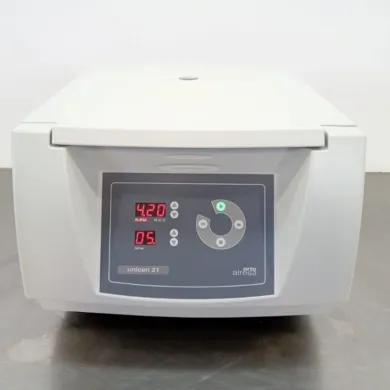
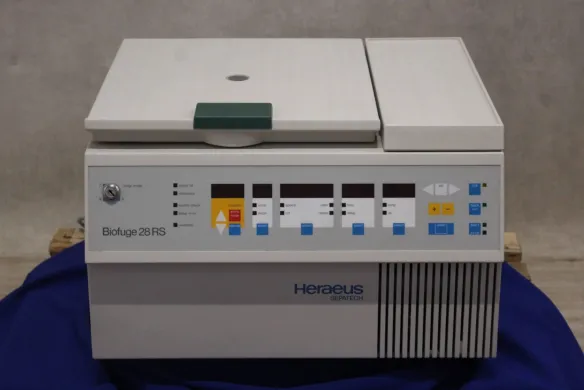
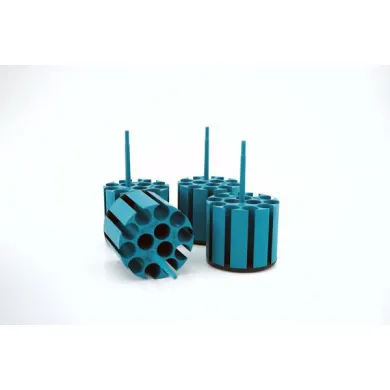

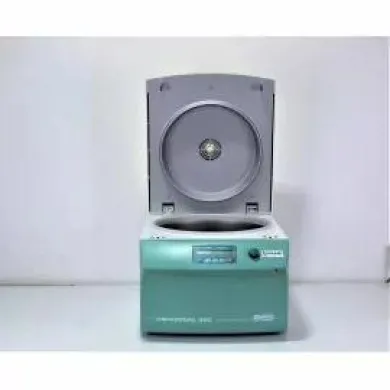
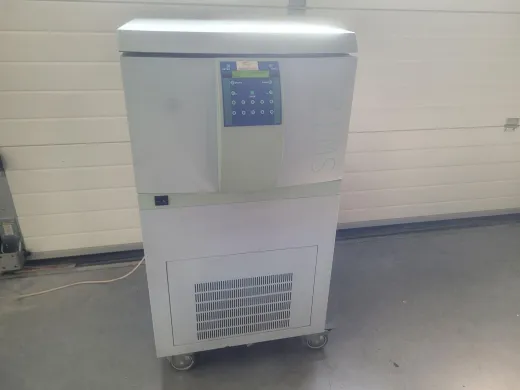
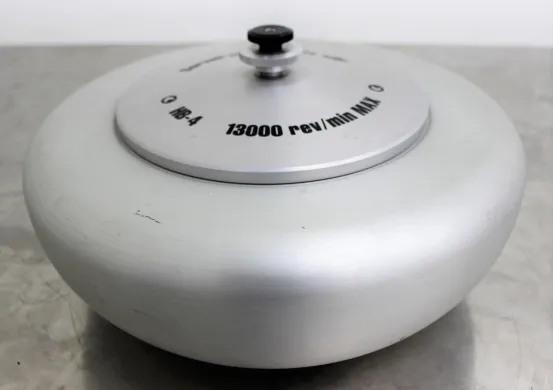
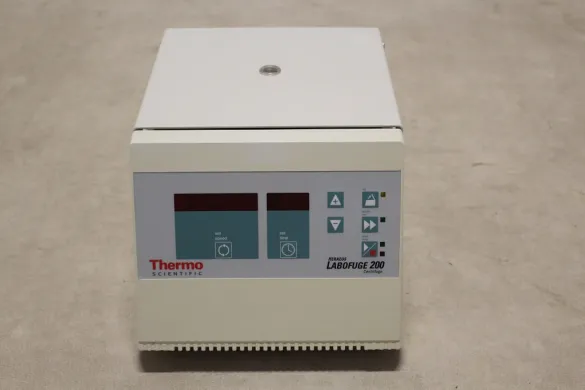
Not the exact instrument you need?
Tell our scientists what you are after. We track it down, including off-market supply.
Showing 1–40 of 1,806 listings
Show 40 more listingsBuying guide
What decides a centrifuge purchase?
The rotor is where a centrifuge purchase is settled, not the drive, because the rotor fixes the maximum speed, the sample format and the force the instrument can reach. A fixed-angle rotor pellets hard and fast and suits clarification; a swing-out rotor keeps the gradient layers flat and suits density separations and blood tubes. Before anything else, a buyer matches the rotor to the work: tube size, tube count, the relative centrifugal force the protocol calls for. A drive rated to 15,000 rpm is irrelevant if no listed rotor fits the tubes the lab actually runs.
On a used instrument, that same rotor is the part to verify. Rotors fatigue with every cycle, and a cracked or over-run rotor is a safety failure, not a performance one. Ask for the rotor's run history and its logged cycle count where the maker tracks it, confirm the lid interlock and the imbalance cut-out still function, and check that the model's rotors remain available, since an orphaned rotor makes an otherwise sound drive unusable. Calibration of the speed sensor and the timer matters for reproducibility but is secondary to the mechanical state of the spinning mass.
Price follows condition and scale. A used microcentrifuge and a refurbished floor-standing ultracentrifuge sit at opposite ends of a wide band, and the Questpair catalogue reflects that spread. Used and refurbished centrifuges are listed for sale at lower cost than new, which is what makes the second-hand route attractive to a lab working to a fixed budget; an affordable benchtop unit can be found where a new equivalent would not fit the equipment line. Common names in the listings include Beckman Coulter, Eppendorf, Thermo Fisher and Hettich, which helps when comparing a model against its direct peers and when judging whether rotors and seals will stay easy to source.
Read the full Centrifuges buying guide →
Types of Centrifuges
Centrifuge rotors or parts
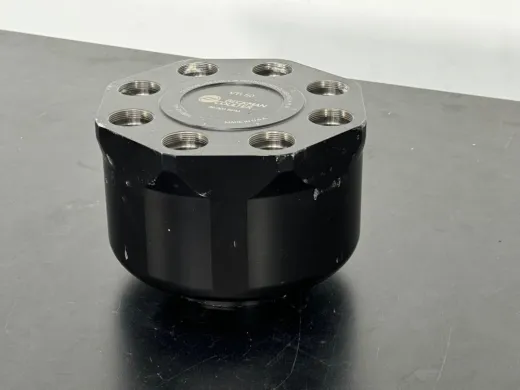
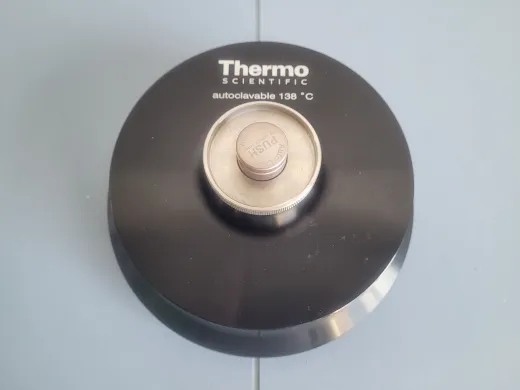
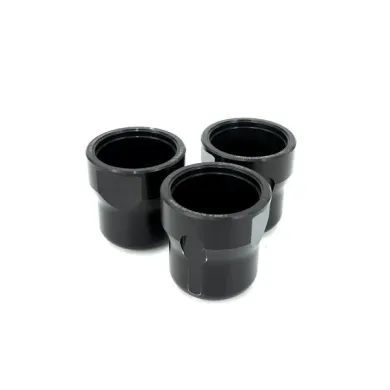
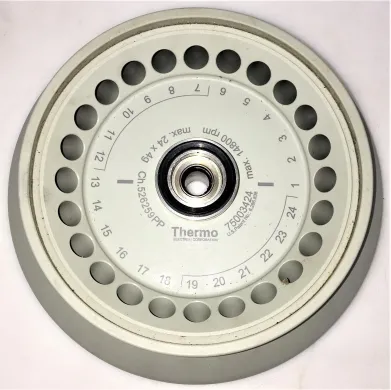
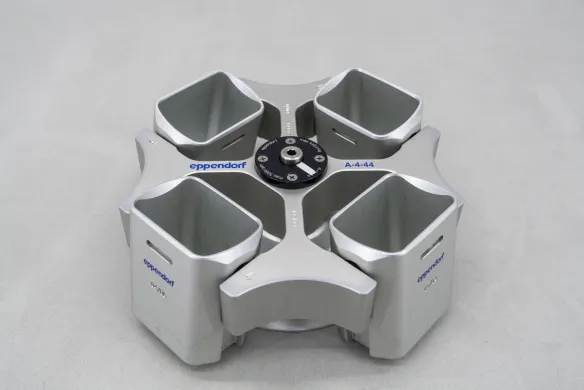
Rotors and spare parts form the largest group among the listings that specify a type, which reflects how often a rotor outlives or is swapped independently of its drive. This group covers the fixed-angle and swing-out rotors themselves, along with buckets, adapters, lids, seals and drive components. A fixed-angle rotor holds tubes at a set angle and delivers the fastest pelleting; a swing-out rotor lets tubes pivot to horizontal under spin, keeping separated layers level for gradient work. Buyers reach for this group to restore an existing instrument, to add a tube format the lab did not previously run, or to replace a rotor that has reached its cycle limit. In molecular biology and protein purification, rotor choice decides whether a run yields a clean pellet for nucleic acid extraction or a defined band in a sucrose gradient, so the part catalogue matters as much as the instrument catalogue.
Microcentrifuges
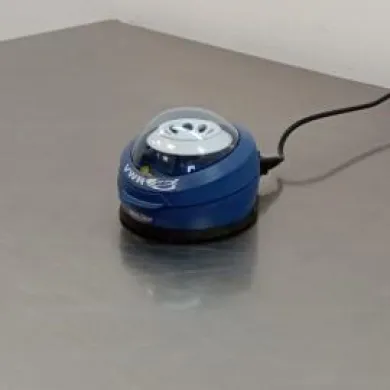
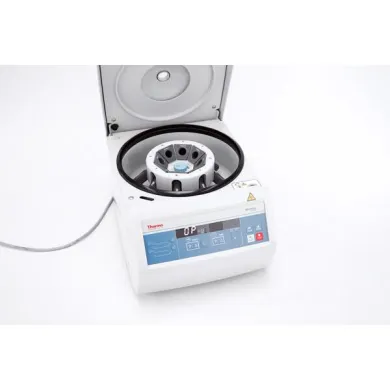
Microcentrifuges are compact benchtop units built for small-volume tubes, typically 0.2, 0.5, 1.5 and 2 millilitre, spun at high speed in a fixed-angle rotor. Their small footprint and rapid spin-up make them the standard tool at an individual bench, distinct from larger benchtop models by the tube size they accept and the higher relative centrifugal force they reach in that format. Researchers use them for the quick pelleting steps that run through everyday molecular biology: spinning down nucleic acid precipitates, clearing cell debris from a lysate, collecting beads in an immunoassay wash. Refrigerated versions hold samples cold during extended spins, which histology and enzymology protocols often require. They are the workhorse of genomics and proteomics sample preparation, where a protocol may call for a brief high-speed spin at nearly every step.
Benchtop centrifuges
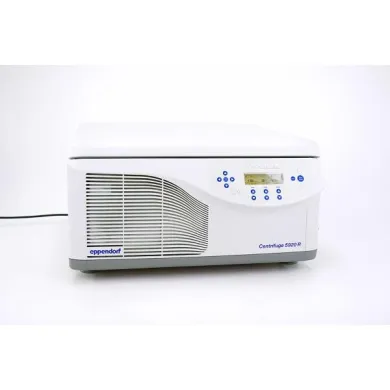
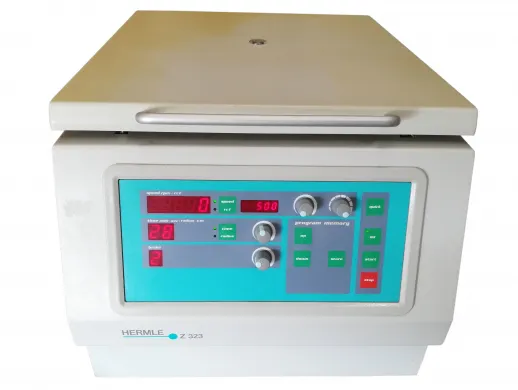
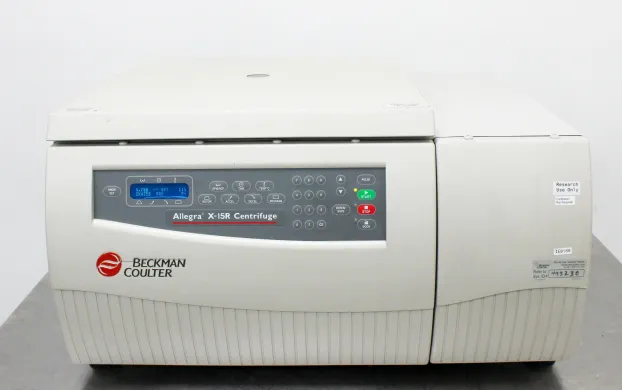
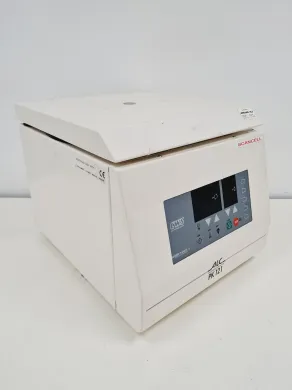
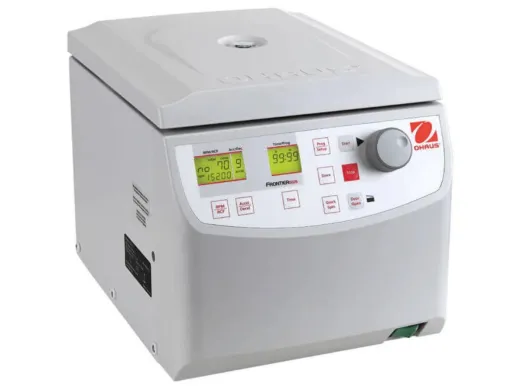
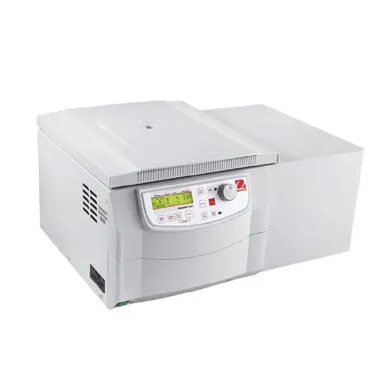
Benchtop centrifuges are the general-purpose instruments sized to sit on a laboratory bench and accept larger tubes and plates, from 15 and 50 millilitre conical tubes up to microplates with the right rotor. They sit between the microcentrifuge and the floor-standing machine, taking swing-out as well as fixed-angle rotors, which gives them the flexibility to move between pelleting and gentle layered separations. A clinical laboratory uses them to spin blood tubes for serum and plasma in haematology and diagnostics; a cell biology group uses them to harvest cells from culture without shearing them. Many models offer refrigeration for temperature-sensitive samples and a choice of rotors that adapts the same instrument to electrophoresis sample prep, cell culture harvesting and routine clarification across a shared facility.
Frequently asked questions
What is a centrifuge?
A centrifuge is a laboratory instrument that spins samples at high speed to separate their components by density. Denser material is driven outward by centrifugal force while lighter fractions stay closer to the axis of rotation.
What does centrifuge mean?
The term refers to the spinning instrument and to the process it performs, called centrifugation. It describes using rotational force to separate mixed materials according to how dense they are.
How do centrifuges work?
A motor spins a rotor holding tubes, bottles or plates at high speed, generating relative centrifugal force that pushes denser particles toward the bottom or outer edge of each tube. The result is a pellet of dense material with lighter liquid above it, or layered fractions in gradient work.
What types of centrifuges are there?
The listings here cover microcentrifuges for small tubes of 0.2 to 2.0 mL, benchtop units for mid-range volumes, and floor-standing machines for large batches. Rotors and parts are listed separately, since the rotor type, fixed-angle, swing-out or vertical, defines what a given instrument can do.
What are centrifuges used for?
They pellet cells, clarify lysates, isolate subcellular fractions and separate density gradients. In molecular biology this includes DNA and RNA extraction, plasmid preps, PCR cleanup and spin-column purification, while clinical and haematology labs use them to separate blood tubes.
How do I choose a centrifuge?
Start with the rotor the protocol requires, since it fixes maximum speed, relative centrifugal force and tube format, then confirm which instruments accept it. After that, weigh whether a refrigerated model is needed for temperature-sensitive samples and whether the capacity matches your volumes.
What is the difference between refurbished and used centrifuges?
A used centrifuge is sold in its existing condition, while a refurbished one has been reconditioned before resale. For either, the rotor's age and run count matter most, so ask whether a rotor log and derating history are available for the specific listing.
How much does a centrifuge cost?
Across the Questpair catalogue, prices run from EUR 6 to EUR 33.915. The spread is wide because bare rotors and parts sit at the low end and complete cooled high-speed instruments at the high end.
What are the best centrifuge brands?
Rather than ranking makers, look at which brands keep rotors and spare parts available long-term and whether one model compares cleanly against the next. Among the brands in the listings are Thermo Scientific, Eppendorf, Beckman Coulter, Hettich, Ohaus, and a recognised name tends to mean parts and rotors stay obtainable.
Can I get a warranty on a refurbished centrifuge?
A warranty is often possible and is arranged in consultation for the specific listing. Terms depend on the individual unit rather than being set across the whole catalogue.
Are parts available for centrifuges?
Rotors, buckets, adapters, lids, seals and drive components are listed here and make up the largest share of the catalogue. Additional parts can be sourced via Questpair when they are not already listed.
How long does a centrifuge last?
The drive and body can run for many years, but the rotor has a defined limit: it is rated for a finite number of cycles and a service life, after which the manufacturer derates its maximum speed. This makes rotor age and run count the component that decides an older unit's remaining usefulness.
Should I buy a new or refurbished centrifuge?
Used and refurbished units are listed at lower prices than new, so a fixed budget often reaches a more capable complete instrument second-hand. On either choice, check the individual listing and note that a warranty is arranged in consultation.
Where can I buy a centrifuge?
Centrifuges, rotors and parts are listed on Questpair from verified suppliers and distributors, with new, used and refurbished items shown side by side. This lets you compare a bare rotor against a complete instrument on one page.
What is the lead time and shipping on a centrifuge?
Lead time and shipping depend on the individual listing and supplier. Specialists respond within one hour if you contact Questpair for details on a specific unit.
How are centrifuges calibrated and maintained?
Recalibration of speed and timer is routine and inexpensive, and should be checked on any used purchase. Confirm that the lid-lock and imbalance detection function, and on older aluminium rotors rule out stress corrosion, since those are the safety systems and failure modes that fail quietly.
Which centrifuge types are listed most, and who reaches for which?
Rotors and parts make up the largest share of the listings, bought by labs extending an instrument they already own or matching a new tube format. Microcentrifuges serve molecular biology and genomics benches for small tubes, while benchtop units cover mid-range volumes across clinical, haematology and microbiology work.
Which brands dominate the centrifuge listings, and what does that mean for a buyer?
Among the brands in the listings are Thermo Scientific, Eppendorf, Beckman Coulter, Hettich, Ohaus. A recognised name generally means rotors and spare parts stay available and one model compares cleanly against the next, which matters because a rotor that cannot be replaced ends the instrument's working life.
What separates the cheapest centrifuges here from the most expensive?
At the low end are bare rotors, buckets and parts, which cost a fraction of a complete machine and suit a lab that already owns a compatible drive. At the high end are cooled high-speed and floor-standing instruments, where refrigeration, maximum speed and batch capacity drive the price up.